


Three-dimensional finite element analysis of the pediatric lumbar spine. Part I: pathomechanism of apophyseal bony ring fracture
- PMID: 16614857
- PMCID: PMC3489464
- DOI: 10.1007/s00586-005-1026-z
Three-dimensional finite element analysis of the pediatric lumbar spine. Part I: pathomechanism of apophyseal bony ring fracture
Abstract
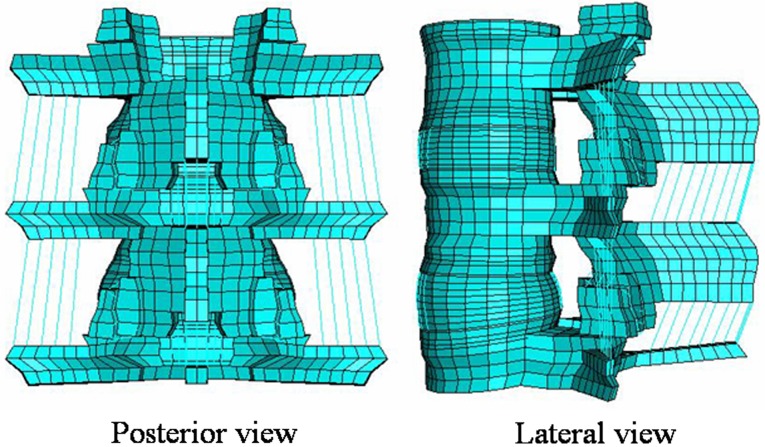
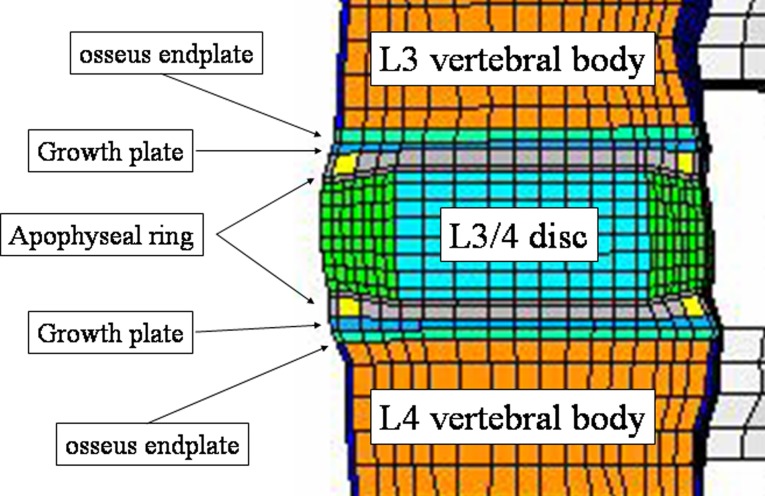
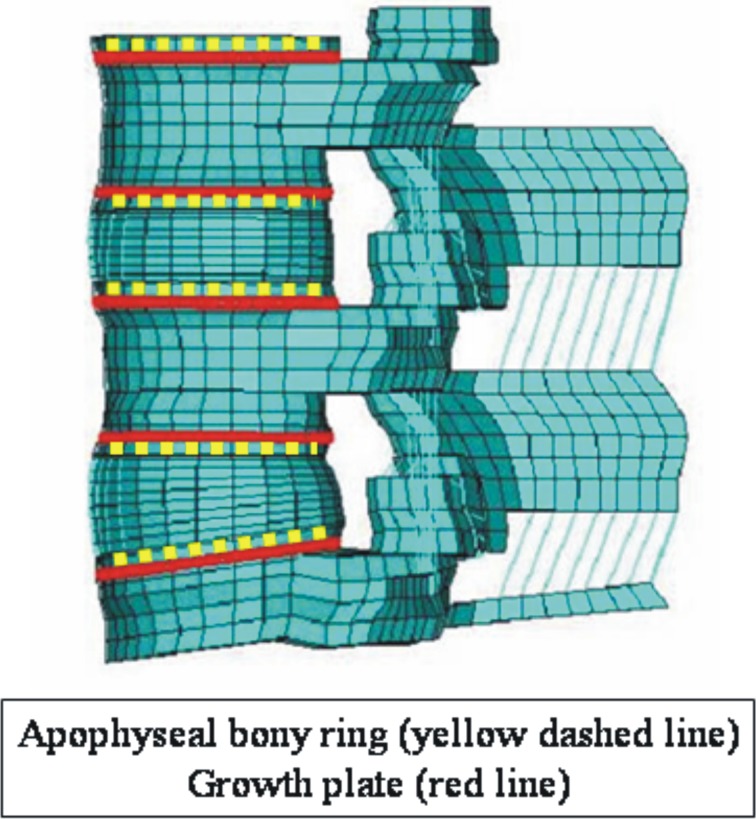
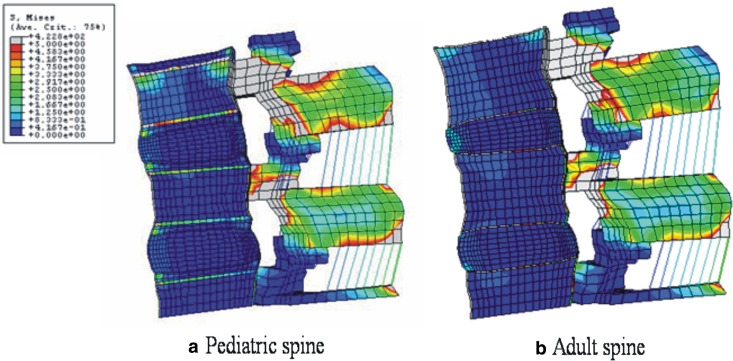
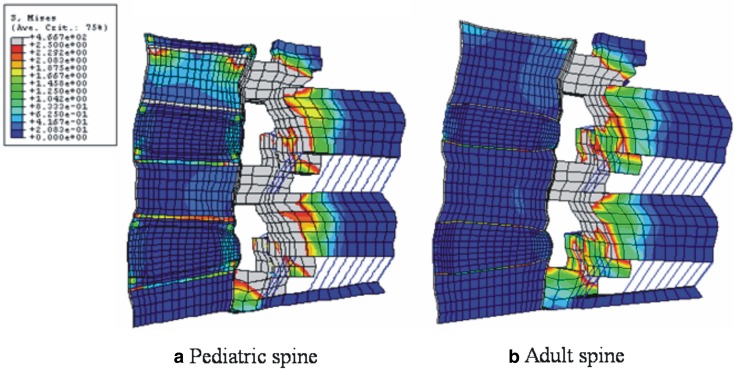
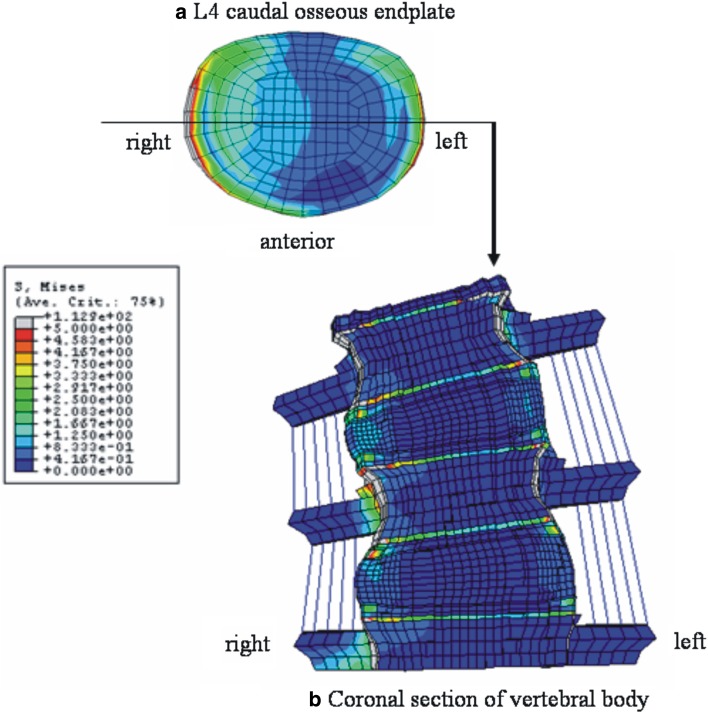
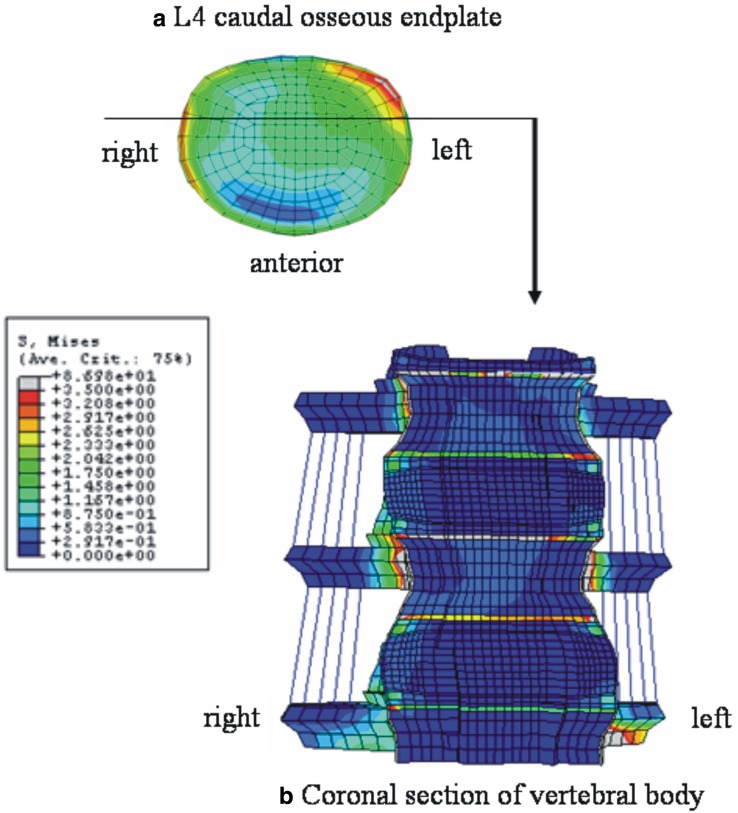
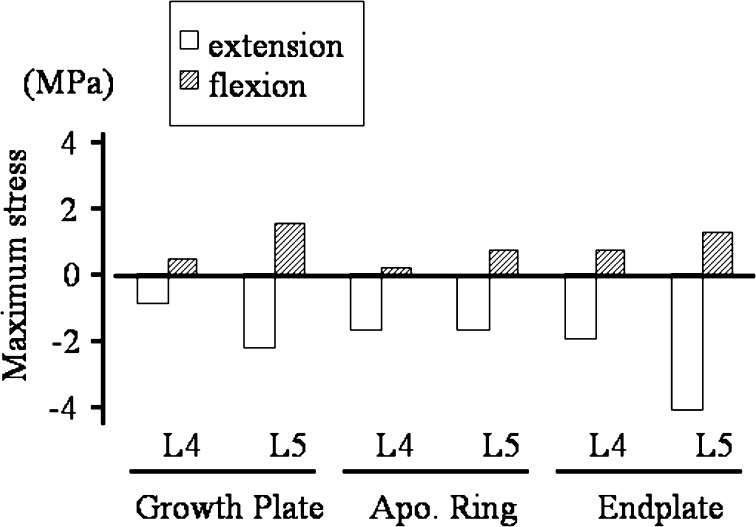
The purpose of this study was to (1) develop a three-dimensional, nonlinear pediatric lumbar spine finite element model (FEM), and (2) identify the mechanical reasons for the posterior apophyseal bony ring fracture in the pediatric patients. The pediatric spine FE model was created from an experimentally validated three-dimensional adult lumbar spine FEM. The size of the FEM was reduced to 96% taking into account of the ratio of the sitting height of an average 14-years-old children to that of an adult. The pediatric spine was created with anatomically specific features like the growth plate and the apophyseal bony ring. For the stress analyses, a 10-N m moment was applied in all the six directions of motion for the lumbar spine. A preload of 351 N was applied which corresponds to the mean body weight of the 14-years-old group. The stresses at the apophyseal bony ring, growth plate and endplate were calculated. The results indicate that the structures surrounding the growth plate including apophyseal bony ring and osseous endplate were highly stressed, as compared to other structures. Furthermore, posterior structures in extension were in compression whereas in flexion they were in tension, with magnitude of stresses higher in extension than in flexion. Over time, the higher compression stresses along with tension stresses in flexion may contribute to the apophyseal ring fracture (fatigue phenomena).
Figures
References
-
- Arlet V, Fassier F. Herniated nucleus pulposus and slipped vertebral apophysis. In: Weinstein SL, editor. The pediatric spine. Philadelphia: Lippincott Williams & Wilkins; 2001. pp. 453–469.
-
- Goel VK, Lim T-H, Gwon J, et al. Effects of rigidity of an internal fixation device—a comprehensive biomechanical investigation. Spine. 1991;16(Suppl):S155–S161. - PubMed
-
- Goel VK, Monroe BT, Gilbertson LG, et al. Interlaminar shear stresses and laminae separation in a disc: finite element analysis of the L3-4 motion segment subjected to axial compressive loads. Spine. 1995;20:689–698. - PubMed
-
- Ikata T, Morita T, Katoh S, et al. Lesions of the lumbar posterior end plate in children and adolescents. An MRI study. J Bone Joint Surg [Br] 1995;77:951–955. - PubMed
MeSH terms
LinkOut - more resources
Full Text Sources
Medical
