


Adjusting for dependent comorbidity in the calculation of healthy life expectancy
- PMID: 16620383
- PMCID: PMC1484491
- DOI: 10.1186/1478-7954-4-4
Adjusting for dependent comorbidity in the calculation of healthy life expectancy
Abstract
Background: Healthy life expectancy--sometimes called health-adjusted life expectancy (HALE)--is a form of health expectancy indicator that extends measures of life expectancy to account for the distribution of health states in the population. The World Health Organization has estimated healthy life expectancy for 192 WHO Member States using information from health interview surveys and from the Global Burden of Disease Study. The latter estimates loss of health by cause, age and sex for populations. Summation of prevalent years lived with disability (PYLD) across all causes would result in overestimation of the severity of the population average health state because of comorbidity between conditions. Earlier HALE calculations made adjustments for independent comorbidity in adding PYLD across causes. This paper presents a method for adjusting for dependent comorbidity using available empirical data.
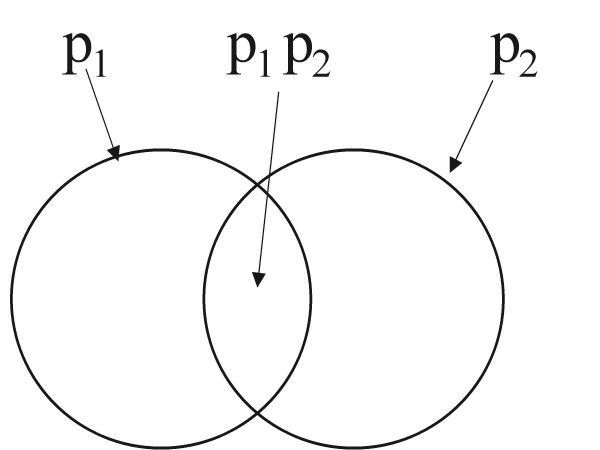
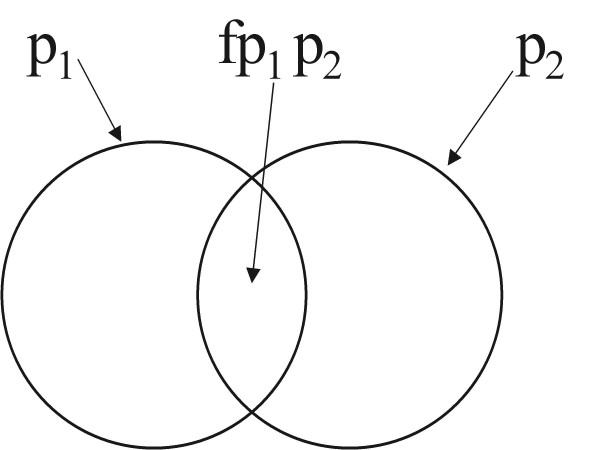
Methods: Data from five large national health surveys were analysed by age and sex to estimate "dependent comorbidity" factors for pairs of conditions. These factors were defined as the ratio of the prevalence of people with both conditions to the product of the two total prevalences for each of the conditions. The resulting dependent comorbidity factors were used for all Member States to adjust for dependent comorbidity in summation of PYLD across all causes and in the calculation of HALE. A sensitivity analysis was also carried out for order effects in the proposed calculation method.
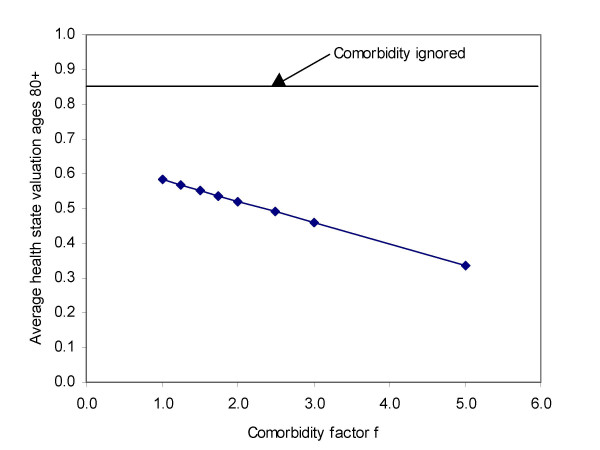
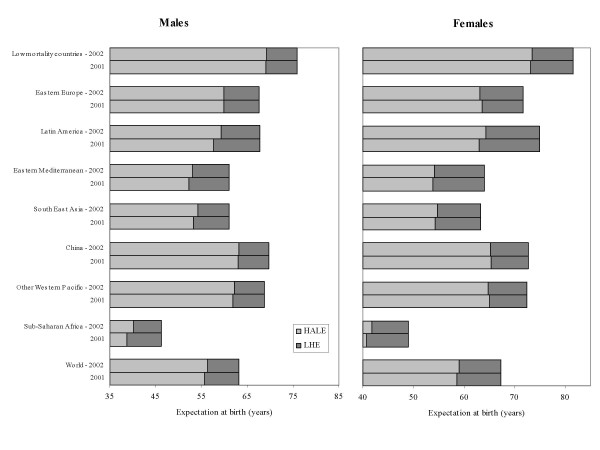
Results: There was surprising consistency in the dependent comorbidity factors across the five surveys. The improved estimation of dependent comorbidity resulted in reductions in total PYLD per capita ranging from a few per cent in younger adult ages to around 8% in the oldest age group (80 years and over) in developed countries and up to 15% in the oldest age group in the least developed countries. The effect of the dependent comorbidity adjustment on estimated healthy life expectancies is small for some regions (high income countries, Eastern Europe, Western Pacific) and ranges from an increase of 0.5 to 1.5 years for countries in Latin America, South East Asia and Sub-Saharan Africa.
Conclusion: The available evidence suggests that dependent comorbidity is important, and that adjustment for it makes a significant difference to resulting HALE estimates for some regions of the world. Given the data limitations, we recommend a normative adjustment based on the available evidence, and applied consistently across all countries.
Figures
References
-
- Organization WH. World Health Report 2000 Health Systems: Improving Performance. Geneva, WHO; 2000. http://www.who.int/whr
-
- Wolfson MC. Health-adjusted life expectancy. Health Reports. 1996;8:41–46. - PubMed
LinkOut - more resources
Full Text Sources
