


Role of self-monitoring of blood glucose in glycemic control
- PMID: 16627393
- PMCID: PMC4278646
- DOI: 10.4158/EP.12.S1.110
Role of self-monitoring of blood glucose in glycemic control
Abstract
Objective: To examine the role of self-monitoring of blood glucose (SMBG) in the management of diabetes mellitus.
Methods: Current trends and published evidence are reviewed.
Results: Despite the widespread evidence that lowering glycemic levels reduces the risks of complications in patients with diabetes, little improvement in glycemic control has been noted among patients in the United States and Europe in recent years. Although SMBG has been widely used, considerable controversy surrounds its role in achieving glycemic control. The high cost of test strips has made considerations regarding appropriate recommendations for SMBG a priority, especially in light of the current climate of health-care cost-containment. Existing clinical recommendations lack specific guidance to patients and clinicians regarding SMBG practice intensity and frequency, particularly for those patients not treated with insulin. Previous studies of the association between SMBG and glycemic control often found weak and conflicting results.
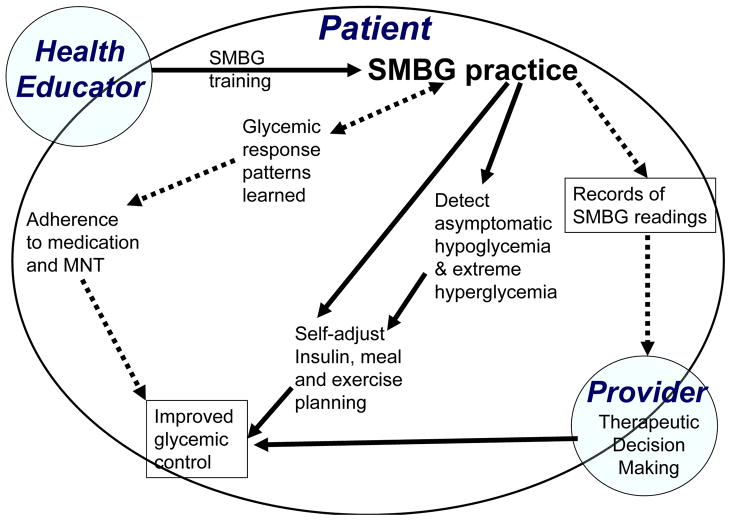
Conclusion: A reexamination of the role of SMBG is needed, with special attention to the unique needs of patients using different diabetes treatments, within special clinical subpopulations, and during initiation of SMBG versus its ongoing use. Further understanding of the intensity and frequency of SMBG needed to reflect the variability in glycemic patterns would facilitate more specific guideline development. Educational programs that focus on teaching patients the recommended SMBG practice, specific glycemic targets, and appropriate responses to various blood glucose readings would be beneficial. Continuing medical education programs for health-care providers should suggest ways to analyze patient SMBG records to tailor medication regimens. For transfer or communication of SMBG reports to the clinical staff, a standardized format that extracts key data elements and allows quick review by health-care providers would be useful. Because the practice of SMBG is expensive, the cost-effectiveness of SMBG needs to be carefully assessed.
Figures
References
-
- The effect of intensive treatment of diabetes on the development and progression of long-term complications in insulin-dependent diabetes mellitus. The Diabetes Control and Complications Trial Research Group. N Engl J Med. 1993;329:977–986. - PubMed
-
- Reichard P, Berglund B, Britz A, Cars I, Nilsson BY, Rosenqvist U. Intensified conventional insulin treatment retards the microvascular complications of insulin-dependent diabetes mellitus (IDDM): the Stockholm Diabetes Intervention Study (SDIS) after 5 years. J Intern Med. 1991;230:101–108. - PubMed
-
- Turner RC, Cull CA, Frighi V, Holman RR. Glycemic control with diet, sulfonylurea, metformin, or insulin in patients with type 2 diabetes mellitus: progressive requirement for multiple therapies (UKPDS 49). UK Prospective Diabetes Study (UKPDS) Group. JAMA. 1999;281:2005–2012. - PubMed
-
- Ohkubo Y, Kishikawa H, Araki E, et al. Intensive insulin therapy prevents the progression of diabetic microvascular complications in Japanese patients with non-insulin-dependent diabetes mellitus: a randomized prospective 6-year study. Diabetes Res Clin Pract. 1995;28:103–117. - PubMed
-
- Saydah SH, Fradkin J, Cowie CC. Poor control of risk factors for vascular disease among adults with previously diagnosed diabetes. JAMA. 2004;291:335–342. - PubMed
Publication types
MeSH terms
Substances
Grants and funding
LinkOut - more resources
Full Text Sources
Medical
