


Lymphatic or hematogenous dissemination: how does a metastatic tumor cell decide?
- PMID: 16627996
- PMCID: PMC1459485
- DOI: 10.4161/cc.5.8.2646
Lymphatic or hematogenous dissemination: how does a metastatic tumor cell decide?
Abstract
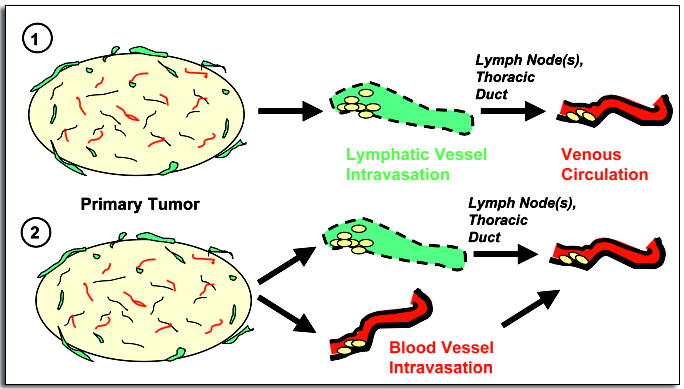
The formation of distant metastases is the deadliest phase of cancer progression. Although numerous studies have identified genes and mechanisms that affect metastasis after tumors have reached secondary sites, our knowledge about how cancer cells initially gain access to systemic circulation is limited. Since tumors can enter the blood directly by intravasating into venous capillaries or indirectly via lymphatics, it is important to evaluate the relative contributions of both pathways as routes of egress from the primary site. Insights into tumor and stromal factors governing the intravasation process may help explain why certain tumors exhibit "preferred" pathways for metastatic dissemination, both clinically and in experimental animal models.
Figures
References
-
- Chambers AF, Groom AC, MacDonald IC. Dissemination and growth of cancer cells in metastatic sites. Nat Rev Cancer. 2002;2:563–72. - PubMed
-
- Fidler IJ. The pathogenesis of cancer metastasis: The ‘seed and soil’ hypothesis revisited. Nat Rev Cancer. 2003;3:453–8. - PubMed
-
- Ramaswamy S, Ross KN, Lander ES, Golub TR. A molecular signature of metastasis in primary solid tumors. Nat Genet. 2003;33:49–54. - PubMed
-
- Veer LJ, Dai H, Vijver MJ, He YD, Hart AA, Mao M, Peterse HL, Kooy K, Marton MJ, Kitteveen AT, Schreiber GJ, Kerkhoven RM, Roberts C, Linsley PS, Bernards R, Friend SH. Gene expression profiling predicts clinical outcome of breast cancer. Nature. 2002;415:530–5. - PubMed
Publication types
MeSH terms
Grants and funding
LinkOut - more resources
Full Text Sources
Other Literature Sources
