


The prognosis for individuals on disability retirement. An 18-year mortality follow-up study of 6887 men and women sampled from the general population
- PMID: 16630360
- PMCID: PMC1459134
- DOI: 10.1186/1471-2458-6-103
The prognosis for individuals on disability retirement. An 18-year mortality follow-up study of 6887 men and women sampled from the general population
Abstract
Background: Several studies have shown a markedly higher mortality rate among disability pensioners than among non-retired. Since most disability pensions are granted because of non-fatal diseases the reason for the increased mortality therefore remains largely unknown. The aim of this study was to evaluate potential explanatory factors.
Methods: Data from five longitudinal cohort studies in Sweden, including 6,887 men and women less than 65 years old at baseline were linked to disability pension data, hospital admission data, and mortality data from 1971 until 2001. Mortality odds ratios were analyzed with Poisson regression and Cox's proportional hazards regression models.
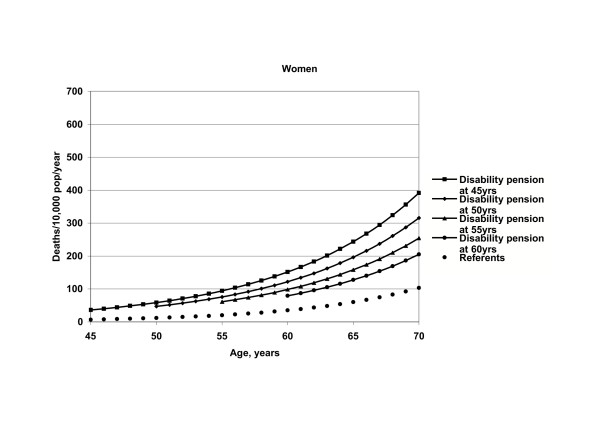
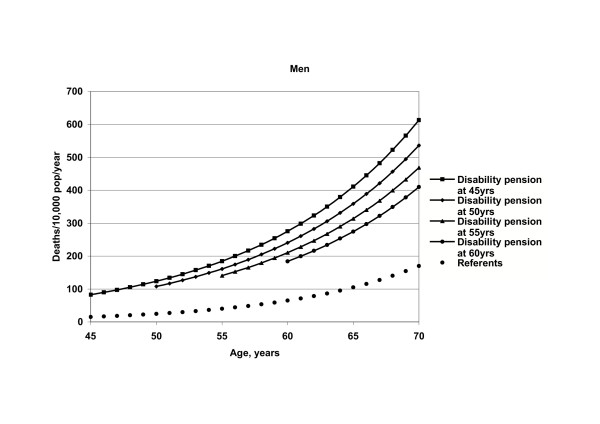
Results: 1,683 (24.4%) subjects had a disability pension at baseline or received one during follow up. 525 (7.6%) subjects died during follow up. The subjects on disability pension had a higher mortality rate than the non-retired, the hazards ratio (HR) being 2.78 (95%CI 2.08-3.71) among women and 3.43 (95%CI 2.61-4.51) among men. HR was highest among individuals granted a disability pension at young ages (HR >7), and declined parallel to age at which the disability pension was granted. The higher mortality rate among the retired subjects was not explained by disability pension cause or underlying disease or differences in age, marital status, educational level, smoking habits or drug abuse. There was no significant association between reason for disability pension and cause of death.
Conclusion: Subjects with a disability pension had increased mortality rates as compared with non-retired subjects, only modestly affected by adjustments for psycho-socio-economic factors, underlying disease, etcetera. It is unlikely that these factors were the causes of the unfavorable outcome. Other factors must be at work.
Figures
References
-
- Kramer C, Gammerler-Shulte H. Psychosocial predictors for initiating a pension procedure after bypass operation. Rehabilitation. 1998;37:21–27. - PubMed
-
- Wallman T, Burell G, Kullman S, Svärdsudd K. Health care utilisation before and after retirement due to illness. A 13-year population-based follow-up study of prematurely retired men and referents from the general population. Scand J Prim Health Care. 2004;22:95–100. doi: 10.1080/02813430410005126. - DOI - PubMed
-
- Edén L, Ejlertsson G, Leden I. Health and health care utilization among early retirement pensioners with musculoskeletal disorders. Scand J Prim Health Care. 1995;13:211–216. - PubMed
-
- Olsen J, Jeune B. The mortality experience of early old-age and disability pensioners from unskilled- and semiskilled labour groups in Fredericia. Scand J Soc Med Suppl. 1980;16:50–52. - PubMed
Publication types
MeSH terms
LinkOut - more resources
Full Text Sources
Other Literature Sources
Medical
