Inhibition of stimulated meningeal blood flow by a calcitonin gene-related peptide binding mirror-image RNA oligonucleotide
- PMID: 16633354
- PMCID: PMC1751788
- DOI: 10.1038/sj.bjp.0706742
Inhibition of stimulated meningeal blood flow by a calcitonin gene-related peptide binding mirror-image RNA oligonucleotide
Abstract
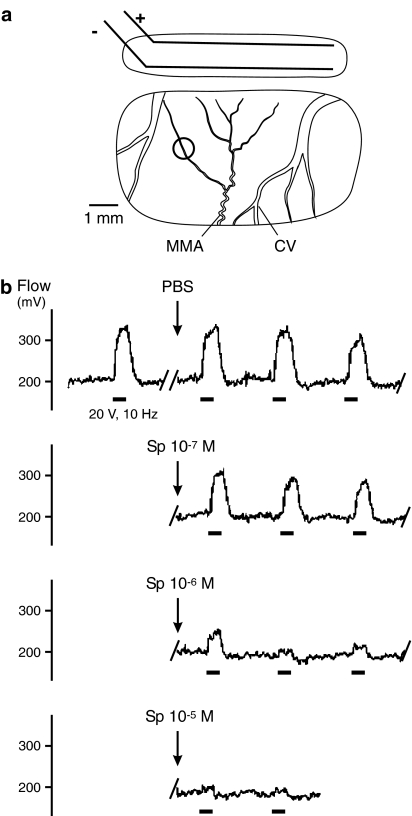
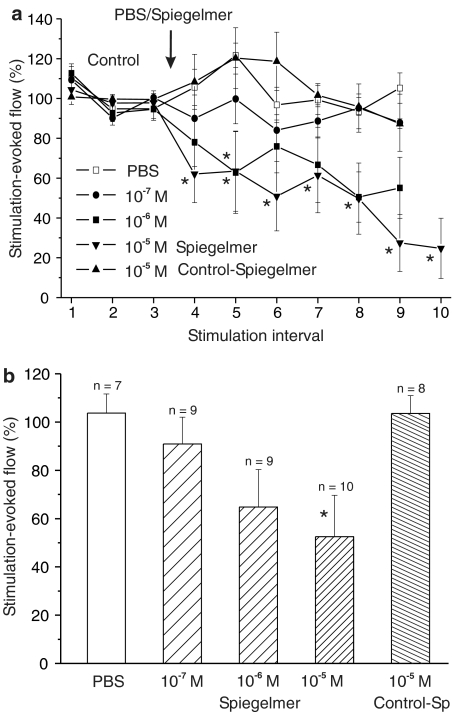
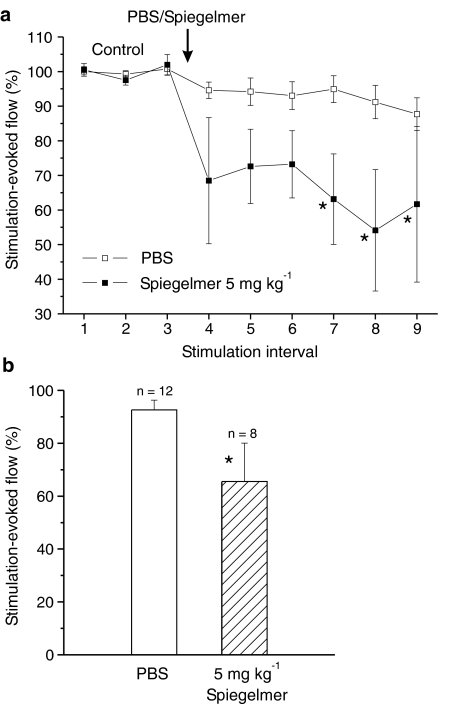
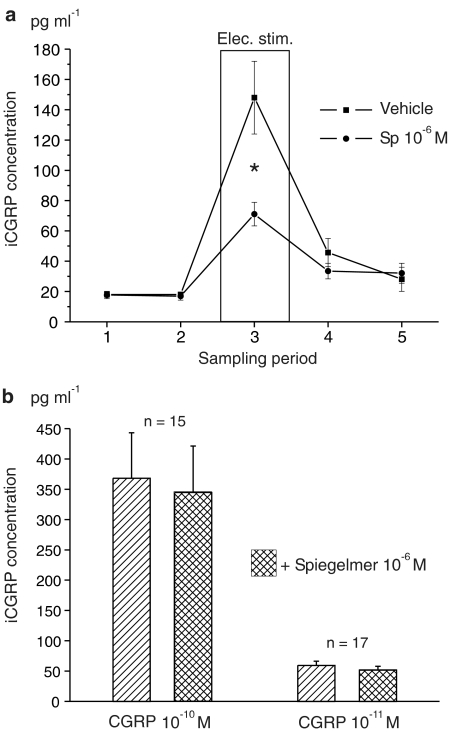
Calcitonin gene-related peptide (CGRP) released from trigeminal afferents is known to play an important role in the control of intracranial blood flow. In a rat preparation with exposed cranial dura mater, periods of electrical stimulation induce increases in meningeal blood flow. These responses are due to arterial vasodilatation mediated in part by the release of CGRP. In this preparation, the effect of a CGRP-binding mirror-image oligonucleotide (Spiegelmer NOX-C89) was examined. Spiegelmer NOX-C89 applied topically at concentrations between 10(-7) and 10(-5) M to the exposed dura mater led to a dose-dependent inhibition of the electrically evoked blood flow increases. The highest dose reduced the mean increases in flow to 56% of the respective control levels. A nonfunctional control Spiegelmer (not binding to CGRP) was ineffective in changing blood flow increases. Intravenous injection of NOX-C89 (5 mg kg(-1)) reduced the evoked blood flow increases to an average of 65.5% of the control. The basal blood flow was not changed by any of the applied substances. In addition, an ex vivo preparation of the hemisected rat skull was used to determine CGRP release from the cranial dura mater caused by antidromic activation of meningeal afferents. In this model, 10(-6) M of NOX-C89 reduced the evoked CGRP release by about 50%. We conclude that increases in meningeal blood flow due to afferent activation can be reduced by sequestering the released CGRP and thus preventing it from activating vascular CGRP receptors. Moreover, the Spiegelmer NOX-C89 may inhibit CGRP release from meningeal afferents. Therefore, the approach to interfere with the CGRP/CGRP receptor system by binding the CGRP may open a new opportunity for the therapy of diseases that are linked to excessive CGRP release such as some forms of primary headaches.
Figures
References
-
- AVERBECK B., REEH P.W. Interactions of inflammatory mediators stimulating release of calcitonin gene-related peptide, substance P and prostaglandin E2 from isolated rat skin. Neuropharmacology. 2001;40:416–423. - PubMed
-
- BUZZI M.G., MOSKOWITZ M.A. The trigemino-vascular system and migraine. Pathol. Biol. (Paris) 1992;40:313–317. - PubMed
-
- EBERSBERGER A., AVERBECK B., MESSLINGER K., REEH P.W. Release of substance P, calcitonin gene-related peptide and prostaglandin E2 from rat dura mater encephali following electrical and chemical stimulation in vitro. Neuroscience. 1999;89:901–907. - PubMed
-
- EDVINSSON L., EKMAN R., JANSEN I., MCCULLOCH J., UDDMAN R. Calcitonin gene-related peptide and cerebral blood vessels: distribution and vasomotor effects. J. Cereb. Blood Flow Metab. 1987;7:720–728. - PubMed
-
- EDVINSSON L., GOADSBY P.J. Neuropeptides in migraine and cluster headache. Cephalalgia. 1994;14:320–327. - PubMed
Publication types
MeSH terms
Substances
LinkOut - more resources
Full Text Sources
Other Literature Sources
Research Materials