


Does literacy mediate the relationship between education and health outcomes? A study of a low-income population with diabetes
- PMID: 16640146
- PMCID: PMC1525295
- DOI: 10.1177/003335490612100305
Does literacy mediate the relationship between education and health outcomes? A study of a low-income population with diabetes
Abstract
Objectives: We sought to determine whether literacy mediates the relationship between education and glycemic control among diabetes patients.
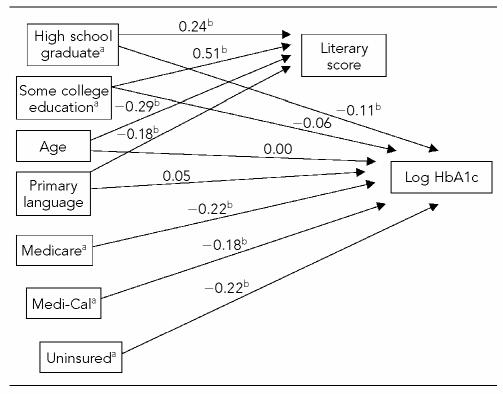
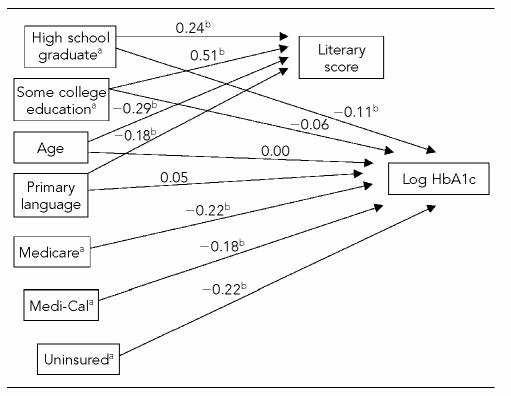
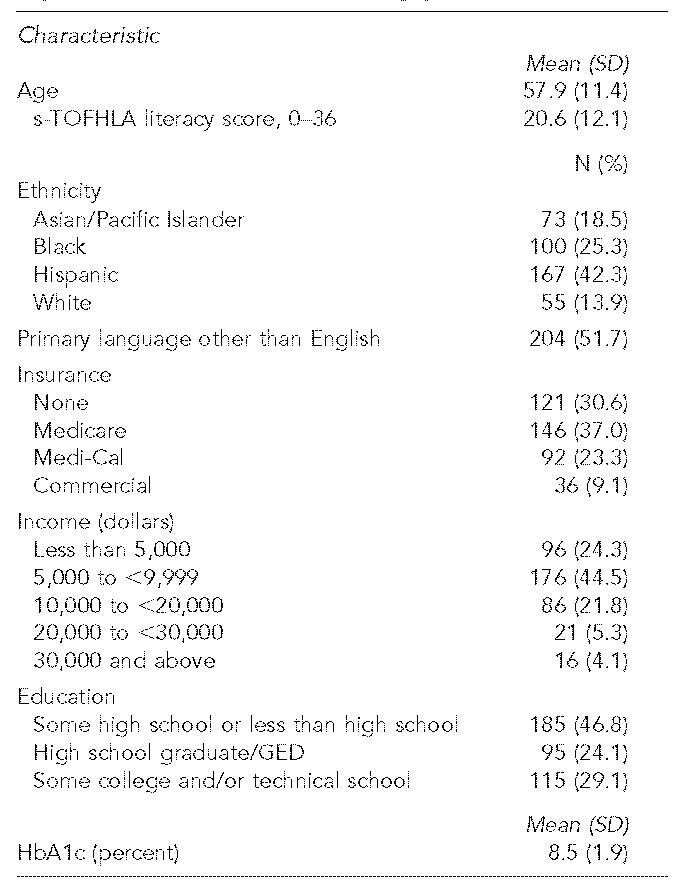
Methods: We measured educational attainment, literacy using the Short Test of Functional Health Literacy in Adults (s-TOFHLA), and glycemic control (HbA1c) in 395 diabetes patients at a U.S. public hospital. We performed path analysis to compare two competing models to explain glycemic control. The direct effects model estimated how education was related to HbA1c; the mediational model estimated the strength of the direct relationship when the additional pathway from education to literacy to HbA1c was added.
Results: Both the model with a direct effect of education on HbA1c and the model with literacy as a mediator were supported by good fit to observed data. The mediational model, however, was a significant improvement, with the additional path from literacy to HbA1c reducing the discrepancy from observed data (p < 0.01). After including this path, the direct relationship between education and HbA1c fell to a non-significant threshold.
Conclusions: In a low-income population with diabetes, literacy mediated the relationship between education and glycemic control. This finding has important implications for both education and health policy.
Figures
References
-
- Backlund E, Sorlie PD, Johnson NJ. A comparison of the relationships of education and income with mortality: the National Longitudinal Mortality Study. Soc Sci Med. 1999;49:1373–84. - PubMed
-
- Adler NE, Newman K. Socioeconomic disparities in health: pathways and policies. Health Aff (Millwood) 2002;21:60–76. - PubMed
-
- Marmot M. The influence of income on health: views of an epidemiologist. Health Aff (Millwood) 2002;21:31–46. - PubMed
Publication types
MeSH terms
Grants and funding
LinkOut - more resources
Full Text Sources
Medical
