


Evaluation of death certificate-based surveillance for traumatic brain injury--Oklahoma 2002
- PMID: 16640151
- PMCID: PMC1525278
- DOI: 10.1177/003335490612100310
Evaluation of death certificate-based surveillance for traumatic brain injury--Oklahoma 2002
Abstract
Objectives: Death certificate data are used to estimate state and national incidence of traumatic brain injury (TBI)-related deaths. This study evaluated the accuracy of this estimate in Oklahoma and examined the case characteristics of those persons who experienced a TBI-related death but whose death certificate did not reflect a TBI.
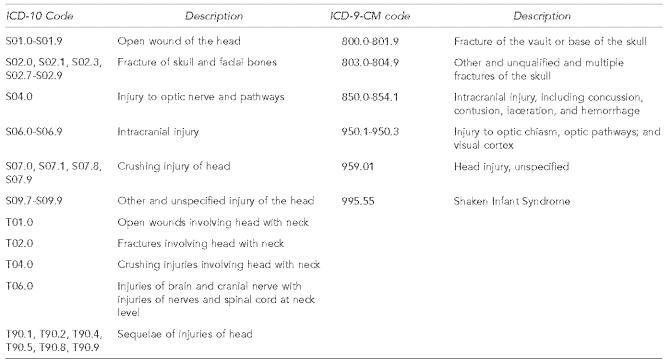
Methods: Data from Oklahoma's vital statistics multiple-cause-of-death database and from the Oklahoma Injury Surveillance System database were analyzed for TBI deaths that occurred during 2002. Cases were defined using the Centers for Disease Control and Prevention (CDC) ICD-10 code case definition. In multivariate analysis using a logistic regression model, we examined the association of case characteristics and the absence of a death certificate for persons who experienced a TBI-related death.
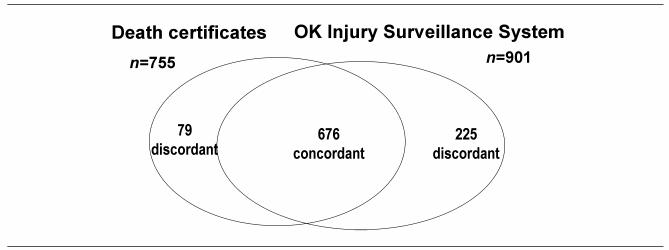
Results: Overall, sensitivity of death certificate-based surveillance was 78%. The majority (62%) of missed cases were due to listing "multiple trauma" as the cause of death. Death certificate surveillance was more likely to miss TBI-related deaths among traffic crashes, falls, and persons aged > or = 65 years. After adding missed cases to cases captured by death certificate surveillance, traffic crashes surpassed firearm fatalities as the leading external cause of TBI-related death.
Conclusions: Death certificate surveillance underestimated TBI-related death in Oklahoma and might lead to national underreporting. More accurate and detailed completion of death certificates would result in better estimates of the burden of TBI-related death. Educational efforts to improve death certificate completion could substantially increase the accuracy of mortality statistics.
Figures
References
-
- Adekoya N, Thurman DJ, White DD, Webb KW. Surveillance for traumatic brain injury deaths—United States, 1989–1998. MMWR Surveill Summ. 2002;51(10):1–14. - PubMed
-
- Archer P, Mallonee S, Lantis S. Horseback-riding-associated traumatic brain injuries—Oklahoma, 1992–1994. MMWR Morb Mortal Wkly Rep. 1996;45(10):209–11. - PubMed
-
- Gabella B, Hoffman R, Land G, Mallonne S, Archer P, Crutcher M, et al. Traumatic brain injury—Colorado, Missouri, Oklahoma, and Utah, 1990-1993. MMWR Morb Mortal Wkly Rep. 1997;46(1):8–11. - PubMed
-
- Adekoya N, Wallace LJD. Traumatic brain injury among American Indians/Alaska Natives—United States, 1992–1996. MMWR Morb Mortal Wkly Rep. 2002;51(14):303–5. - PubMed
-
- Cross J, Trent R, Adekoya N. Public health and aging: nonfatal fall-related traumatic brain injury among older adults—California, 1996–1999. MMWR Morb Mortal Wkly Rep. 2003;52(13):276–8. - PubMed
Publication types
MeSH terms
Grants and funding
LinkOut - more resources
Full Text Sources
