


Cell-free and cell-bound circulating DNA in breast tumours: DNA quantification and analysis of tumour-related gene methylation
- PMID: 16641902
- PMCID: PMC2361269
- DOI: 10.1038/sj.bjc.6603117
Cell-free and cell-bound circulating DNA in breast tumours: DNA quantification and analysis of tumour-related gene methylation
Abstract
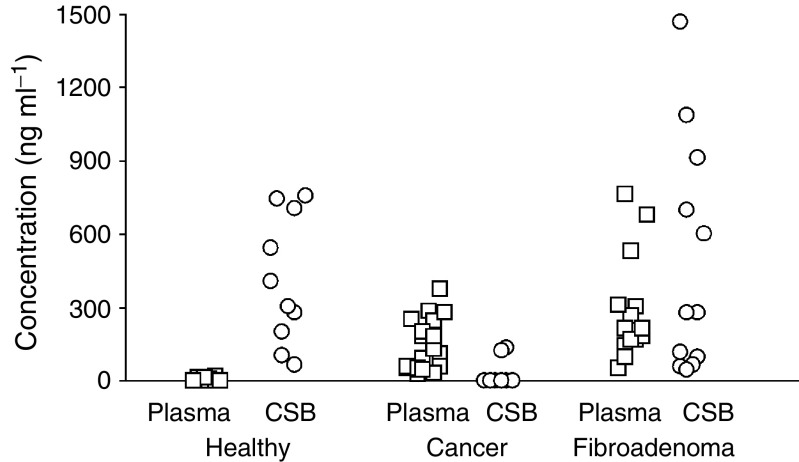
Tumour development is characterised by the increased circulating DNA (cirDNA) concentration and by tumour-related changes in blood plasma DNA. Concentration of cirDNA and methylation of RARbeta2, RASSF1A and HIC-1 gene promoters were investigated in cell-free and cell-surface-bound fractions from healthy donors, patients with breast cancer, and patients with breast fibroadenoma. Tumour development was shown to lead to significant changes in the distribution of cirDNA between cell-free and cell-surface-bound fractions. Analysis of RARbeta2 and RASSF1A methylation in the total cirDNA provides 95% diagnostic coverage in breast cancer patients, 60% in patients with benign lesions, and is without false-positive results in healthy women. Results of the study indicate that methylation-specific PCR of RARbeta2 and RASSF1A genes based on the total cirDNA combined with the quantitative analysis of cirDNA distribution between cell-bound and cell-free fractions in blood provide the sensitive and accurate detection and discrimination of malignant and benign breast tumours.
Figures
References
-
- Anker P (2000) Quantitative aspects of plasma/serum DNA in cancer patients. Ann NY Acad Sci 906: 5–7 - PubMed
-
- Anker P, Mulcahy H, Stroun M (2003) Circulating nucleic acids in plasma and serum as a noninvasive investigation for cancer: time for large-scale clinical studies? Int J Cancer 103: 149–152 - PubMed
-
- Beliaev ND, Budker VG, Gorokhova OE, Sokolov AV (1988) Mg2+-dependent interaction of DNA with eukaryotic cells. Mol Biol (Moskovskogo) 22: 1667–1672 - PubMed
-
- Egger G, Liang G, Aparicio A, Jones PA (2004) Epigenetics in human disease and prospects for epigenetic therapy. Nature 429: 457–463 - PubMed
MeSH terms
Substances
LinkOut - more resources
Full Text Sources
Other Literature Sources
Medical
