


Influence of the blood bacterial load on the meningeal inflammatory response in Streptococcus pneumoniae meningitis
- PMID: 16643642
- PMCID: PMC1475592
- DOI: 10.1186/1471-2334-6-78
Influence of the blood bacterial load on the meningeal inflammatory response in Streptococcus pneumoniae meningitis
Abstract
Background: Despite bacteraemia is present in the majority of patients with pneumococcal, little is known about the influence of the systemic infection on the meningeal inflammatory response.
Methods: To explore the role of systemic infection on the meningeal inflammation, experimental meningitis was induced by intracisternal injection of approximately 1 x 10(6) CFU Streptococcus pneumoniae, type 3, and the 26 rabbits were either provided with approximately 1 x 10(6) CFU S. pneumoniae intravenously at 0 hour ("bacteraemic" rabbits, n = 9), immunized with paraformaldehyde-killed S. pneumoniae for 5 weeks prior to the experiment ("immunized" rabbits", n = 8), or not treated further ("control" rabbits, n = 9). WBC and bacterial concentrations were determined in CSF and blood every second hour during a 16 hours study period together with CSF IL-8 and protein levels. We also studied CSF and blood WBC levels in 153 pneumococcal meningitis patients with and without presence of bacteraemia.
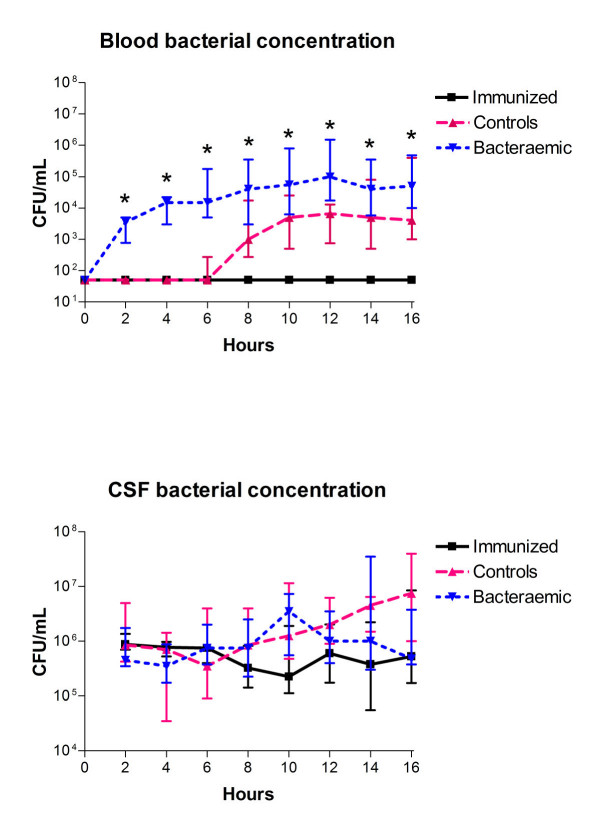
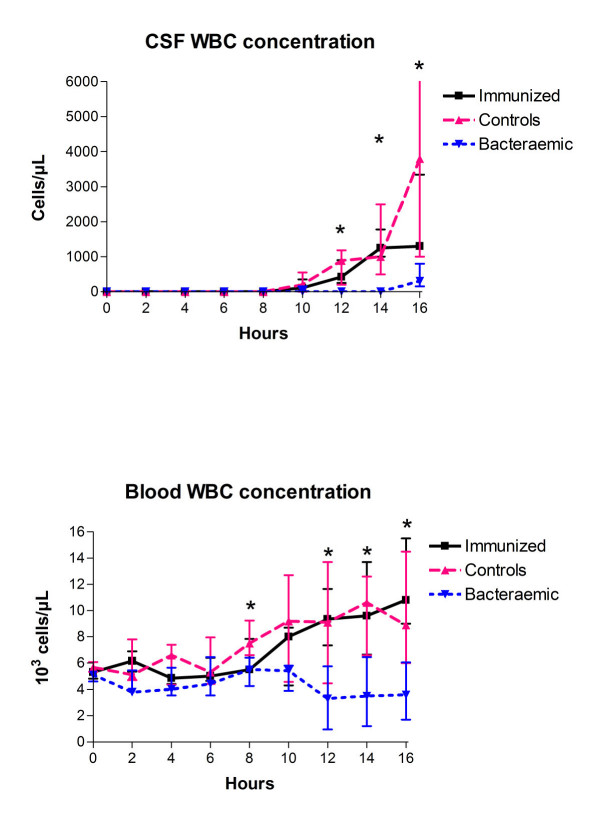
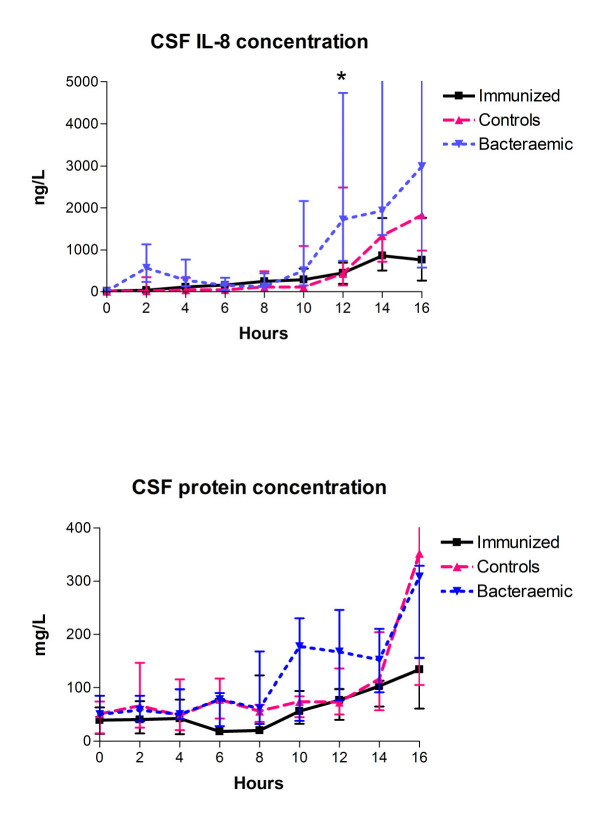
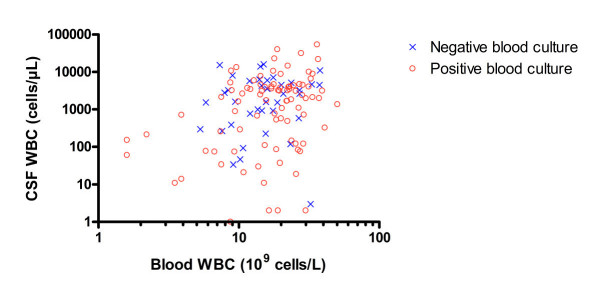
Results: As designed, blood bacterial concentrations were significantly different among three experimental groups during the 16 hours study period (Kruskal Wallis test, P < 0.05), whereas no differences in CSF bacterial levels were observed (P > 0.05). Blood WBC decreased in bacteraemic rabbits between approximately 10-16 hours after the bacterial inoculation in contrast to an increase for both the immunized rabbits and controls (P < 0.05). The CSF pleocytosis was attenuated in bacteraemic rabbits as compared to the two other groups between 12-16 hours from time of infection (P < 0.017), despite accelerated CSF IL-8 levels in bacteraemic rabbits. In patients with pneumococcal meningitis, no significant difference in CSF WBC was observed between patients with or without bacteraemia at admission (n = 103, 1740 cells/microL (123-4032) vs. n = 50, 1961 cells/microL (673-5182), respectively, P = 0.18), but there was a significant correlation between CSF and blood WBC (n = 127, Spearman rho = 0.234, P = 0.008).
Conclusion: Our results suggest that a decrease in peripheral WBC induced by enhanced bacteraemia in pneumococcal meningitis results in an attenuated CSF pleocytosis.
Figures
References
-
- Meli DN, Christen S, Leib SL, Tauber MG. Current concepts in the pathogenesis of meningitis caused by Streptococcus pneumoniae. Curr Opin Infect Dis. 2002;15:253–7. - PubMed
-
- Brandt CT, Lundgren JD, Frimodt-Moller N, Christensen T, Benfield T, Espersen F, Hougaard DM, ∅stergaard C. Blocking of leukocyte accumulation in the cerebrospinal fluid augments bacteremia and increases lethality in experimental pneumococcal meningitis. J Neuroimmunol. 2005;166:126–31. doi: 10.1016/j.jneuroim.2005.05.014. - DOI - PubMed
Publication types
MeSH terms
Substances
LinkOut - more resources
Full Text Sources
Research Materials
