


AMP-activated protein kinase--development of the energy sensor concept
- PMID: 16644800
- PMCID: PMC1817788
- DOI: 10.1113/jphysiol.2006.108944
AMP-activated protein kinase--development of the energy sensor concept
Abstract
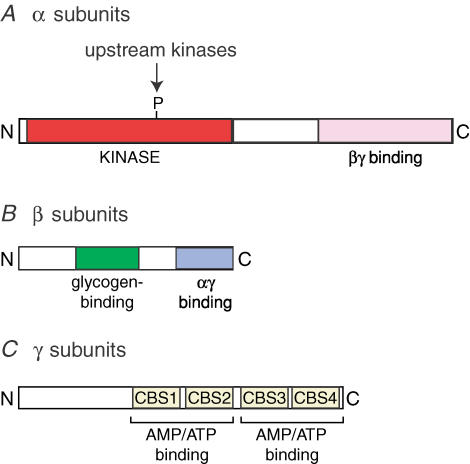
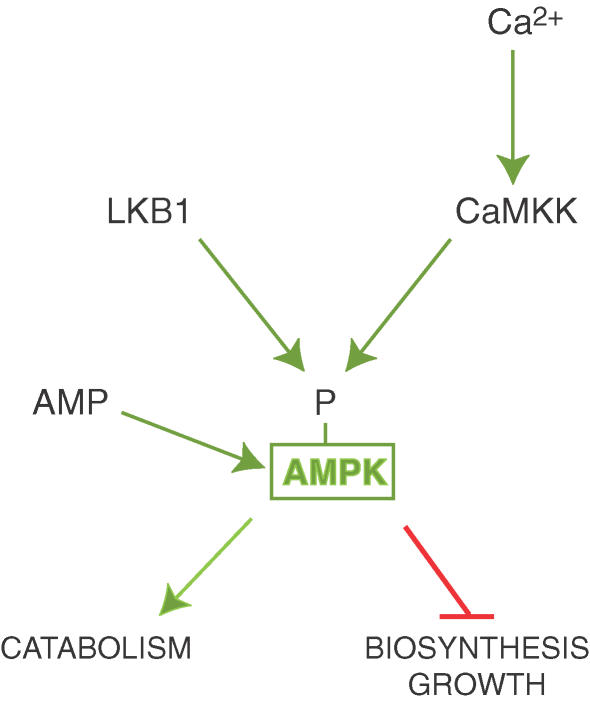
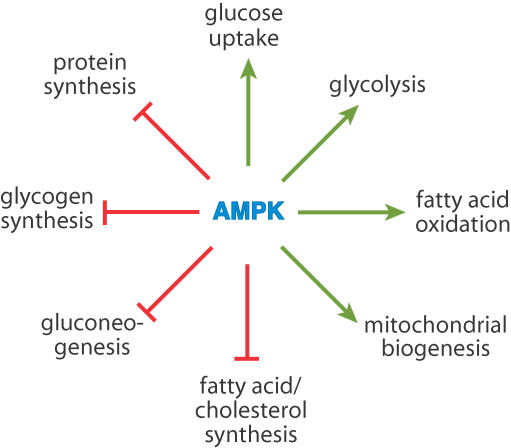
The LKB1-->AMPK cascade is switched on by metabolic stresses that either inhibit ATP production (e.g. hypoxia, hypoglycaemia) or that accelerate ATP consumption (e.g. muscle contraction). Any decline in cellular energy status is accompanied by a rise in the cellular AMP: ATP ratio, and this activates AMPK by a complex and sensitive mechanism involving antagonistic binding of the nucleotides to two sites on the regulatory gamma subunits of AMPK. Once activated by metabolic stress, AMPK activates catabolic pathways that generate ATP, while inhibiting cell growth and biosynthesis and other processes that consume ATP. While the AMPK system probably evolved in single-celled eukaryotes to maintain energy balance at the cellular level, in multicellular organisms its role has become adapted so that it is also involved in maintaining whole body energy balance. Thus, it is regulated by hormones and cytokines, especially the adipokines leptin and adiponectin, increasing whole body energy expenditure while regulating food intake. Some hormones may activate AMPK by an LKB1-independent mechanism involving Ca2+/calmodulin dependent protein kinase kinases. Low levels of activation of AMPK are likely to play a role in the current global rise in obesity and Type 2 diabetes, and AMPK is the target for the widely used antidiabetic drug metformin.
Figures
References
-
- Anderson KA, Means RL, Huang QH, Kemp BE, Goldstein EG, Selbert MA, Edelman AM, Fremeau RT, Means AR. Components of a calmodulin-dependent protein kinase cascade. Molecular cloning, functional characterization and cellular localization of Ca2+/calmodulin-dependent protein kinase kinase β. J Biol Chem. 1998;273:31880–31889. - PubMed
-
- Andersson U, Filipsson K, Abbott CR, Woods A, Smith K, Bloom SR, Carling D, Small CJ. AMP-activated protein kinase plays a role in the control of food intake. J Biol Chem. 2004;279:12005–12008. - PubMed
-
- Barnes K, Ingram JC, Porras OH, Barros LF, Hudson ER, Fryer LG, Foufelle F, Carling D, Hardie DG, Baldwin SA. Activation of GLUT1 by metabolic and osmotic stress: potential involvement of AMP-activated protein kinase (AMPK) J Cell Sci. 2002;115:2433–2442. - PubMed
-
- Bateman A. The structure of a domain common to archaebacteria and the homocystinuria disease protein. Trends Biochem Sci. 1997;22:12–13. - PubMed
Publication types
MeSH terms
Substances
Grants and funding
LinkOut - more resources
Full Text Sources
Other Literature Sources
Medical
Miscellaneous
