


The relationship of rhinovirus-associated asthma hospitalizations with inhaled corticosteroids and smoking
- PMID: 16652282
- PMCID: PMC7109695
- DOI: 10.1086/503809
The relationship of rhinovirus-associated asthma hospitalizations with inhaled corticosteroids and smoking
Abstract
Background: Although rhinovirus (RV) respiratory infections trigger asthma exacerbations, the etiologic association between this virus and severe exacerbations, as well as the clinical characteristics of adults at risk for RV-associated asthma that necessitates hospitalization, have not been established.
Methods: During 1999-2003, we conducted a cohort study of 101 adults prospectively enrolled at hospital admission for an asthma exacerbation. Patient characteristics and frequencies of RV in nasal specimens were analyzed, by reverse-transcription polymerase chain reaction (RT-PCR), at asthma-related hospital admission and at a 3-month convalescent follow-up visit.
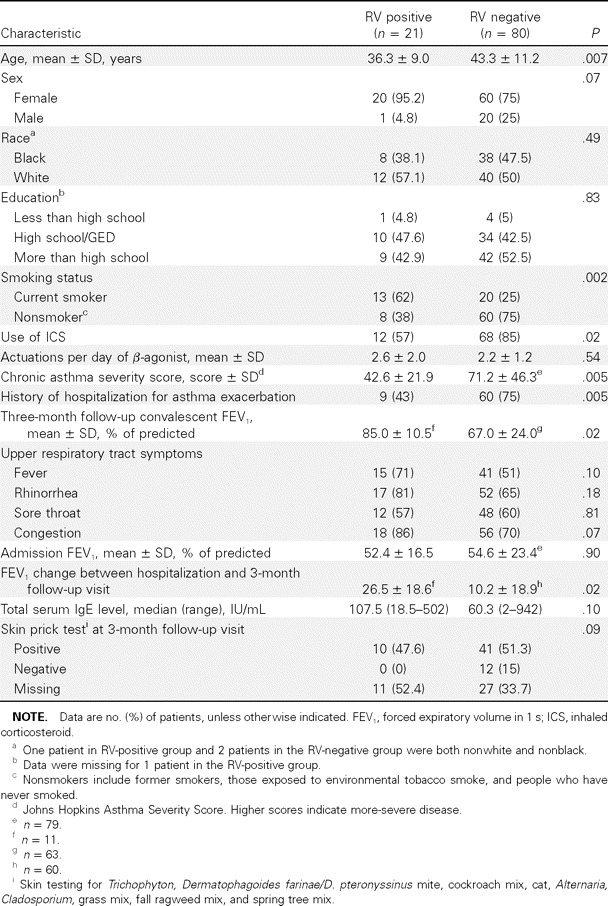
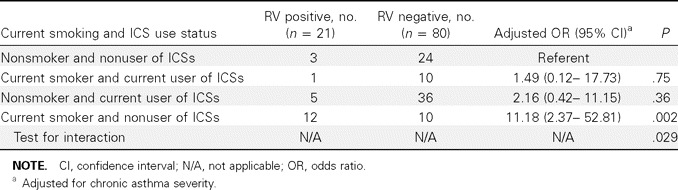
Results: RV was detected by RT-PCR in 21% of hospitalized patients over a 4-year period and in 1.3% of patients who returned for a 3-month follow-up visit. RV detection was strongly associated with hospitalization for asthma (adjusted odds ratio [OR], 15.1 [95% confidence interval {CI}, 1.88-121.4]). After adjustment for baseline asthma severity, RV-positive patients were more likely than RV-negative patients to be current smokers and nonusers of inhaled corticosteroids (ICSs) (adjusted OR, 11.18 [95% CI, 2.37-52.81]; P=.002).
Conclusions: RV respiratory infection is an etiologic agent in severe asthma exacerbations necessitating hospitalization in adults. Compared with hospitalized patients with asthma who were RV negative, RV-positive patients were significantly more likely to be smokers and nonusers of ICSs.
Figures
References
-
- Minor TE, Dick EC, DeMeo AN, Ouellette JJ, Cohen M. Viruses as precipitants of asthmatic attacks in children. JAMA. 1974;227:292–8. - PubMed
-
- Duff AL, Pomeranz ES, Gelber LE, et al. Risk factors for acute wheezing in infants and children: viruses, passive smoke, and IgE antibodies to inhalant allergens. Pediatrics. 1993;92:535–40. - PubMed
Publication types
MeSH terms
Substances
Grants and funding
LinkOut - more resources
Full Text Sources
Other Literature Sources
Medical
