. 2006 May;116(5):1425-34.
doi: 10.1172/JCI25982.

Mannan-binding lectin activates C3 and the alternative complement pathway without involvement of C2

Affiliations

Mannan-binding lectin activates C3 and the alternative complement pathway without involvement of C2

Barbro Selander et al. J Clin Invest. 2006 May.

Abstract

Lectin pathway activation of C3 is known to involve target recognition by mannan-binding lectin (MBL) or ficolins and generation of classical pathway C3 convertase via cleavage of C4 and C2 by MBL-associated serine protease 2 (MASP-2). We investigated C3 activation in C2-deficient human sera and in sera with other defined defects of complement to assess other mechanisms through which MBL might recruit complement. The capacity of serum to support C3 deposition was examined by ELISA using microtiter plates coated with O antigen-specific oligosaccharides derived from Salmonella typhimurium, S. thompson, and S. enteritidis corresponding to serogroups B, C, and D (BO, CO, and DO). MBL bound to CO, but not to BO and DO, and efficiently supported C3 deposition in the absence of C2, C4, or MASP-2. The existence of an MBL-dependent C2 bypass mechanism for alternative pathway-mediated C3 activation was clearly demonstrated using CO, solid-phase mannan, and E. coli LPS. MASP-1 might contribute, but was not required for C3 deposition in the model used. Independent of MBL, specific antibodies to CO supported C3 deposition through classical and alternative pathways. MBL-dependent C2 bypass activation could be particularly important in various inherited and acquired complement deficiency states.


Figures
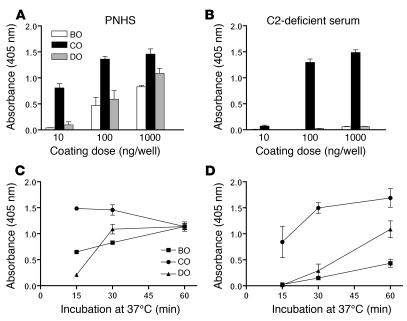
Figure 1
Figure 1. C3 deposition onto wells coated with O antigen–specific BO, CO, and DO following incubation in PNHS or C2-deficient serum.
(A and B) Influence of the oligosaccharide coating dose. Serum (12.5 μl) in VBS (37.5 μl) was added to duplicate microtiter plate wells coated with 10, 100, or 1,000 ng of each oligosaccharide and to a control well. All wells were blocked with buffer containing gelatine. Plates were then incubated at 37°C for 30 minutes. (C and D) Kinetics of C3 deposition in wells coated with oligosaccharide at 1,000 ng/well. C3 deposition was detected with alkaline phosphatase–conjugated rabbit anti-C3c antibodies. Absorbance values were corrected for background. Each panel shows the mean and SEM for 3 separate experiments. Sera from 3 C2-deficient patients were used in the kinetic experiments.
Figure 2
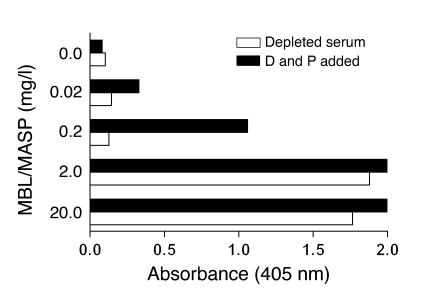
Figure 2. C3 deposition induced by CO antigen (1,000 ng/well) in an MBL-deficient serum that was depleted of C1qDP and Igs.
The serum was used at a final concentration of 20% and was studied with or without reconstitution of the alternative pathway. Reconstitution of undiluted serum with C1q (70 mg/l, not shown) or D (1 mg/l) together with P (25 mg/l) did not promote C3 deposition, showing that the CO antigen did not activate complement in the absence of recognition proteins. Addition of MBL/MASP complexes promoted C3 deposition in a dose-dependent manner; alternative pathway-mediated amplification was evident at moderately low MBL/MASP concentrations but was not required at high MBL/MASP concentrations. C3 deposition was measured after 60 minutes at 37°C. The experiment was performed in duplicate and was repeated once with similar results.
Figure 3
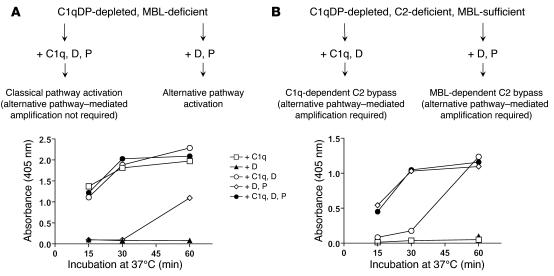
Figure 3. Complement requirements for C3 deposition induced by CO antigen (1,000 ng/well).
Analysis of MBL-deficient serum (A) and C2-deficient, MBL-sufficient serum (B). The sera were C1qDP depleted and reconstituted with C1q (70 mg/l), D (1 mg/l), and P (25 mg/l) added alone or in combinations. Sera were used at a final concentration of 25%. Interpretations are shown at top. Each experiment was performed in duplicate and was repeated once with similar results.
Figure 4
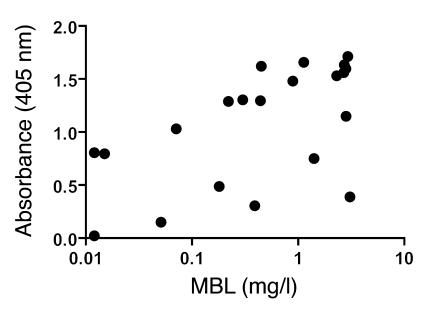
Figure 4. Relationship between MBL concentration and the capacity to support C3 deposition induced by CO antigen (1,000 ng/well) in C2-deficient sera (n = 21).
Sera were used at a final concentration of 25% with incubation at 37°C for 30 minutes. The correlation was significant (P < 0.05, r = 0.49, Spearman rank correlation).
Figure 5
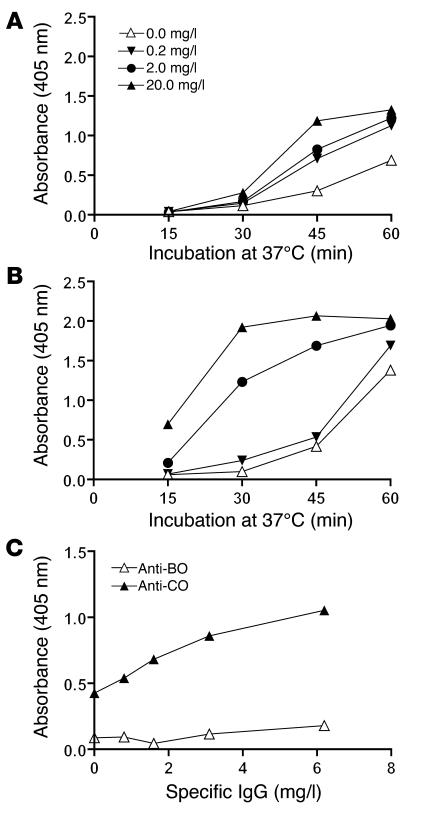
Figure 5. Dose-dependent enhancement of C3 deposition by purified MBL (A ), purified MBL/MASP complexes (B ), and specific anti-CO IgG antibodies (C ) in C2D:21 serum (combined C2 and MBL deficiency).
The serum was used at a final concentration of 25%. Shown are experiments in which CO-coated wells (1,000 ng/well) were presensitized with MBL in VBS before addition of serum (A) and in which MBL/MASP complexes were added directly to the serum (B) applied to the CO-coated wells. In experiments with specific antibodies (C), wells coated with BO or CO antigen were presensitized in VBS-EDTA with polyclonal IgG (Endobulin) containing defined amounts of the specific antibodies. After washing, incubation of the bound specific antibodies with the C2-deficient serum was carried out at 37°C for 30 minutes. Each experiment was performed in duplicate and was repeated once with similar results.
Figure 6
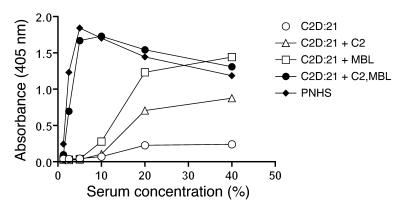
Figure 6. Effect of serum dilution on C3 deposition induced by CO antigen (1,000 ng/well) in C2D:21 serum (combined C2 and MBL deficiency).
The serum was reconstituted with MBL (2 mg/l) and C2 (6.5 mg/l) as indicated. PNHS was used as a control. MBL-dependent C2 bypass activation was abolished in 5–10% serum. By contrast, these serum concentrations appeared to be optimal for lectin pathway activation mediated through C4b2a. C3 incubations with serum were carried out at 37°C for 30 minutes. The experiment was performed in duplicate and was repeated once with similar results.
Figure 7
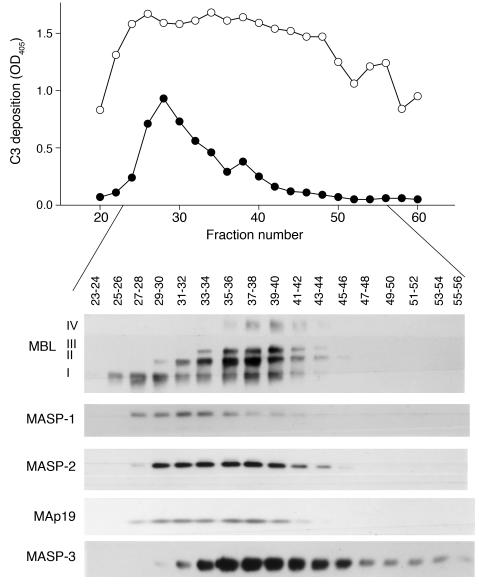
Figure 7. Influence of fractionated MBL/MASP complexes on C3 deposition induced by CO antigen in the serum of C2D:21.
Purified MBL/MASP complexes were separated according to charge and size on a Mono Q column. Elution patterns are shown by Western blot analysis of samples of the fractions as indicated above the blot (2 fractions were combined for application to each slot of the gel). The blot illustrates the differential elution of the MBL oligomers and the elution of the associated MASPs and MAp19. The different MBL oligomers are given as I–IV in order of increasing size (6). The analysis was performed with (open circles) and without (filled circles) reconstitution of the serum with purified C2 (6.5 mg/l). The experiment was repeated once with similar results.
Figure 8
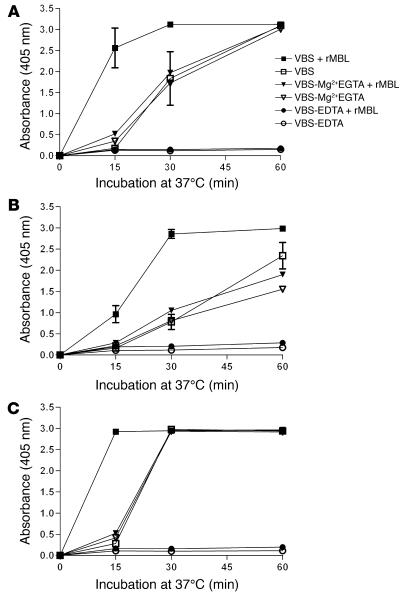
Figure 8. MBL-dependent C2 bypass activation by solid-phase mannan (A) and mannan-rich E. coli O8 LPS (B).
The LPS was also used after partial delipidation (C). The LPS coating dose was 0.01 mg/well. rMBL at 4 mg/l was added to C2D:21 serum (combined C2 and MBL deficiency). The experiments were performed using 25% serum in VBS, VBS-Mg2+EGTA, and VBS-EDTA (see Methods). Mean values of at least 3 experiments are shown together with SEM for experiments with VBS.

Comment in

  • J Clin Invest. 116:1215.

References

    1. Turner M.W., Hamvas R.M. Mannose-binding lectin: structure, function, genetics and disease associations. Rev. Immunogenet. . 2000;39:305–322. - PubMed
    1. Hoffmann J.A., Kafator F.C., Janeway C.A., Ezekowitz R. A.B. Phylogenetic perspectives in innate immunity. Science. 1999;284:1313–1318. - PubMed
    1. Holmskov U., Thiel S., Jensenius J.C. Collectins and ficolins: humoral lectins of the innate immune defense. Annu. Rev. Immunol. 2003;21:547–578. - PubMed
    1. Matsushita M., Fujita T. Activation of the classical complement pathway by mannose-binding protein in association with a novel C1s-like serine protease. J. Exp. Med. . 1992;176:1497–1502. - PMC - PubMed
    1. Thiel S., et al. A second serine protease associated with mannan-binding lectin that activates complement. Nature. . 1997;386:506–510. - PubMed

Publication types

MeSH terms