


Modeling shifts in microbial populations associated with health or disease
- PMID: 16672517
- PMCID: PMC1472368
- DOI: 10.1128/AEM.72.5.3678-3684.2006
Modeling shifts in microbial populations associated with health or disease
Abstract
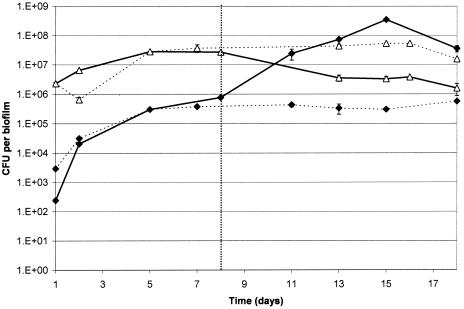
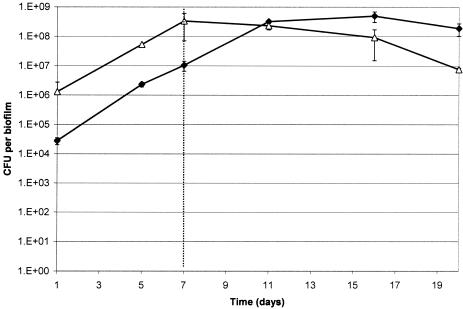
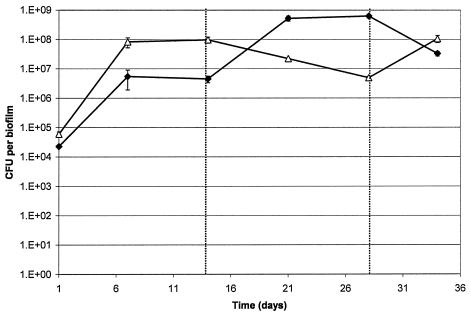
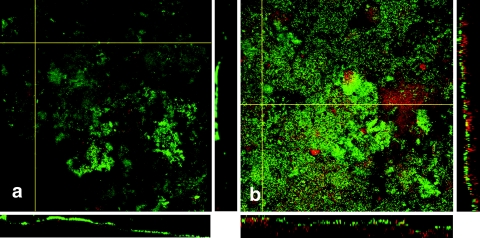
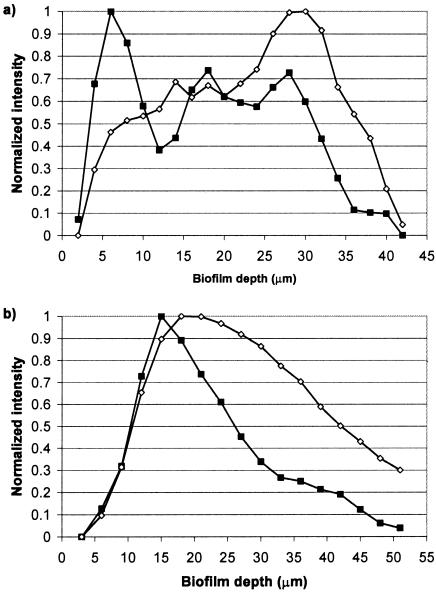
Stable microbial communities associated with health can be disrupted by altered environmental conditions. Periodontal diseases are associated with changes in the resident oral microflora. For example, as gingivitis develops, a key change in the microbial composition of dental plaque is the ascendancy of Actinomyces spp. and gram-negative rods at the expense of Streptococcus spp. We describe the use of an in vitro model to replicate this population shift, first with a dual-species model (Actinomyces naeslundii and Streptococcus sobrinus) and then using a microcosm model of dental plaque. The population shift was induced by environmental changes associated with gingivitis, first by the addition of artificial gingival crevicular fluid and then by a switch to a microaerophilic atmosphere. In addition to the observed population shifts, confocal laser scanning microscopy also revealed structural changes and differences in the distribution of viable and nonviable bacteria associated with the change in environmental conditions. This model provides an appropriate system for the further understanding of microbial population shifts associated with gingivitis and for the testing of, for example, antimicrobial agents.
Figures
References
-
- Arweiler, N. B., E. Hellwig, A. Sculean, N. Hein, and T. M. Auschill. 2004. Individual vitality pattern of in situ dental biofilms at different locations in the oral cavity. Caries Res. 38:442-447. - PubMed
-
- Auschill, T. M., N. B. Arweiler, L. Netuschil, M. Brecx, E. Reich, and A. Sculean. 2001. Spatial distribution of vital and dead microorganisms in dental biofilms. Arch. Oral Biol. 46:471-476. - PubMed
-
- Bell, G., D. Emslie-Smith, and C. Patterson. 1980. Textbook of physiology. Churchill Livingstone, London, United Kingdom.
-
- Brown, L. J., and H. Loe. 1993. Prevalence, extent, severity and progression of periodontal disease. Periodontol. 2000 2:57-71. - PubMed
Publication types
MeSH terms
Substances
LinkOut - more resources
Full Text Sources
Molecular Biology Databases
Miscellaneous
