


Physical activity in individuals at risk for diabetes: Diabetes Prevention Program
- PMID: 16672833
- PMCID: PMC1570396
- DOI: 10.1249/01.mss.0000218138.91812.f9
Physical activity in individuals at risk for diabetes: Diabetes Prevention Program
Abstract
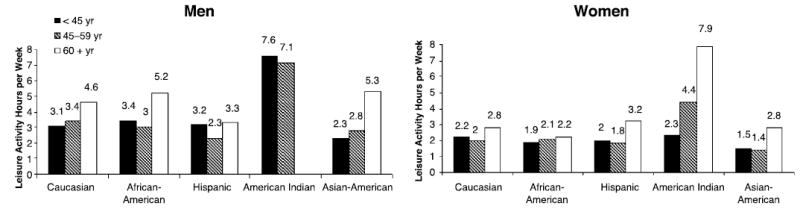
Purpose and methods: Leisure physical activity was assessed using questionnaires with different time frames in the Diabetes Prevention Program (DPP) cohort of 3234 overweight individuals aged > 25 yr with impaired glucose tolerance (IGT) from 27 centers across the United States. The three questionnaires were the Modifiable Activity Questionnaire (MAQ; past year), the Low-Level Physical Activity Recall (LOPAR; past 7 d), and the Third National Health and Nutrition Examination Survey (NHANES III; past month). This provided the opportunity to examine the relationship between the three activity measures and to compare activity levels of the DPP sample with that of a national sample with IGT.
Results: Leisure activity determined by the three questionnaires significantly correlated with each other, although the correlations between MAQ and NHANES III were stronger (men: rho = 0.52; women: rho = 0.49; P < 0.01) than between LOPAR and either measure (men: rho = 0.20 for MAQ, 0.24 for NHANES; women: rho = 0.10 for MAQ, 0.13 for NHANES). In the DPP, measures of obesity and glucose tolerance were significantly correlated with activity levels determined by MAQ and NHANES, but not LOPAR. Activity levels in DPP participants determined by the NHANES III questionnaire were generally higher than those reported by individuals meeting DPP eligibility criteria who were part of the NHANES cohort for similar age, body mass index, and race or ethnicity.
Conclusion: If the DPP participants were more active than a national sample of individuals with IGT, this would have implications for translation when using the DPP lifestyle intervention in less active or less motivated populations. Finally, the weak relationship between activity levels obtained with MAQ and LOPAR may result from the fact that they encompass different time frames and different components of leisure activity.
Figures
References
-
- Aaron D, Dearwater S, Anderson R, Olsen T, Kriska A, LaPorte R. Physical activity and the initiation of high-risk health behaviors in adolescents. Med Sci Sports Exerc. 1995;27:1639–1645. - PubMed
-
- Aaron DJ, Kriska AM, Dearwater SR, et al. The epidemiology of leisure physical activity in an adolescent population. Med Sci Sports Exerc. 1993;25:847–853. - PubMed
-
- Blair SN, Haskell WL, Paffenbarger RS, Jr, Vranizan KM, Farquhar JW, Wood PD. Assessment of habitual physical activity by a seven-day recall in a community survey and controlled experiments. Am J Epidemiol. 1985;122:794–804. - PubMed
-
- Brandenburg SL, Bauer TA, Reusch JEB, Hiatt WR, Regensteiner JG. Effects of exercise training on oxygen uptake kinetic responses in women with type 2 diabetes mellitus. Diabetes Care. 1999;221:640–646. - PubMed
Publication types
MeSH terms
Grants and funding
LinkOut - more resources
Full Text Sources
Medical
Miscellaneous
