


Comparative developmental neurotoxicity of organophosphate insecticides: effects on brain development are separable from systemic toxicity
- PMID: 16675431
- PMCID: PMC1459930
- DOI: 10.1289/ehp.8828
Comparative developmental neurotoxicity of organophosphate insecticides: effects on brain development are separable from systemic toxicity
Abstract
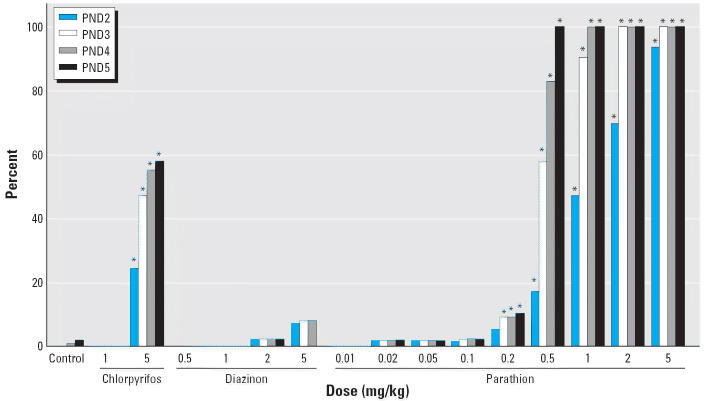
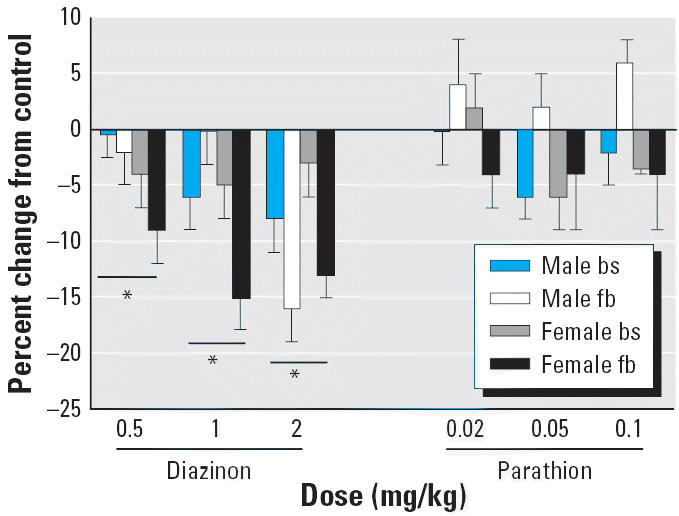
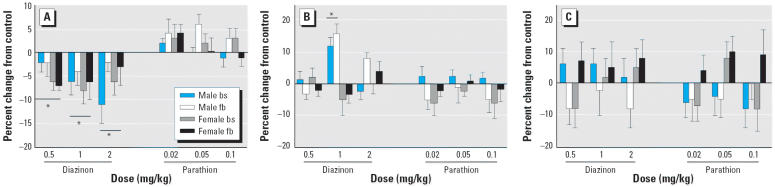
A comparative approach to the differences between systemic toxicity and developmental neurotoxicity of organophosphates is critical to determine the degree to which multiple mechanisms of toxicity carry across different members of this class of insecticides. We contrasted neuritic outgrowth and cholinergic synaptic development in neonatal rats given different organophosphates (chlorpyrifos, diazinon, parathion) at doses spanning the threshold for impaired growth and viability. Animals were treated daily on postnatal days 1-4 by subcutaneous injection so as to bypass differences in first-pass activation to the oxon or catabolism to inactive products. Evaluations occurred on day 5. Parathion (maximum tolerated dose, 0.1 mg/kg) was far more systemically toxic than was chlorpyrifos or diazinon (maximum tolerated dose, 1-5 mg/kg). Below the maximum tolerated dose, diazinon impaired neuritic outgrowth in the forebrain and brainstem, evidenced by a deficit in the ratio of membrane protein to total protein. Diazinon also decreased choline acetyltransferase activity, a cholinergic neuronal marker, whereas it did not affect hemicholinium-3 binding to the presynaptic choline transporter, an index of cholinergic neuronal activity. There was no m(subscript)2(/subscript)-muscarinic acetylcholine receptor down-regulation, as would have occurred with chronic cholinergic hyperstimulation. The same pattern was found previously for chlorpyrifos. In contrast, parathion did not elicit any of these changes at its maximum tolerated dose. These results indicate a complete dichotomy between the systemic toxicity of organophosphates and their propensity to elicit developmental neurotoxicity. For parathion, the threshold for lethality lies below that necessary for adverse effects on brain development, whereas the opposite is true for chlorpyrifos and diazinon.
Figures
References
-
- Abu-Qare AW, Abou-Donia MB. Inhibition and recovery of maternal and fetal cholinesterase enzyme activity following a single cutaneous dose of methyl parathion and diazinon, alone and in combination, in pregnant rats. J Appl Toxicol. 2001;21:307–316. - PubMed
-
- Atterberry TT, Burnett WT, Chambers JE. Age-related differences in parathion and chlorpyrifos toxicity in male rats: target and nontarget esterase sensitivity and cytochrome P450-mediated metabolism. Toxicol Appl Pharmacol. 1997;147:411–418. - PubMed
-
- Axelrad JC, Howard CV, McLean WG. The effects of acute pesticide exposure on neuroblastoma cells chronically exposed to diazinon. Toxicology. 2003;185:67–78. - PubMed
-
- Barber D, Hunt J, Ehrich M. Inhibition of calcium-stimulated ATPase in the hen brain P2 synaptosomal fraction by organophosphorus esters: relevance to delayed neuropathy. J Toxicol Environ Health. 2001;63:101–113. - PubMed
-
- Barone S, Das KP, Lassiter TL, White LD. Vulnerable processes of nervous system development: a review of markers and methods. Neurotoxicology. 2000;21:15–36. - PubMed
Publication types
MeSH terms
Substances
Grants and funding
LinkOut - more resources
Full Text Sources
Other Literature Sources