


Transcapillary fluid balance consequences of missing initial lymphatics studied in a mouse model of primary lymphoedema
- PMID: 16675495
- PMCID: PMC1817763
- DOI: 10.1113/jphysiol.2006.108308
Transcapillary fluid balance consequences of missing initial lymphatics studied in a mouse model of primary lymphoedema
Abstract
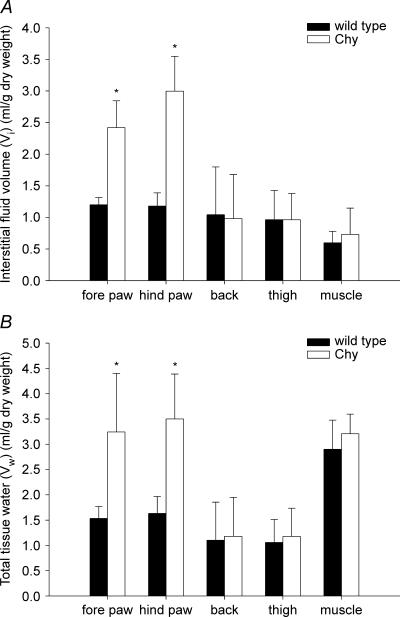
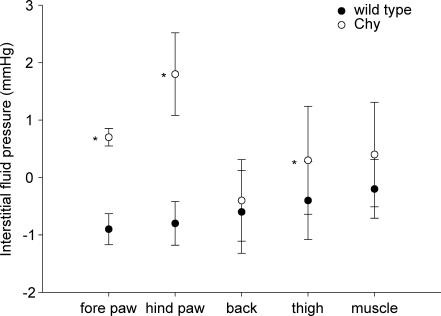
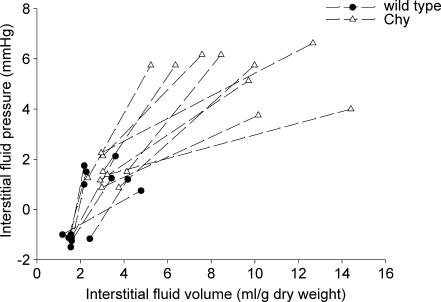
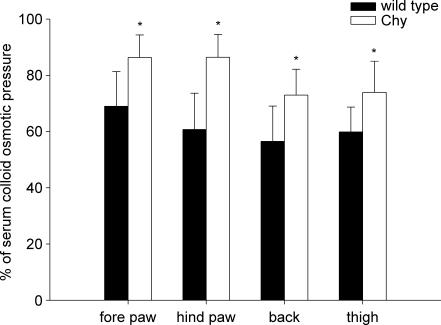
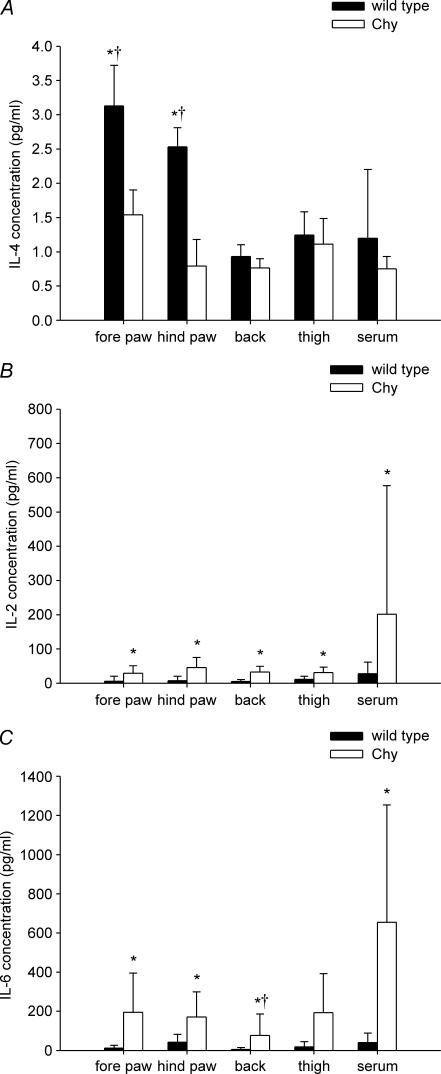
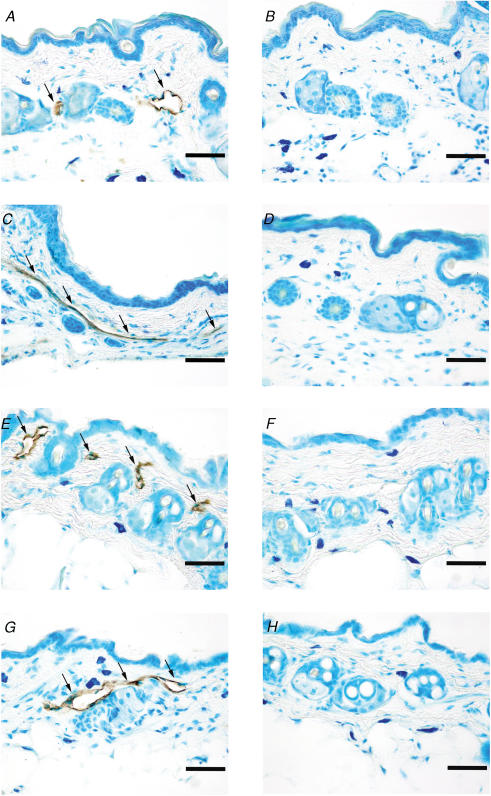
To investigate the phenotypic consequences of a deranged lymphangiogenesis in relation to tissue fluid accumulation and the possible role of inflammation in the pathogenesis of lymphoedema, we measured determinants of transcapillary fluid filtration and inflammatory mediators in the interstitial fluid in genetically engineered Chy mice, a model for primary congenital lymphoedema (Milroy's disease). Although initial lymphatics were not present in dermis in any of the areas studied (fore paw, hind paw, thigh and back skin) interstitial fluid pressure (P(if)), measured with micropipettes, and tissue fluid volumes were significantly increased only in the areas with visible swelling - the fore and hind paw, whereas interstitial colloid osmotic pressure (COP(if)) was increased in all the skin areas examined. A volume load of 15% of body weight resulted in a more pronounced increase in P(if) as well as a four-fold increase in interstitial fluid volume in Chy relative to wild-type (wt) mice, showing the quantitative importance of lymphatics for fluid homeostasis during acute perturbations. A similar level of proinflammatory markers in interstitial fluid in early established lymphoedema (3-4 months) in Chy and wt suggests that inflammation does not have a major pathogenetic role for the development of lymphoedema, whereas a reduced level of the immunomodulatory cytokine interleukin (IL)-4 may result in a reduced immunological defence ability and thus lead to the increase in inflammatory cytokines IL-2 and IL-6 observed at a later stage (11-13 months). Our data suggest that primary lymphoedema results in a high interstitial fluid protein concentration that does not induce an interstitial inflammatory reaction per se, and furthermore shows the paramount importance of the initial lymphatics in tissue fluid homeostasis, especially during perturbations of transcapillary fluid balance.
Figures
Comment in
-
Of mice and men; the translational physiology of a genetic form of lymphoedema.J Physiol. 2006 Jul 15;574(Pt 2):331. doi: 10.1113/jphysiol.2006.114124. Epub 2006 May 25. J Physiol. 2006. PMID: 16728443 Free PMC article. No abstract available.
References
-
- Alitalo K, Tammela T, Petrova TV. Lymphangiogenesis in development and human disease. Nature. 2005;438:946–953. - PubMed
-
- Aukland K, Reed RK. Interstitial-lymphatic mechanisms in the control of extracellular fluid volume. Physiol Rev. 1993;73:1–78. - PubMed
-
- Bates DO, Levick JR, Mortimer PS. Subcutaneous interstitial fluid pressure and arm volume in lymphoedema. Int J Microcirc Clin Exp. 1992;11:359–373. - PubMed
Publication types
MeSH terms
Substances
Grants and funding
LinkOut - more resources
Full Text Sources
Medical
Molecular Biology Databases
