


An informatics model for tissue banks--lessons learned from the Cooperative Prostate Cancer Tissue Resource
- PMID: 16677389
- PMCID: PMC1484486
- DOI: 10.1186/1471-2407-6-120
An informatics model for tissue banks--lessons learned from the Cooperative Prostate Cancer Tissue Resource
Abstract
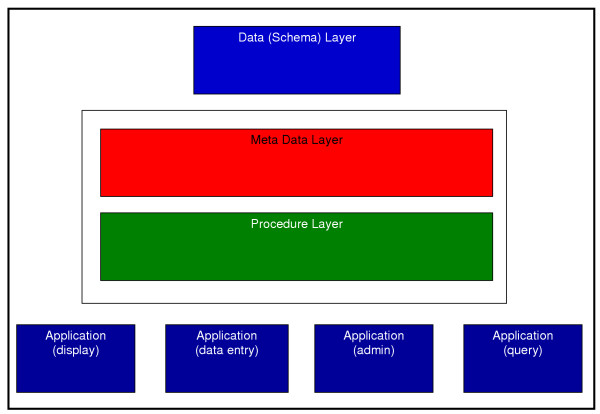
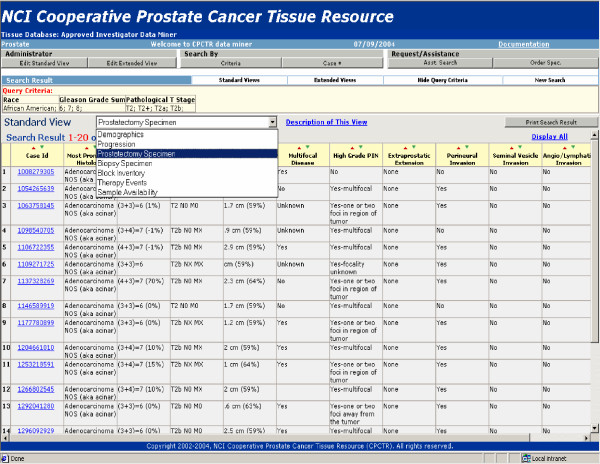
Background: Advances in molecular biology and growing requirements from biomarker validation studies have generated a need for tissue banks to provide quality-controlled tissue samples with standardized clinical annotation. The NCI Cooperative Prostate Cancer Tissue Resource (CPCTR) is a distributed tissue bank that comprises four academic centers and provides thousands of clinically annotated prostate cancer specimens to researchers. Here we describe the CPCTR information management system architecture, common data element (CDE) development, query interfaces, data curation, and quality control.
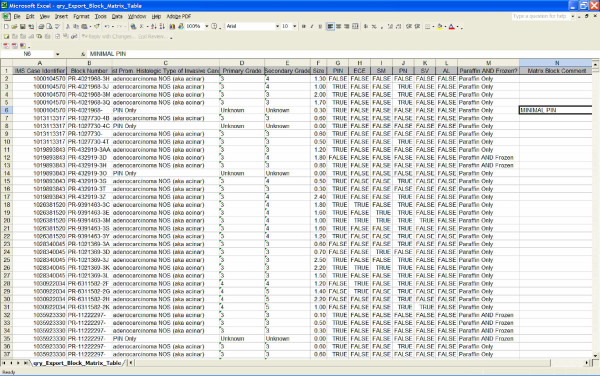
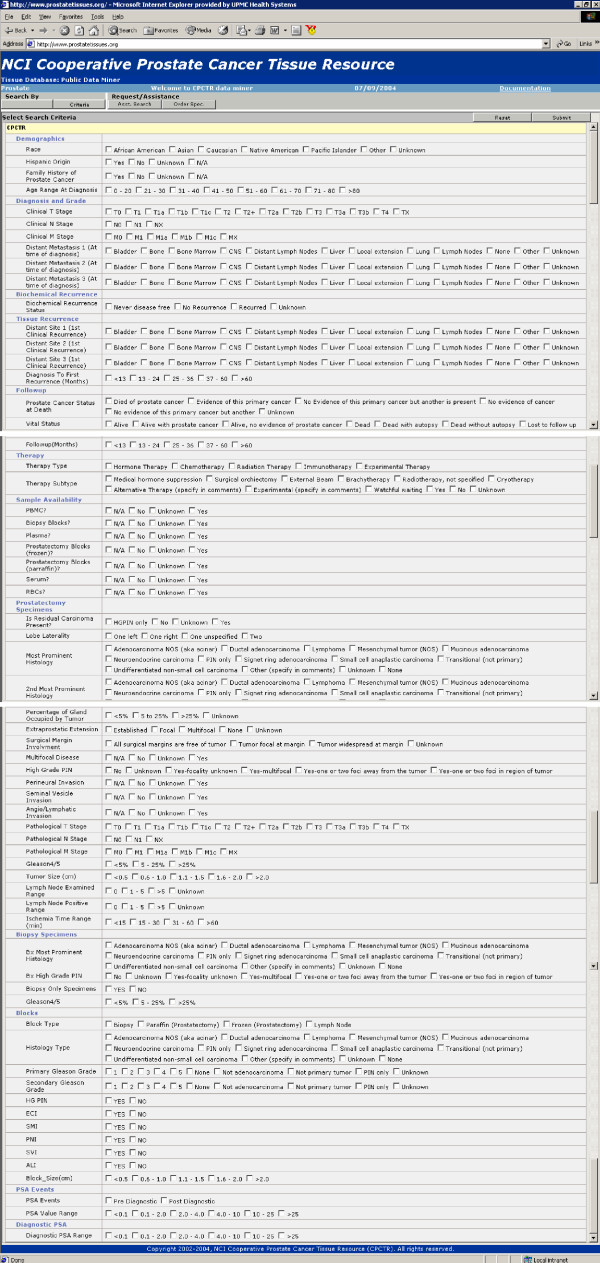
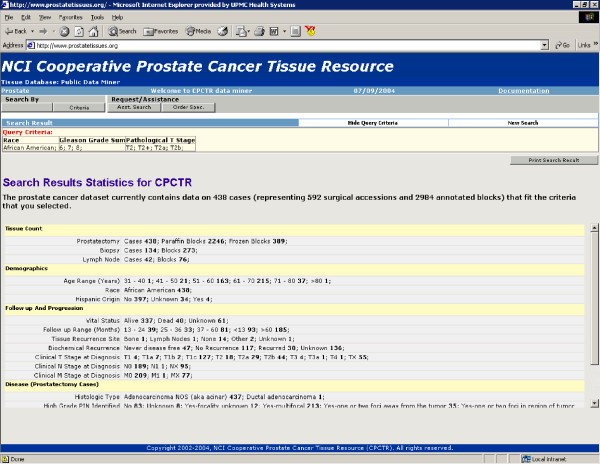
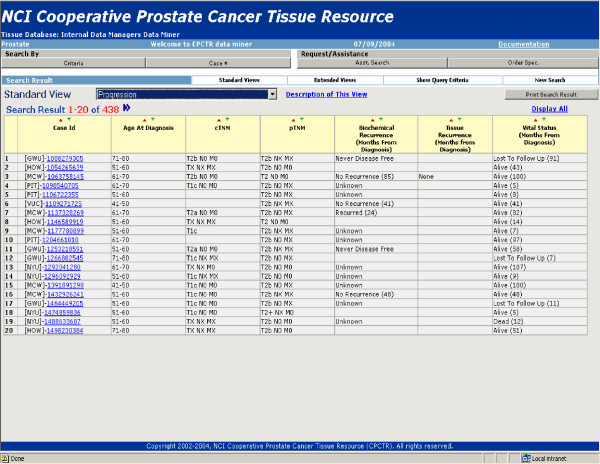
Methods: Data managers review the medical records to collect and continuously update information for the 145 clinical, pathological and inventorial CDEs that the Resource maintains for each case. An Access-based data entry tool provides de-identification and a standard communication mechanism between each group and a central CPCTR database. Standardized automated quality control audits have been implemented. Centrally, an Oracle database has web interfaces allowing multiple user-types, including the general public, to mine de-identified information from all of the sites with three levels of specificity and granularity as well as to request tissues through a formal letter of intent.
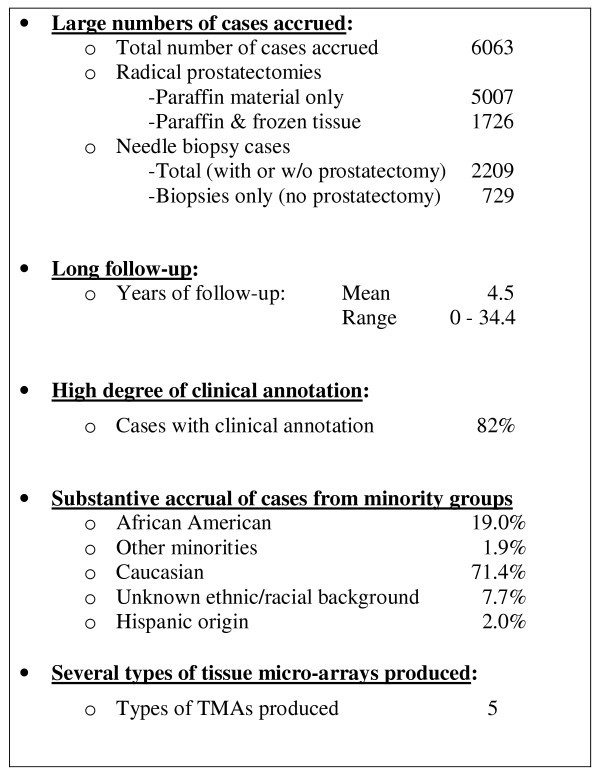
Results: Since July 2003, CPCTR has offered over 6,000 cases (38,000 blocks) of highly characterized prostate cancer biospecimens, including several tissue microarrays (TMA). The Resource developed a website with interfaces for the general public as well as researchers and internal members. These user groups have utilized the web-tools for public query of summary data on the cases that were available, to prepare requests, and to receive tissues. As of December 2005, the Resource received over 130 tissue requests, of which 45 have been reviewed, approved and filled. Additionally, the Resource implemented the TMA Data Exchange Specification in its TMA program and created a computer program for calculating PSA recurrence.
Conclusion: Building a biorepository infrastructure that meets today's research needs involves time and input of many individuals from diverse disciplines. The CPCTR can provide large volumes of carefully annotated prostate tissue for research initiatives such as Specialized Programs of Research Excellence (SPOREs) and for biomarker validation studies and its experience can help development of collaborative, large scale, virtual tissue banks in other organ systems.
Figures
References
-
- Qualman SJ, Bowen J, Brewer-Swartz S, France M. The Role of Tumor Banking and Related Informatics. In: Ladanyi M, Gerald WL, editor. Expression profiling of human tumors: diagnostic and research applications. Vol. 7. Totowa, N.J.: Humana Press; 2003. pp. 103–117.
-
- Merriam-Webster Inc . Merriam-Webster's medical desk dictionary. Springfield, Mass.: Merriam-Webster; 2002.
-
- Gilbertson JR, Gupta R, Nie Y, Patel AA, Becich MJ. Automated clinical annotation of tissue bank specimens. Medinfo. 2004;11:607–610. - PubMed
-
- Holland NT, Pfleger L, Berger E, Ho A, Bastaki M. Molecular epidemiology biomarkers–sample collection and processing considerations. Toxicol Appl Pharmacol. 2005;206:261–268. - PubMed
-
- Naber SP. Continuing role of a frozen-tissue bank in molecular pathology. Diagn Mol Pathol. 1996;5:253–259. - PubMed
Publication types
MeSH terms
Grants and funding
LinkOut - more resources
Full Text Sources
Medical
Research Materials
Miscellaneous
