


Arginine-vasopressin in catecholamine-refractory septic versus non-septic shock in extremely low birth weight infants with acute renal injury
- PMID: 16677425
- PMCID: PMC1550969
- DOI: 10.1186/cc4917
Arginine-vasopressin in catecholamine-refractory septic versus non-septic shock in extremely low birth weight infants with acute renal injury
Abstract
Introduction: The aim of this study was to assess the efficacy of arginine-vasopressin (AVP) as a rescue therapy in catecholamine-refractory septic and non-septic shock in extremely low birth weight (ELBW) infants with acute renal injury.
Methods: Prospective assessment of AVP therapy in three ELBW infants with catecholamine-refractory septic shock and acute renal injury (mean birth weight 600 +/- 30 g) and three ELBW infants with non-septic shock and acute renal injury (mean birth weight 770 +/- 110 g) at a University hospital. The main outcome measures were restoration of blood pressure with adequate organ perfusion and survival at discharge.
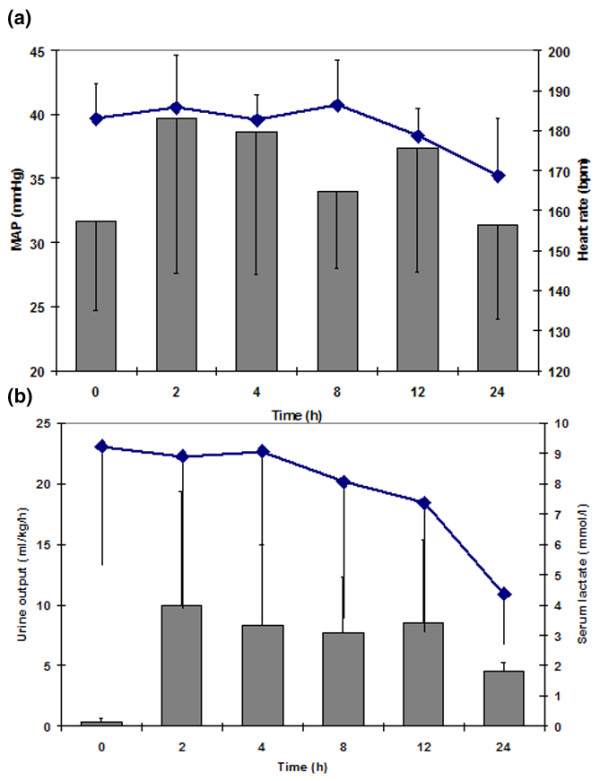
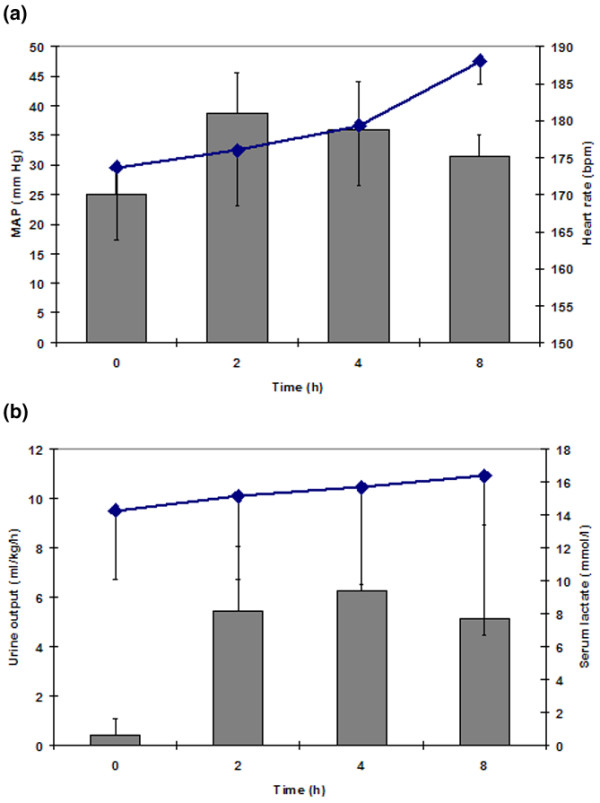
Results: In all three ELBW infants with catecholamine-resistant septic shock, systemic arterial blood pressure increased substantively with restoration of urine output after AVP administration (dosage, 0.035 to 0.36 U/kg/h; length, 70 +/- 21 hours). In the three ELBW infants with non-septic shock, only a transient stabilization in mean arterial pressure with restoration of urine output was observed after AVP therapy (dosage, 0.01 to 0.36 U/kg/h; length, 30 +/- 16 hours). The mortality rate was 1/3 in the sepsis group versus 3/3 in the non-septic group.
Conclusion: AVP may be a promising rescue therapy in catecholamine-resistant shock in ELBW infants with acute renal injury. Larger prospective clinical trials are warranted to assess the efficacy and safety of AVP as a pressor adjunct in septic versus non-septic shock in ELBW infants.
Figures
References
-
- Landry DW, Levin HR, Gallant EM, Ashton RC, Jr, Seo S, D'Alessandro D, Oz MC, Oliver JA. Vasopressin deficiency contributes to the vasodilation of septic shock. Circulation. 1997;95:1122–1125. - PubMed
Publication types
MeSH terms
Substances
LinkOut - more resources
Full Text Sources
Other Literature Sources
Miscellaneous
