Dynamic behavioural interpretation of cervical intraepithelial neoplasia with molecular biomarkers
- PMID: 16679355
- PMCID: PMC1861745
- DOI: 10.1136/jcp.2005.027839
Dynamic behavioural interpretation of cervical intraepithelial neoplasia with molecular biomarkers
Abstract
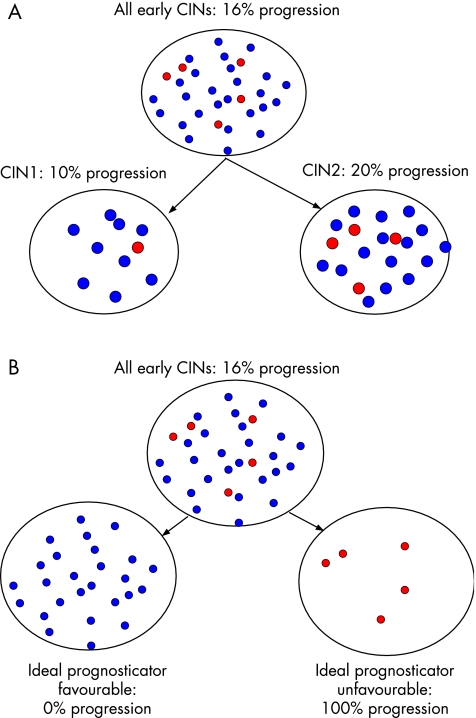
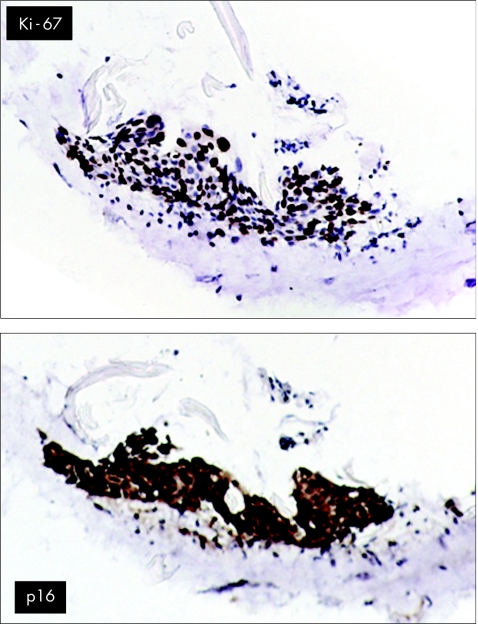
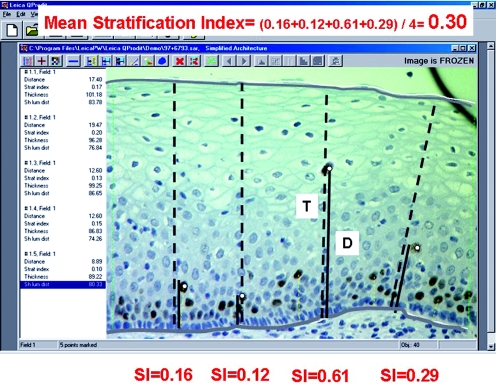
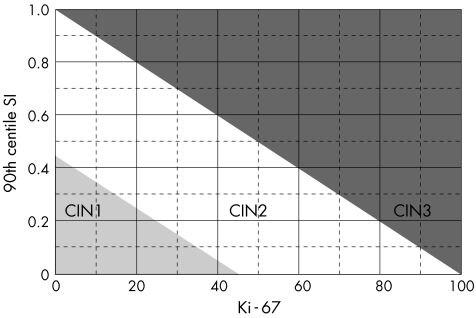
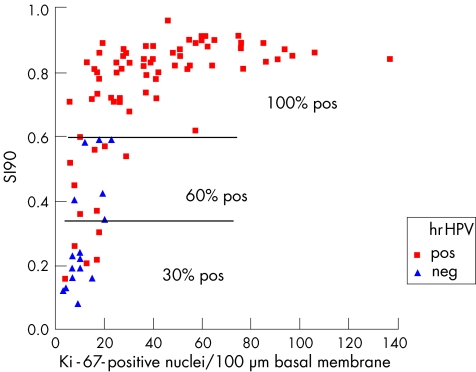
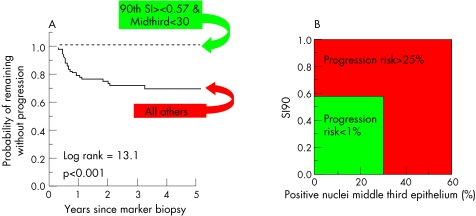
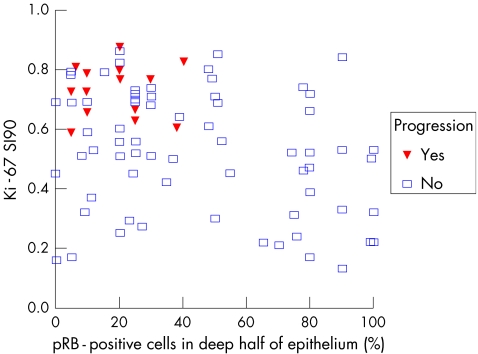
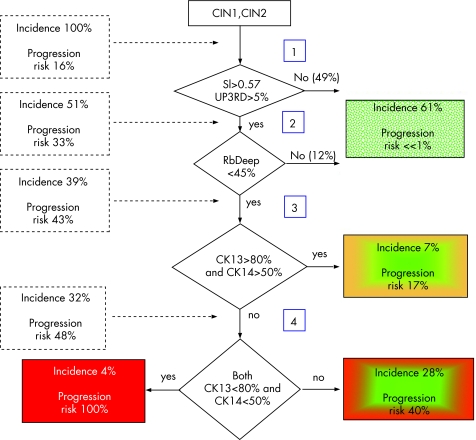
The microscopic phenotype of cervical intraepithelial neoplasia (CIN) reflects a fine balance between factors that promote or reduce CIN development. A shortcoming of the current grading system is its reliance on static morphology and microscopic haematoxylin-eosin features of the epithelium alone. In reality, CIN is a dynamic process, and the epithelium may exhibit differing results over time. Functional biomarkers p16, Ki-67, p53, retinoblastoma protein cytokeratin (CK)14 and CK13, help in the assessment of an individual CIN's lesion's potential for progression and regression. The aggregate information provided by these biomarkers exceeds the value of the classic grading system. Consequently, many more CINs that will either regress or progress can be accurately identified. These findings agree with known molecular interactions between HPV and the host. For accurate interpretation of a CIN, it is essential that these biomarkers be determined quantitatively and separately in the superficial, middle and deep layers of the epithelium. Such geography-specific epithelial evaluations of quantitative biomarkers emphasise the dynamic nature of a particular CIN lesion, thereby changing the art of static morphology grading into dynamic interpretation of the diseased tissue, with a strong prognostic effect.
Conflict of interest statement
Competing interests: None.






References
-
- Ostor A G. Natural history of cervical intraepithelial neoplasia: a critical review. Int J Gynecol Pathol 199312186–192. - PubMed
-
- Heatly M K. How should we grade CIN? Histopathology 200240377–390. - PubMed
-
- Keenan S J, Diamond J, McCluggage W G.et al An automated machine vision system for the histological grading of cervical intraepithelial neoplasia (CIN). J Pathol 2000192351–362. - PubMed
-
- Ismail S M, Colclough A B, Dinnen J S.et al Reporting cervical intra‐epithelial neoplasia (CIN): intra and inter‐pathologist variation and factors associated with disagreement. Histopathology 199016371–376. - PubMed
Publication types
MeSH terms
Substances
LinkOut - more resources
Full Text Sources
Other Literature Sources
Medical
Research Materials
Miscellaneous