


GREM, a technique for genome-wide isolation and quantitative analysis of promoter active repeats
- PMID: 16698959
- PMCID: PMC3303178
- DOI: 10.1093/nar/gkl335
GREM, a technique for genome-wide isolation and quantitative analysis of promoter active repeats
Abstract
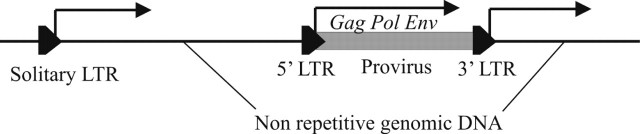
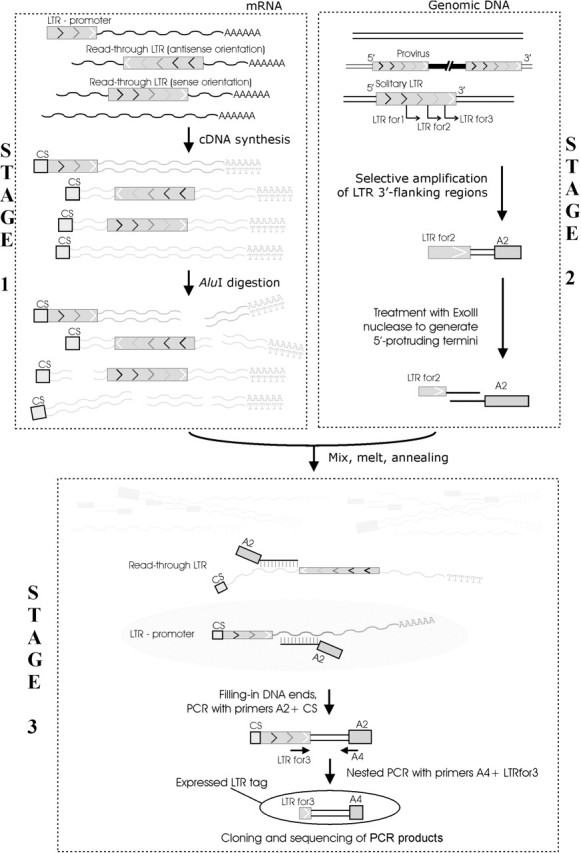
We developed a technique called GREM (Genomic Repeat Expression Monitor) that can be applied to genome-wide isolation and quantitative analysis of any kind of transcriptionally active repetitive elements. Briefly, the technique includes three major stages: (i) generation of a transcriptome wide library of cDNA 5' terminal fragments, (ii) selective amplification of repeat-flanking genomic loci and (iii) hybridization of the cDNA library (i) to the amplicon (ii) with subsequent selective amplification and cloning of the cDNA-genome hybrids. The sequences obtained serve as 'tags' for promoter active repetitive elements. The advantage of GREM is an unambiguous mapping of individual promoter active repeats at a genome-wide level. We applied GREM for genome-wide experimental identification of human-specific endogenous retroviruses and their solitary long terminal repeats (LTRs) acting in vivo as promoters. Importantly, GREM tag frequencies linearly correlated with the corresponding LTR-driven transcript levels found using RT-PCR. The GREM technique enabled us to identify 54 new functional human promoters created by retroviral LTRs.
Figures
References
-
- Weiner, A.M., Deininger, P.L., Efstratiadis, A. 1986. Nonviral retroposons: genes, pseudogenes, and transposable elements generated by the reverse flow of genetic information Annu. Rev. Biochem. 55631–661 - PubMed
-
- Mouse genome sequencing consortium. 2002. Initial sequencing and comparative analysis of the mouse genome Nature 420520–562 - PubMed
-
- International human genome sequencing consortium. 2001. Initial sequencing and analysis of the human genome Nature 409860–921 - PubMed
