


Evidence for functional protein interactions required for poliovirus RNA replication
- PMID: 16699013
- PMCID: PMC1472133
- DOI: 10.1128/JVI.02684-05
Evidence for functional protein interactions required for poliovirus RNA replication
Abstract
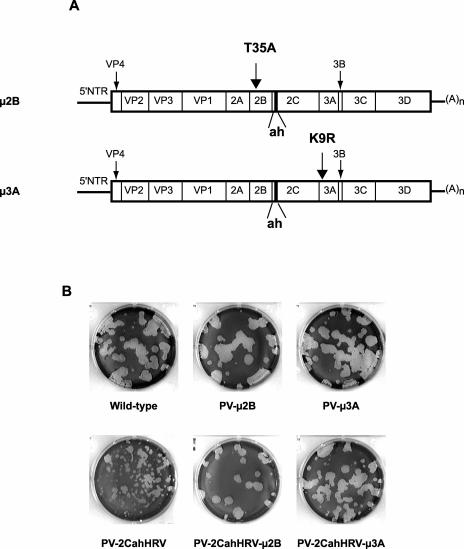
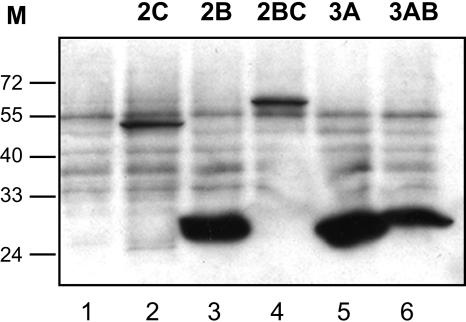
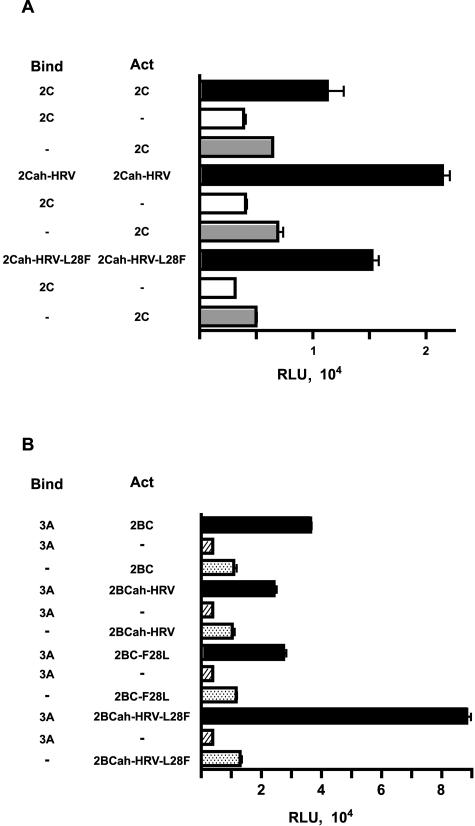
Poliovirus protein 2C contains a predicted N-terminal amphipathic helix that mediates association of the protein with the membranes of the viral RNA replication complex. A chimeric virus that contains sequences encoding the 18-residue core from the orthologous amphipathic helix from human rhinovirus type 14 (HRV14) was constructed. The chimeric virus exhibited defects in viral RNA replication and produced minute plaques on HeLa cell monolayers. Large plaque variants that contained mutations within the 2C-encoding region were generated upon subsequent passage. However, the majority of viruses that emerged with improved growth properties contained no changes in the region encoding 2C. Sequence analysis and reconstruction of genomes with individual mutations revealed changes in 3A or 2B sequences that compensated for the HRV14 amphipathic helix in the polio 2C-containing proteins, implying functional interactions among these proteins during the replication process. Direct binding between these viral proteins was confirmed by mammalian cell two-hybrid analysis.
Figures



References
-
- Carrasco, L., R. Guinea, A. Irurzun, and A. Barco. 2002. Effects of viral replication on cellular membrane metabolism and function, p. 337-354. In B. L. Semler and E. Wimmer (ed.), Molecular biology of picornaviruses. ASM Press, Washington, D.C.
-
- Cho, M. W., N. Teterina, D. Egger, K. Bienz, and E. Ehrenfeld. 1994. Membrane rearrangement and vesicle induction by recombinant poliovirus 2C and 2BC in human cells. Virology 202:129-145. - PubMed
Publication types
MeSH terms
Substances
Grants and funding
LinkOut - more resources
Full Text Sources
