


hMLH1 promoter methylation and silencing in primary endometrial cancers are associated with specific alterations in MBDs occupancy and histone modifications
- PMID: 16701802
- PMCID: PMC3273419
- DOI: 10.1016/j.ygyno.2006.03.045
hMLH1 promoter methylation and silencing in primary endometrial cancers are associated with specific alterations in MBDs occupancy and histone modifications
Abstract
Objective: To investigate the relationship between hMLH1 promoter methylation and changes in chromatin composition. To study how the occupancy of methyl CpG binding domain proteins (MBDs) and histone acetylation/methylation in hMLH1 promoter may participate in hMLH1 silencing.
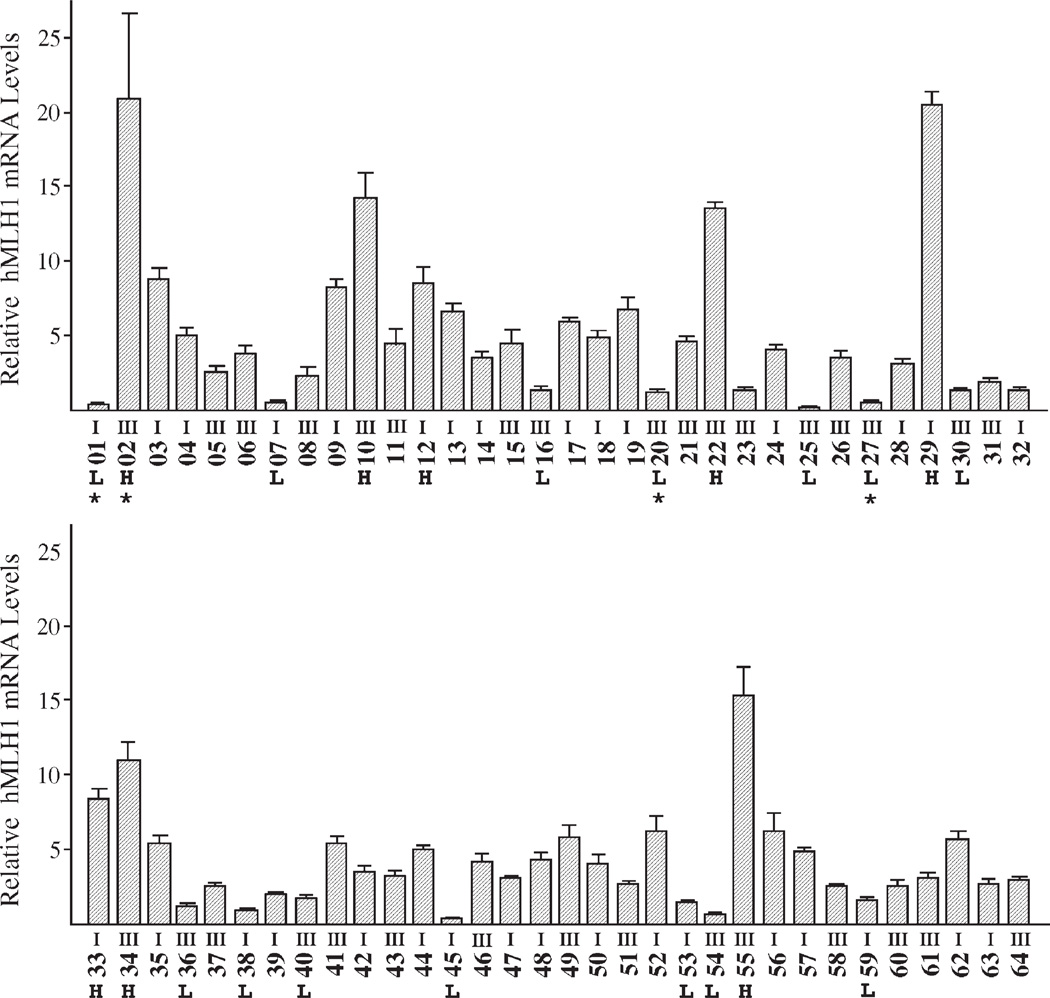
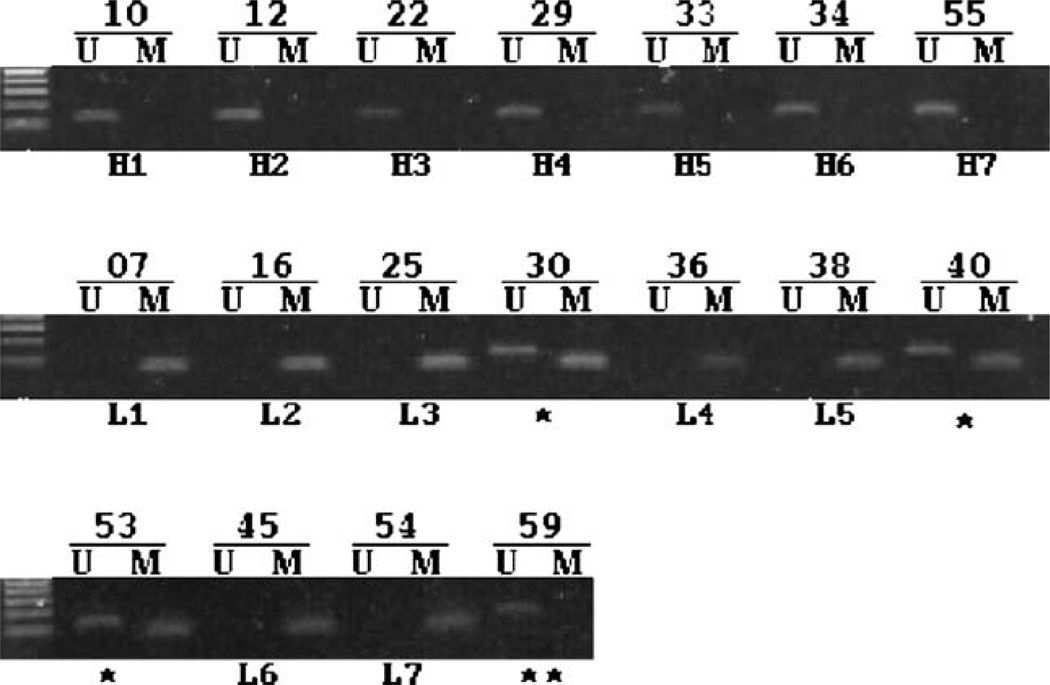
Methods: 64 endometrial cancer samples were screened for hMLH1 mRNA expression. hMLH1 promoter methylation status was confirmed by methylation-specific PCR in cancers with high and low levels of hMLH1 expression. Chromatin immunoprecipitation was performed to compare the MBD occupancy and histone modifications between the methylated/silenced and unmethylated/active hMLH1 genes in multiple primary endometrial cancers.
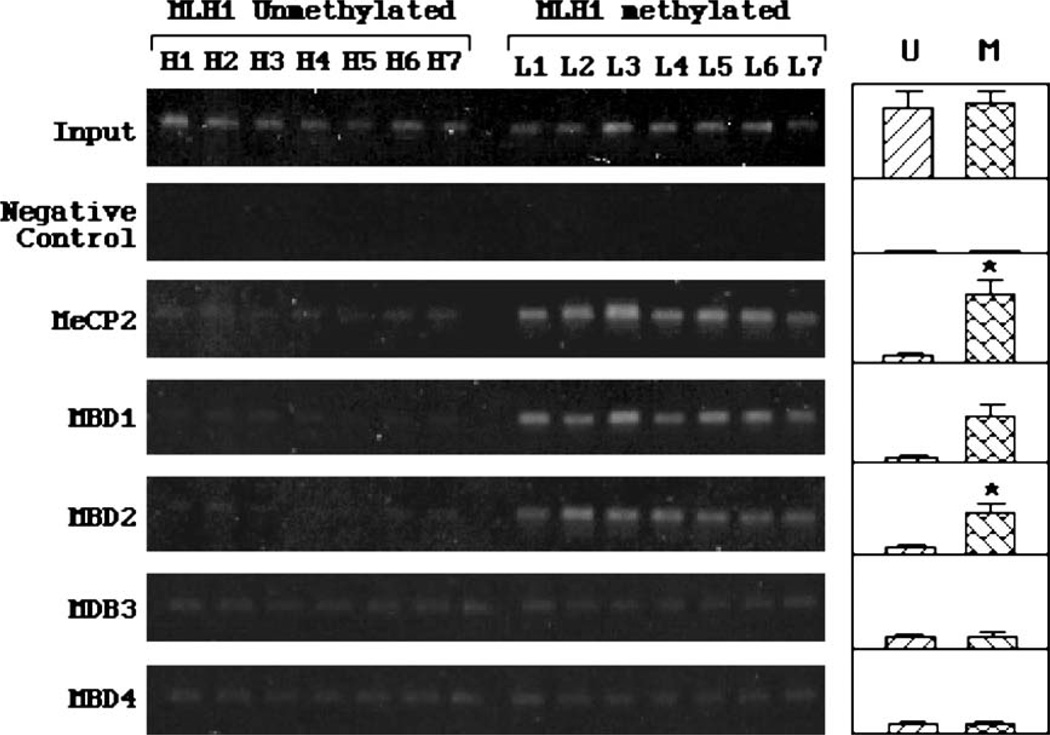
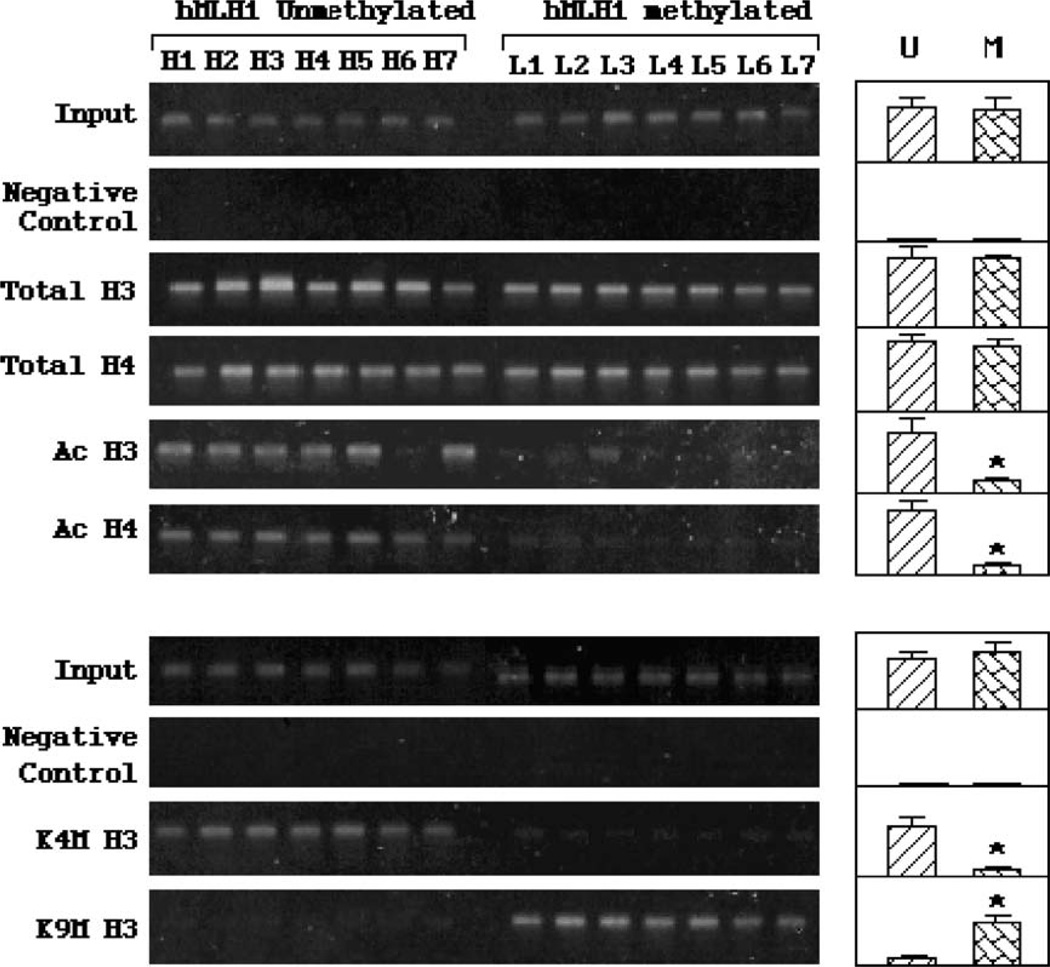
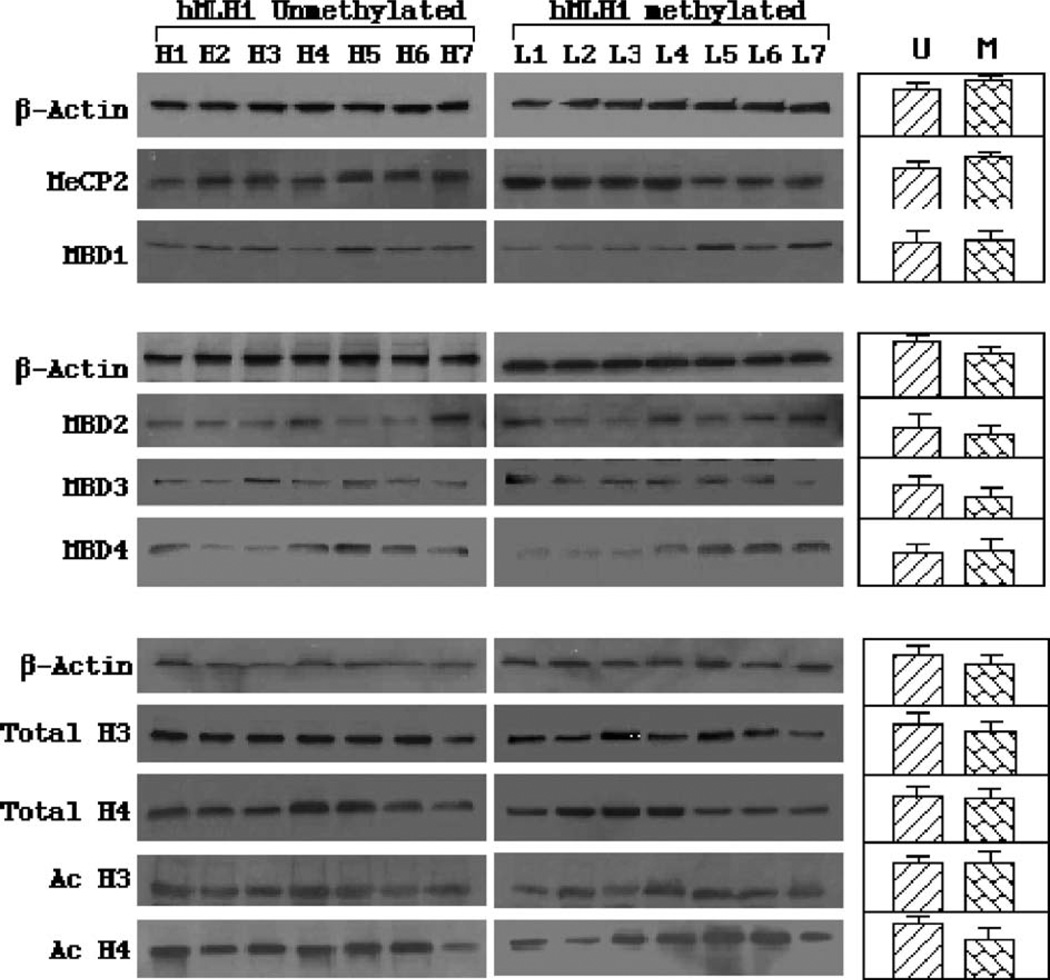
Results: We demonstrated that MeCP2, MBD1 and MBD2, but not MBD3 and MBD4, specifically bind to methylated hMLH1 promoters. Hyperacetylated histones H3 and H4 were found to be associated with the unmethylated and transcriptionally active hMLH1 promoters. While H3 lysine-4 methylation was present in unmethylated hMLH1 promoters, H3 lysine-9 methylation was found exclusively in methylated promoters. Western blot analysis showed that similar global levels of MBDs and histones were present in the two cancer groups with high and low hMLH1 expression.
Conclusions: A distinct combination of MBDs and histone modification is associated with the silencing of the hMLH1 gene. The changes in hMLH1 chromatin composition are closely related to methylation status of hMLH1 promoters. These changes are not accounted by the global expression levels of MBDs and histones in endometrial cancers.
Figures
References
-
- Cederquist K, Emanuelsson M, Goransson I, Holinski-Feder E, Muller-Koch Y, Golovleva I, et al. Mutation analysis of the MLH1, MSH2 and MSH6 genes in patients with double primary cancers of the colorectum and the endometrium: a population-based study in northern Sweden. Int J Cancer. 2004;109:370–376. - PubMed
-
- Hirasawa A, Aoki D, Inoue J, Imoto I, Susumu N, Sugano K, et al. Unfavorable prognostic factors associated with high frequency of microsatellite instability and comparative genomic hybridization analysis in endometrial cancer. Clin Cancer Res. 2003;9:5675–5682. - PubMed
-
- Esteller M, Levine R, Baylin SB, Ellenson LH, Herman JG. MLH1 promoter hypermethylation is associated with the microsatellite instability phenotype in sporadic endometrial carcinomas. Oncogene. 1998;17:2413–2417. - PubMed
-
- Gurin CC, Federici MG, Kang L, Boyd J. Causes and consequences of microsatellite instability in endometrial carcinoma. Cancer Res. 1999;59:462–466. - PubMed
-
- Banno K, Susumu N, Hirao T, Yanokura M, Hirasawa A, Aoki D, et al. Identification of germline MSH2 gene mutations in endometrial cancer not fulfilling the new clinical criteria for hereditary nonpolyposis colorectal cancer. Cancer Genet Cytogenet. 2003;146:58–65. - PubMed
Publication types
MeSH terms
Substances
Grants and funding
LinkOut - more resources
Full Text Sources
Other Literature Sources
Research Materials
Miscellaneous
