Review
. 2005 Apr;2(1):147-55.
doi: 10.3390/ijerph2005010147.

Photodecomposition and phototoxicity of natural retinoids

Affiliations
Review

Photodecomposition and phototoxicity of natural retinoids

William H Tolleson et al. Int J Environ Res Public Health. 2005 Apr.

Abstract

Sunlight is a known human carcinogen. Many cosmetics contain retinoid-based compounds, such as retinyl palmitate (RP), either to protect the skin or to stimulate skin responses that will correct skin damaged by sunlight. However, little is known about the photodecomposition of some retinoids and the toxicity of these retinoids and their sunlight-induced photodecomposition products on skin. Thus, studies are required to test whether topical application of retinoids enhances the phototoxicity and photocarcinogenicity of sunlight and UV light. Mechanistic studies are needed to provide insight into the disposition of retinoids in vitro and on the skin, and to test thoroughly whether genotoxic damage by UV-induced radicals may participate in any toxicity of topically applied retinoids in the presence of UV light. This paper reports the update information and our experimental results on photostability, photoreactions, and phototoxicity of the natural retinoids including retinol (ROH), retinal, retinoid acid (RA), retinyl acetate, and RP (Figure 1).


Figures

Figure 1
Figure 1
Names and numbering of retinoids.
Figure 2
Figure 2
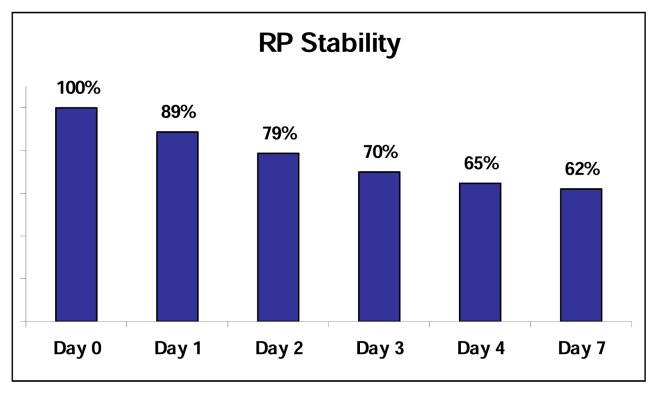
Decomposition of 2% RP in oil-in-water cream at 4°C.
Figure 3
Figure 3
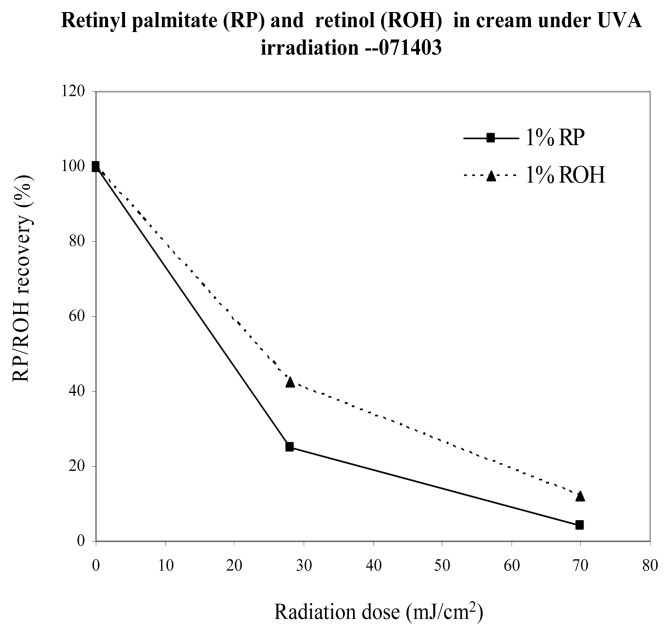
Photodecomposition of RP and ROH.
Figure 4
Figure 4
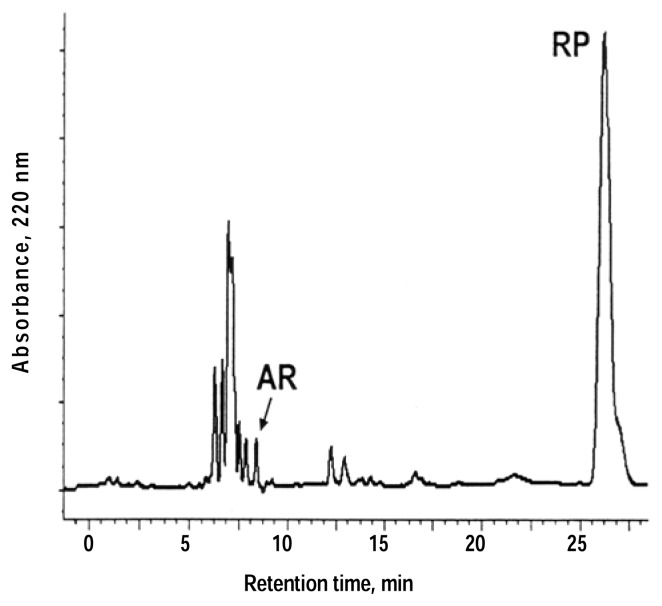
HPLC profile of photodecomposition of RP under sun simulated light (10mJ.CIE/cm2).
Figure 5
Figure 5
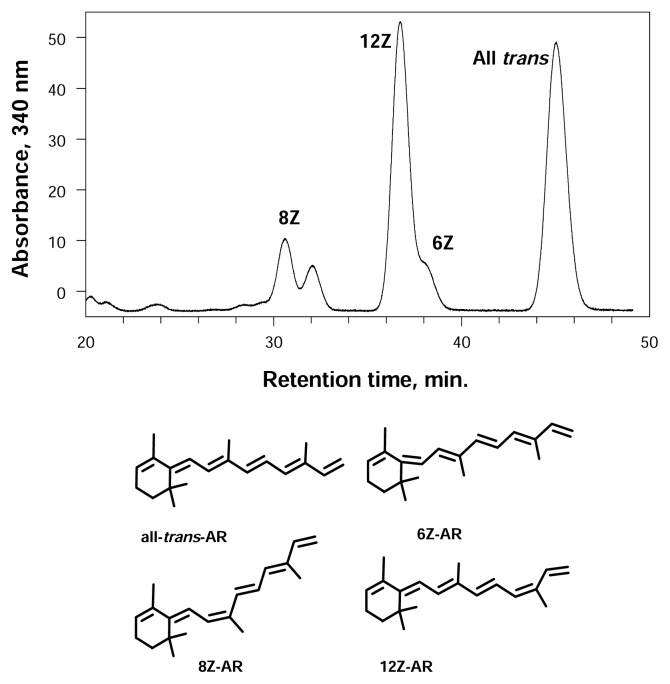
HPLC separation of cis- and trans-isomeric AR. HPLC analysis was conducted on a Vydac C18 column (4.6 × 250 mm) eluted isocratically with water in methanol (v/v; 14/86) at 1 mL/min.
Figure 6
Figure 6
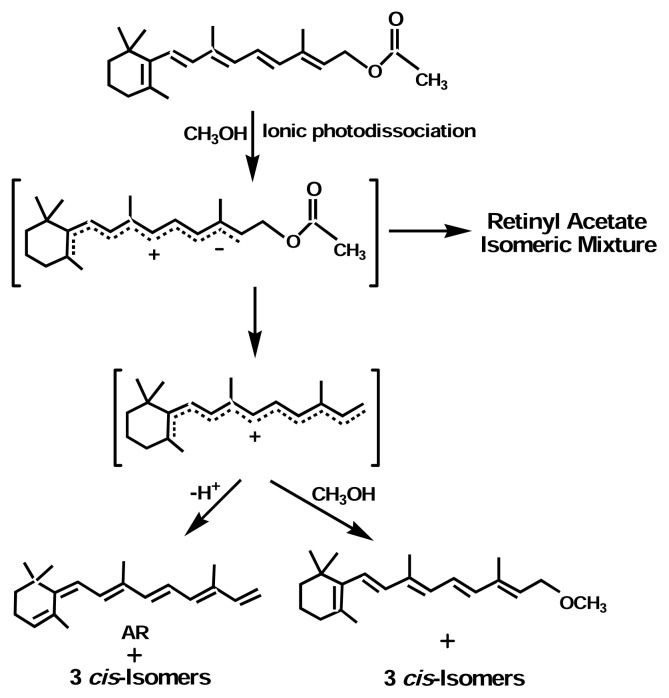
Ionic photodissociation mechanism of isomerization of retinyl acetate under UVA light irradiation to cis-retinyl acetate and a mixture of cis- and trans-AR.
Figure 7
Figure 7
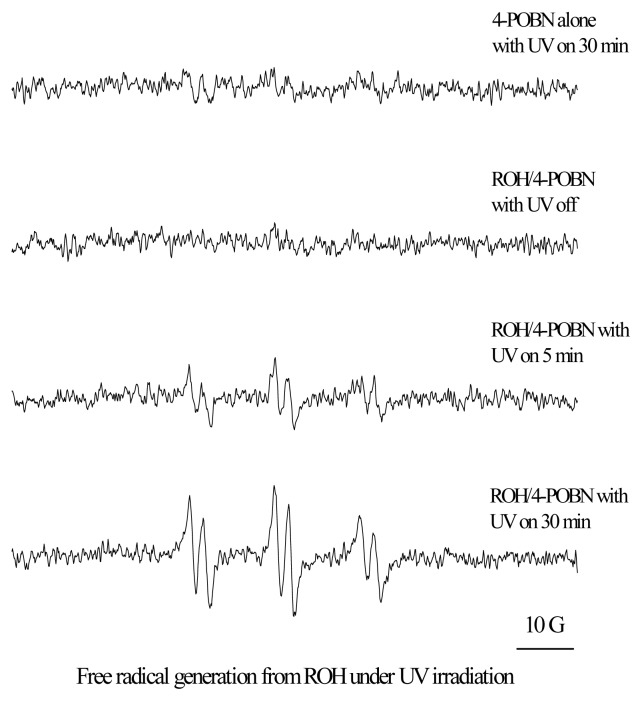
ESR measurements of 0.35 mg/ml ROH in 70% ethanol in water containing 200 mM spin trap α-(4-Pyridyl-1-oxide)-N-tert-butylnitrone (POBN) after being photoirradiated with UVA light at wavelength 320 nm. Conventional ESR spectra were obtained with a Varian E-109 X-band spectrometer. ESR signals were recorded with 15 mW incident microwave and 100 kHz field modulation of 1.25 G. All measurements were performed at room temperature.
Figure 8
Figure 8
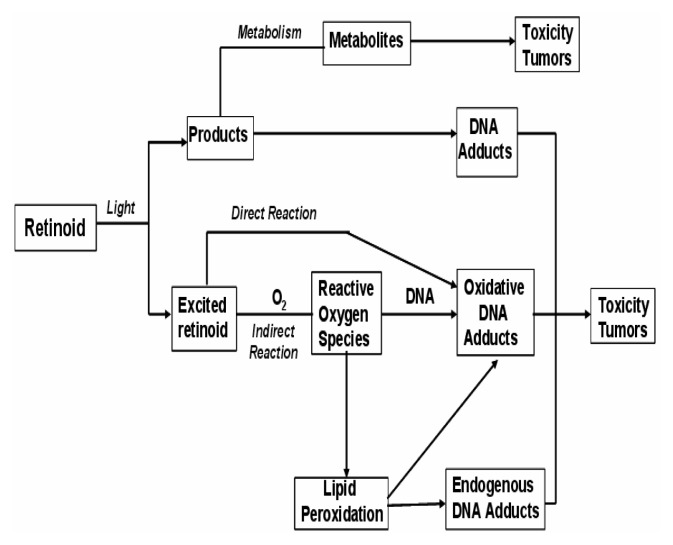
Potential photoreaction pathways of retinoids leading to phototoxicity and tumor formation.
Figure 9
Figure 9
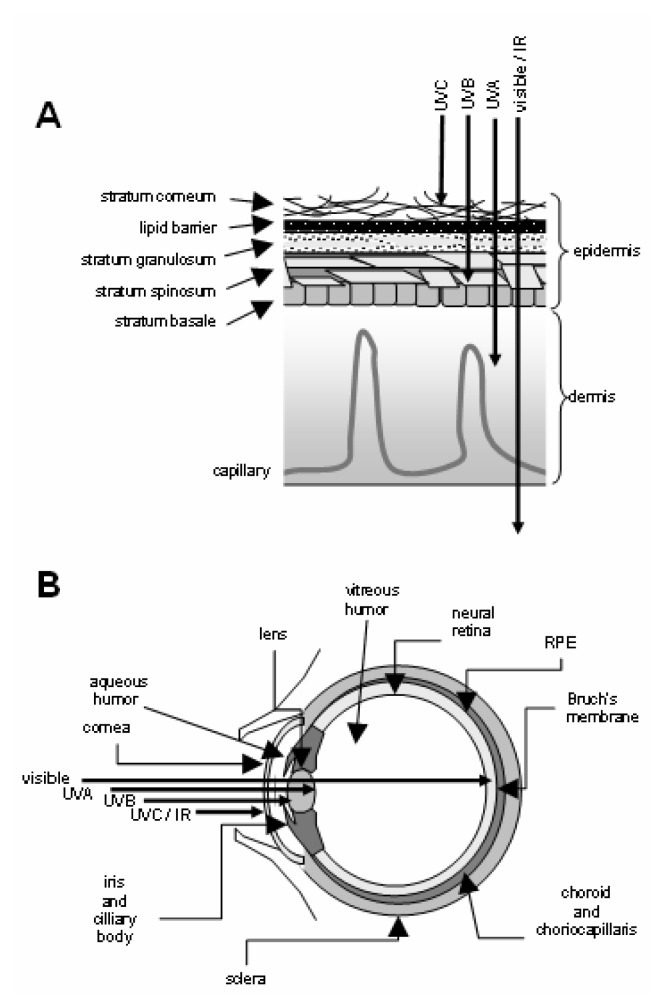
Penetration of skin and eye by solar radiation. (A) Diagram of skin. (B) Diagram of eye.
Figure 10
Figure 10
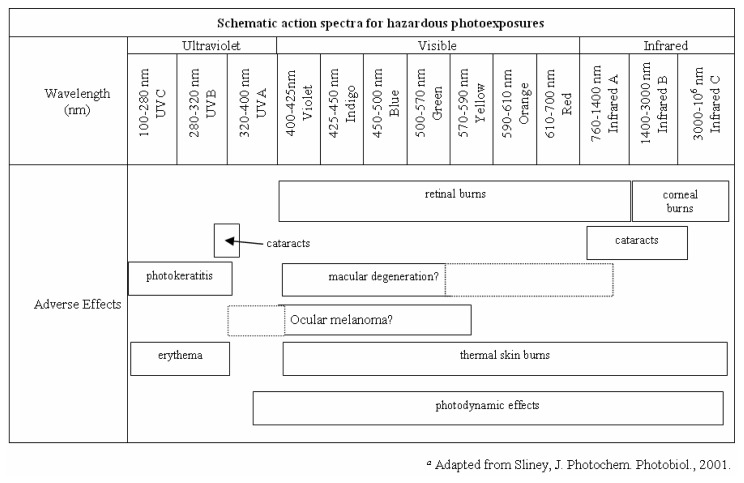
Schematic action spectra for hazardous photoexposures (31).
Figure 11
Figure 11
A2E, a fluorescent retinoid derivative isolated from retinal pigment epithelial cells
Figure 12
Figure 12
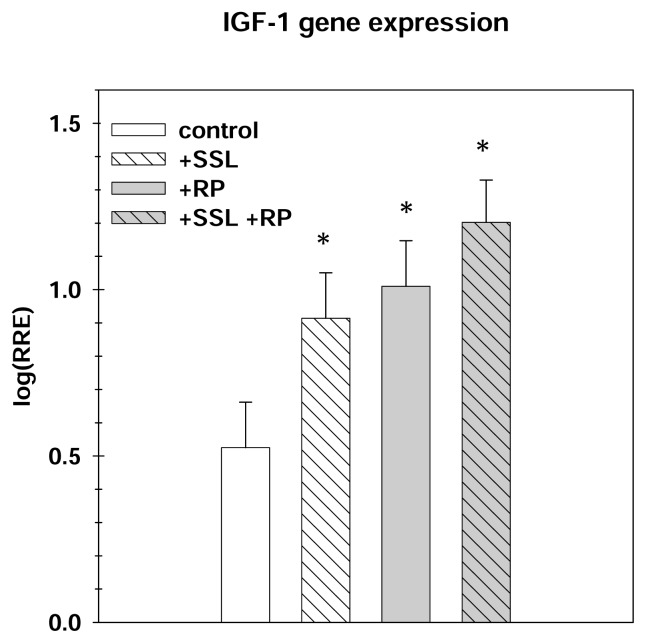
Simulated solar light and retinyl palmitate increase mRNA levels for insulin-like growth factor-1. Groups of HR/Skh-1 hairless mice (n=13) were exposed to simulated solar light (SSL) and/or 13% retinyl palmitate (RP) three times per week for 13 weeks. Whole skin samples were collected in RNAlater (Ambion) 48 hours after the final treatments. Total RNA was extracted using RNeasy Mini kits (Qiagen). IGF-1 and 18S rRNA levels were determined using qRT-PCR. The relative ratio of expression (RRE) for each group was calculated by the method of Pfaffl (40). Log transformation was used to normalize the data prior to Two Way ANOVA (p < 0.05).

References

    1. (IARC) IARC Monographs on the Evaluation of Carcinogenic Risks to Humans. Vol. 55 International Agency for Research on Cancer; 1992. Solar and ultraviolet radiation. - PMC - PubMed
    1. Idson B. Vitamins in cosmetics, an update I. Overview and Vitamin A. Drug Cosmet. Ind. 1990;146:26–91.
    1. (IARC) Vitamin A. International Agency for Research on Cancer. Vol. 3 Handbooks of Cancer Prevention; Lyon, French: 1998.
    1. Code of Federal Regulations. Washington, D.C: 2000. Title 21, Part 720.4 (d)(1).
    1. Wenninger J., Canterbery R.C., McEwen G.N. Jr, editors. The Cosmetic, Toiletry and Fragrance Association. International Cosmetic Ingredient Dictionary and Handbook. Eighth Edition. CTFA; Washington, D.C: 2000. 1999. p. 1279.

Publication types

LinkOut - more resources