


Co-infections of adenovirus species in previously vaccinated patients
- PMID: 16707047
- PMCID: PMC3373024
- DOI: 10.3201/eid1206.050245
Co-infections of adenovirus species in previously vaccinated patients
Abstract
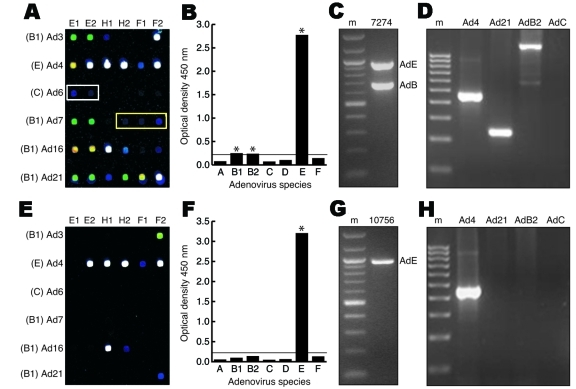
Despite the success of the adenovirus vaccine administered to US military trainees, acute respiratory disease (ARD) surveillance still detected breakthrough infections (respiratory illnesses associated with the adenovirus serotypes specifically targeted by the vaccine). To explore the role of adenoviral co-infection (simultaneous infection by multiple pathogenic adenovirus species) in breakthrough disease, we examined specimens from patients with ARD by using 3 methods to detect multiple adenoviral species: a DNA microarray, a polymerase chain reaction (PCR)-enzyme-linked immunosorbent assay, and a multiplex PCR assay. Analysis of 52 samples (21 vaccinated, 31 unvaccinated) collected from 1996 to 2000 showed that all vaccinated samples had co-infections. Most of these co-infections were community-acquired serotypes of species B1 and E. Unvaccinated samples primarily contained only 1 species (species E) associated with adult respiratory illness. This study highlights the rarely reported phenomenon of adenoviral co-infections in a clinically relevant environment suitable for the generation of new recombinational variants.
Figures
References
-
- Rubin BA. Clinical picture and epidemiology of adenovirus infections. Acta Microbiol Hung. 1993;40:303–23. - PubMed
-
- Wadell G. Molecular epidemiology of human adenoviruses. Curr Top Microbiol Immunol. 1984;110:191–220. - PubMed
-
- Rosen L. A hemagglutination-inhibition technique for typing adenoviruses. Am J Hyg. 1960;71:120–8. - PubMed
Publication types
MeSH terms
Substances
LinkOut - more resources
Full Text Sources