


Significance of heat-stable and heat-labile enterotoxins in porcine colibacillosis in an additive model for pathogenicity studies
- PMID: 16714538
- PMCID: PMC1479275
- DOI: 10.1128/IAI.01338-05
Significance of heat-stable and heat-labile enterotoxins in porcine colibacillosis in an additive model for pathogenicity studies
Abstract
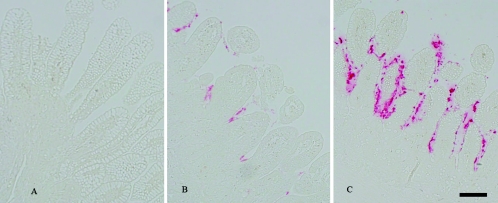
Although heat-stable (ST) and heat-labile (LT) enterotoxins produced by enterotoxigenic Escherichia coli (ETEC) have been documented as important factors associated with diarrheal diseases, investigations assessing the contributions of individual enterotoxins to the pathogenesis of E. coli infection have been limited. To address the individual roles of enterotoxins in the diarrheal disease caused by K88-positive ETEC in young pigs, enterotoxin-positive and -negative isogenic E. coli strains were constructed by using pBR322 to clone and express LT and STb. Four strains, K88+ astA, K88+ astA/pBR322, K88+ astA STb+, and K88+ astA LT+, were constructed and subsequently included in gnotobiotic piglet challenge studies, and their pathogenesis was assessed. The results indicated that all K88+ isogenic strains were able to colonize the small intestines of piglets exhibiting the K88 receptor. However, only LT- and STb-positive strains caused appreciable diarrhea. Piglets inoculated with the K88+ astA LT+ strain became dehydrated within 18 h, while those inoculated with the K88+ astA STb+ strain did not, although diarrhea developed in several piglets. The changes in the blood packed-cell volume and plasma total protein of gnotobiotic piglets inoculated with the LT-positive strains were significantly greater than those of pigs inoculated with the K88 astA/pBR322 strain (P = 0.012, P = 0.002). Immunochemistry image analysis also suggested that LT enhanced bacterial colonization in a gnotobiotic piglet model. This investigation suggested that LT is a major contributor to the virulence of K88+ ETEC and that isogenic constructs are a useful tool for studying the pathogenesis of ETEC infection.
Figures
References
-
- Alexander, T. J. L. 1994. Neonatal diarrhoea in pigs, p. 151-170. In C. L. Gyles (ed.), Escherichia coli in domestic animals and human. CAB International, Willingford, United Kingdom.
-
- Ausubel, F. M., R. Brent, R. K. Kingston, D. D. Moore, J. G. Seidman, J. A. Smith, and K. Struhl. 1999. Short protocols in molecular biology, fourth ed. John Wiley & Sons, Inc., New York, N.Y.
-
- Baker, D. R., L. O. Billey, and D. H. Francis. 1997. Distribution of K88 Escherichia coli adhesive and nonadhesive phenotypes among pigs of four breeds. Vet. Microbiol. 54:123-132. - PubMed
-
- Berberov, E. M., Y. Zhou, D. H. Francis, M. A. Scott, S. D. Kachman, and R. A. Moxley. 2004. Relative importance of heat-labile enterotoxin in the causation of severe diarrheal disease in the gnotobiotic piglet model by a strain of enterotoxigenic Escherichia coli that produces multiple enterotoxins. Infect. Immun. 72:3914-3924. - PMC - PubMed
-
- Bertschinger, H. U., and J. M. Fairbrother. 1999. Escherichia coli infection, p 431-468. In B. E. Straw, S. D'Allaire, W. L. Mengeling, and D. J. Taylor (ed.), Disease of swine, 8th ed. Iowa State University Press, Ames.
Publication types
MeSH terms
Substances
LinkOut - more resources
Full Text Sources
Other Literature Sources
Medical
