


Infection of human fallopian tube epithelial cells with Neisseria gonorrhoeae protects cells from tumor necrosis factor alpha-induced apoptosis
- PMID: 16714596
- PMCID: PMC1479248
- DOI: 10.1128/IAI.00012-06
Infection of human fallopian tube epithelial cells with Neisseria gonorrhoeae protects cells from tumor necrosis factor alpha-induced apoptosis
Abstract
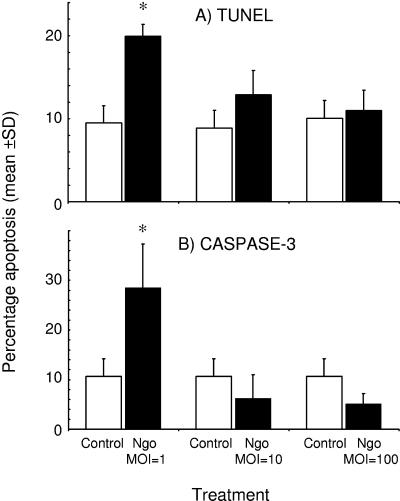
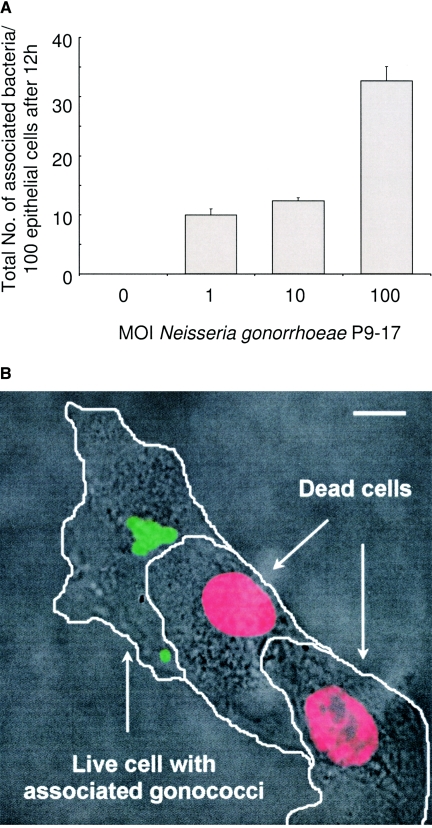
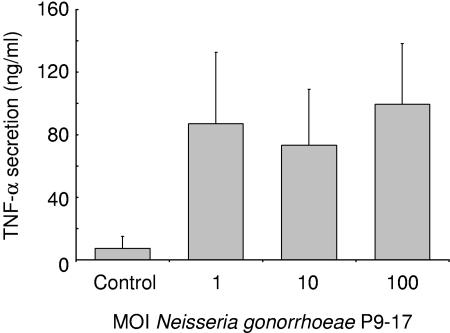
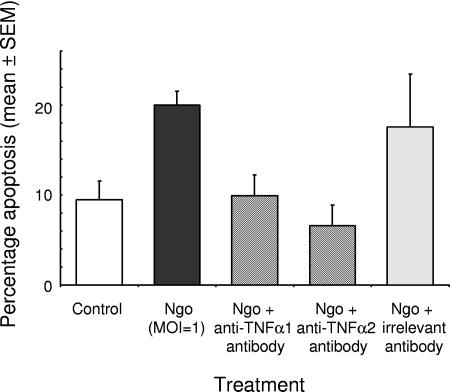
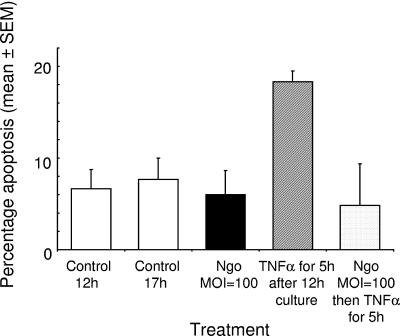
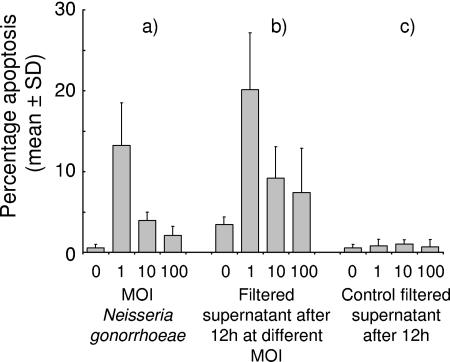
Following infection with Neisseria gonorrhoeae, bacteria may ascend into the Fallopian tubes (FT) and induce salpingitis, a major cause of infertility. In the FT, interactions between mucosal epithelial cells and gonococci are pivotal events in the pathogen's infection cycle and the inflammatory response. In the current study, primary FT epithelial cells were infected in vitro with different multiplicities of infection (MOI) of Pil+ Opa+ gonococci. Bacteria showed a dose-dependent association with cells and induced the secretion of tumor necrosis factor alpha (TNF-alpha). A significant finding was that gonococcal infection (MOI = 1) induced apoptosis in approximately 30% of cells, whereas increasing numbers of bacteria (MOI = 10 to 100) did not induce apoptosis. Apoptosis was observed in only 11% of cells with associated bacteria, whereas >84% of cells with no adherent bacteria were apoptotic. TNF-alpha was a key contributor to apoptosis, since (i) culture supernatants from cells infected with gonococci (MOI = 1) induced apoptosis in naïve cultures, suggesting that a soluble factor was responsible; (ii) gonococcal infection-induced apoptosis was inhibited with anti-TNF-alpha antibodies; and (iii) the addition of exogenous TNF-alpha induced apoptosis, which was inhibited by the presence of increasing numbers of bacteria (MOI = 10 to 100). These data suggest that TNF-alpha-mediated apoptosis of FT epithelial cells is likely a primary host defense mechanism to prevent pathogen colonization. However, epithelial cell-associated gonococci have evolved a mechanism to protect the cells from undergoing TNF-alpha-mediated apoptosis, and this modulation of the host innate response may contribute to establishment of infection. Understanding the antiapoptotic mechanisms used by Neisseria gonorrhoeae will inform the pathogenesis of salpingitis and could suggest new intervention strategies for prevention and treatment of the disease.
Figures
References
-
- Ayala, P., J. Scott Wilbur, L. M. Wetzler, J. A. Tainer, A. Snyder, and M. So. 2005. The pilus and porin of Neisseria gonorrhoeae cooperatively induce Ca2+ transients in infected epithelial cells. Cell. Microbiol. 7:1736-1748. - PubMed
-
- Beck, S. C., and T. F. Meyer. 2000. IgA1 protease from Neisseria gonorrhoeae inhibits TNF alpha-mediated apoptosis of human monocytic cells. FEBS Lett. 472:287-292. - PubMed
-
- Binnicker, M. J., R. D. Williams, and M. A. Apicella. 2003. Infection of human urethral epithelium with Neisseria gonorrhoeae elicits an upregulation of host anti-apoptotic factors and protects cells from staurosporine-induced apoptosis. Cell. Microbiol. 5:549-560. - PubMed
-
- Brunham, R. C., B. Binns, F. Guijon, D. Danforth, M. L. Kosseim, F. Rand, J. Mcdowell, and E. Rayner. 1988. Etiology and outcome of acute pelvic inflammatory disease. J. Infect. Dis. 158:510-517. - PubMed
Publication types
MeSH terms
Substances
LinkOut - more resources
Full Text Sources
Other Literature Sources
