The tobacco epidemic in Syria
- PMID: 16723671
- PMCID: PMC2563543
- DOI: 10.1136/tc.2005.014860
The tobacco epidemic in Syria
Abstract
Background: The Syrian Center for Tobacco Studies (SCTS) was established in response to the smoking epidemic in Syria and lack of local knowledge and expertise to confront it.
Objectives: To (1) study tobacco use and local smoking practices using both qualitative and quantitative research methods; (2) develop and test an effective smoking cessation intervention for the Syrian environment; and (3) train Syrian researchers.
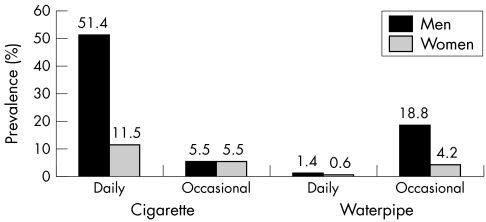
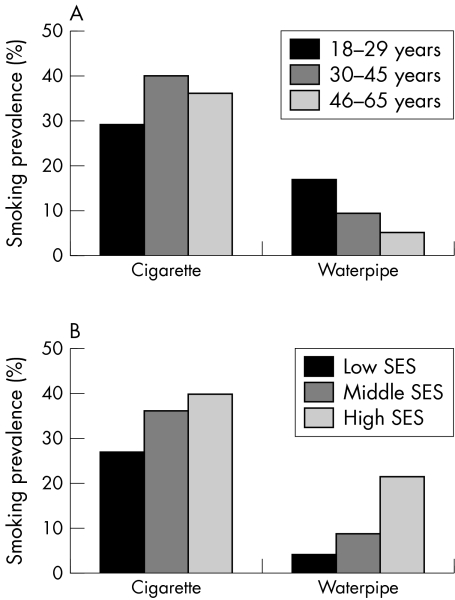
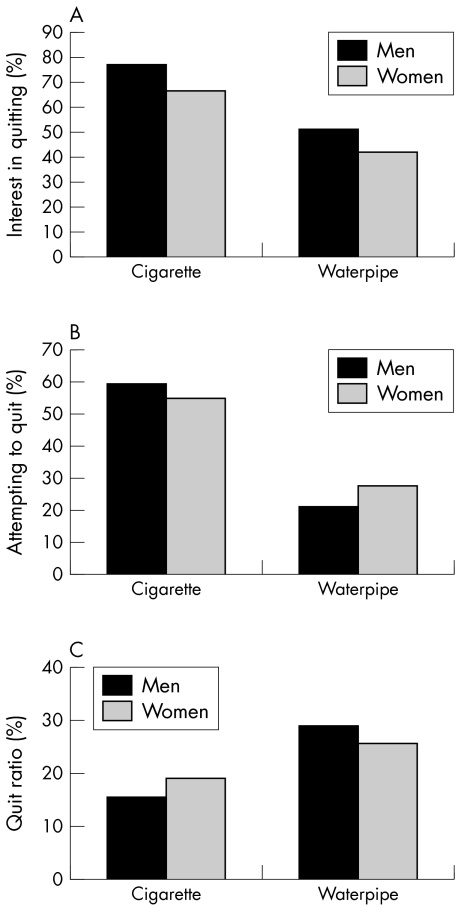
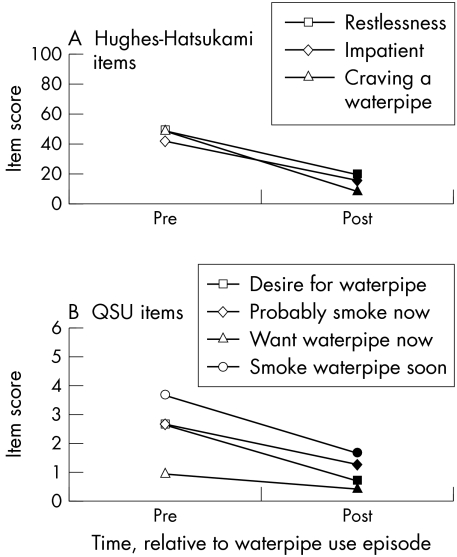
Methods and results: The Aleppo Household Survey involved a representative sample of adults in Aleppo (2038 subjects, 45.2% men, mean age 35.3 years, response rate 86%). The prevalence of cigarette smoking was 56.9% among men and 17.0% among women, while the prevalence of waterpipe smoking was 20.2% among men and 4.8% among women. Daily use predominated for cigarettes (29.0%), while the opposite was seen in waterpipe use with 10.6% smoking occasionally. Interest in quitting was greater for cigarette than waterpipe smokers (74.0% v 48.6%), while quit rates were higher for waterpipe compared to cigarettes (28.2% v 16.5%). In-depth ethnographic interviews with smokers show that smoking waterpipe is often viewed as an aesthetic enjoyable experience, while smoking cigarettes is viewed as a mundane anxiety-relieving addiction. Clinical laboratory studies reveal that both waterpipe and cigarette smokers in Syria are exposed to smoke toxicants and exhibit dependence symptoms.
Conclusions: All these data have been used iteratively to adapt smoking cessation interventions from developed countries to suit the local Syrian environment. Research conducted in the SCTS to date has provided a fertile training ground for Syrian researchers, as well as for the building of regional collaborations.
Conflict of interest statement
Competing interests: none declared
References
-
- Maziak W. Smoking in Syria: profile of a developing Arab country. Int J Tuberc Lung Dis 20026183–191. - PubMed
-
- Maziak W, Ward K D, Eissenberg T.et al The Syrian Center for Tobacco Studies: a model of international partnership for the creation of sustainable research capacity in developing countries. Promot Educ 20041193–7, 116, 134. - PubMed
-
- Maziak W, Ward K D, Mzayek F.et al Mapping the health and environmental situation in informal zones in Aleppo, Syria: report from the Aleppo household survey. Int Arch Occup Environ Health 200578547–558. - PubMed
-
- World Health Organization Guidelines for controlling and monitoring the tobacco epidemic. Geneva: WHO, 1998
Publication types
MeSH terms
Grants and funding
LinkOut - more resources
Full Text Sources