


Use of point-of-sale data to track usage patterns of residential pesticides: methodology development
- PMID: 16725037
- PMCID: PMC1534012
- DOI: 10.1186/1476-069X-5-15
Use of point-of-sale data to track usage patterns of residential pesticides: methodology development
Abstract
Background: Residential-use pesticides have been shown to be a major source of pesticide exposure to people in the United States. However, little is understood about the exposures to household pesticides and the resultant health effects. One reason that little is known about home-use pesticide exposure is the lack of comprehensive data on exposures to pesticides in the home. One method to help ascertain the amount of pesticides present in the home is use of point-of-sale data collected from marketing companies that track product sales to obtain the volume of pesticides sold for home-use. This provides a measure of volume of home-use pesticide.
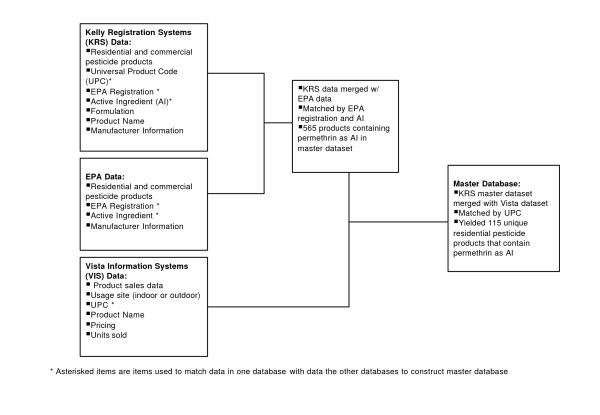
Methods: We have constructed a searchable database containing sales data for home-use permethrin-containing pesticides sold by retail stores in the United States from January 1997 through December 2002 in an attempt to develop a tracking method for pesticide. This pilot project was conducted to determine if point-of-sale data would be effective in helping track the purchase of home-use permethrin containing pesticides and if it would stand as a good model for tracking sales of other home-use pesticides.
Results: There are several limitations associated with this tracking method, including the availability of sales data, market coverage, and geographic resolution. As a result, a fraction of sales data potentially available for reporting is represented in this database. However, the database is sensitive to the number and type of merchants reporting permethrin sales. Further, analysis of the sale of individual products included in the database indicates that year to year variability has a greater impact on reported permethrin sales than the amount sold by each type of merchant.
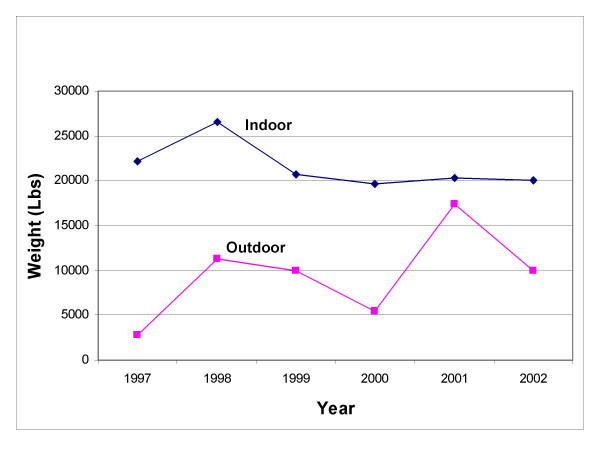
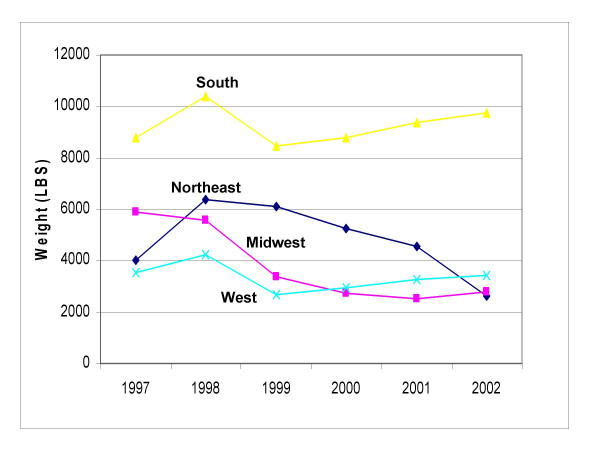
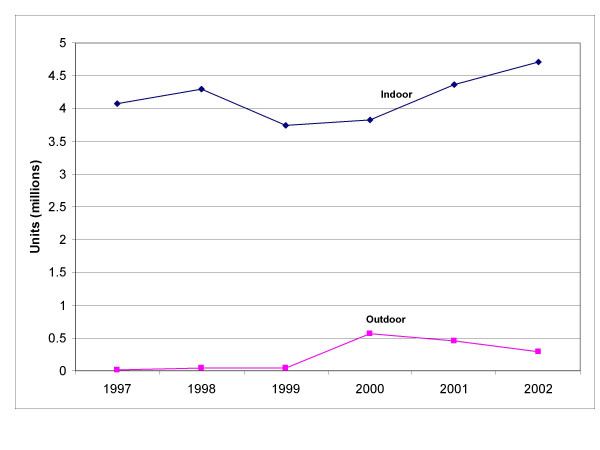
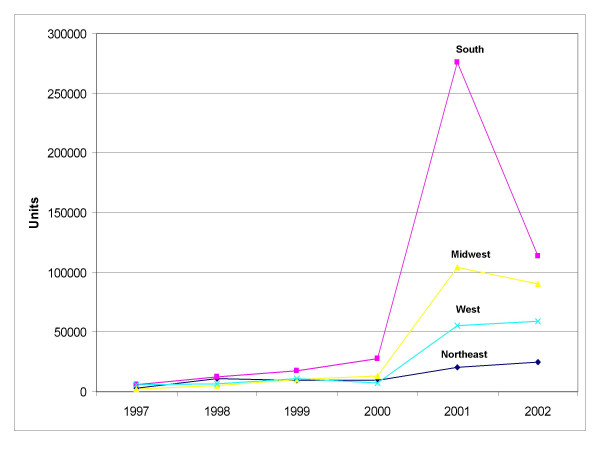
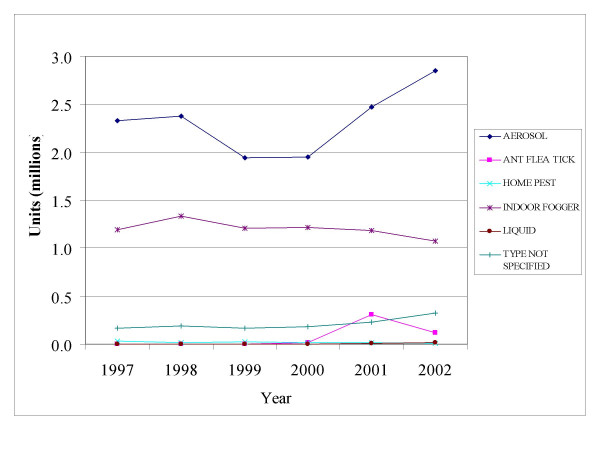
Conclusion: We conclude that, while nothing could completely replace a detailed exposure assessment to estimate exposures to home-use pesticides, a point-of-sale database is a useful tool in tracking the purchase of these types of pesticides to 1) detect anomalous trends in regional and seasonal pesticide sales warranting further investigation into the potential causes of the trends; 2) determine the most commonly purchased application types; and 3) compare relative trends in sales between indoor and outdoor use products as well as compare trends in sales between different active ingredients.
Figures
References
-
- Pesticide Industr Sales and Usage: 2000 and 2001 Market Estimates http://www.epa.gov/oppbead1/pestsales/
-
- United States Environmental Protection Agency, Office of Pesticide Programs http://www.epa.gov/pesticides/
-
- Thier EJA, Klossner C. Plagued by pesticides: An analysis of New York State's 1997 Pesticide Use and Sales Data. Albany, NY: Environmental Advocates; 1998.
Publication types
MeSH terms
Substances
LinkOut - more resources
Full Text Sources
Medical
Research Materials
