


Response of rice (Oryza sativa) with root surface iron plaque under aluminium stress
- PMID: 16735401
- PMCID: PMC2803463
- DOI: 10.1093/aob/mcl110
Response of rice (Oryza sativa) with root surface iron plaque under aluminium stress
Abstract
Background and aims: Rice (Oryza sativa) is an aquatic plant with a characteristic of forming iron plaque on its root surfaces. It is considered to be the most Al-tolerant species among the cereal crops. The objective of this study was to determine the effects of root surface iron plaque on Al translocation, accumulation and the change of physiological responses under Al stress in rice in the presence of iron plaque.
Methods: The japonica variety rice, Koshihikari, was used in this study and was grown hydroponically in a growth chamber. Iron plaque was induced by exposing the rice roots to 30 mg L(-1) ferrous iron either as Fe(II)-EDTA in nutrient solution (6 d, Method I) or as FeSO(4) in water solution (12 h, Method II). Organic acid in root exudates was retained in the anion-exchange resin and eluted with 2 m HCl, then analysed by high-performance liquid chromatography (HPLC) after proper pre-treatment. Fe and Al in iron plaque were extracted with DCB (dithionite-citrate-bicarbonate) solution.
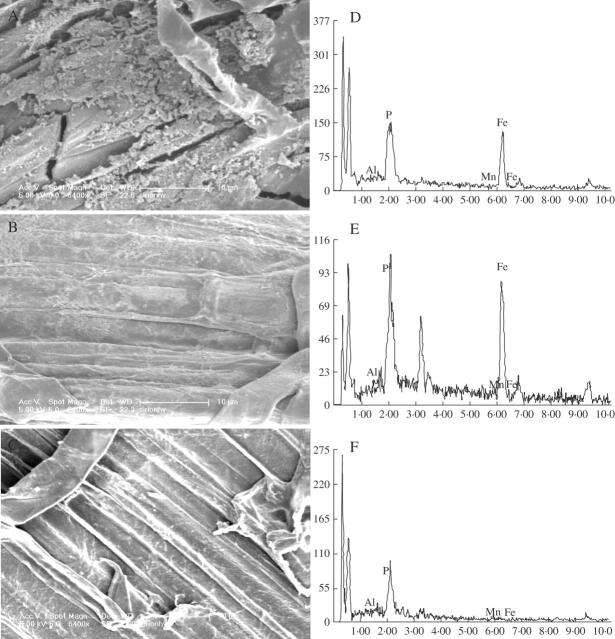
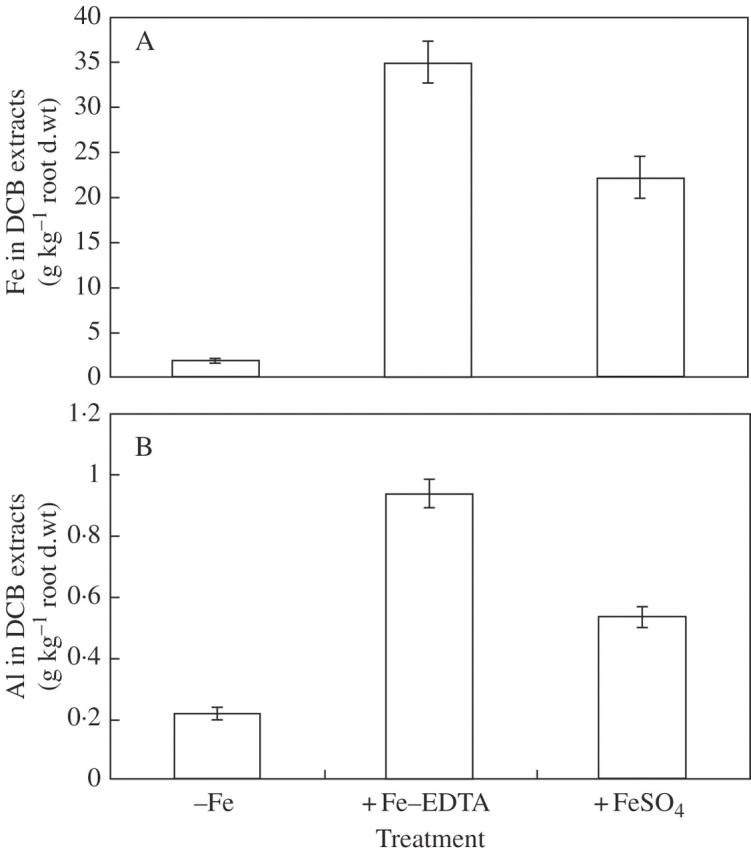
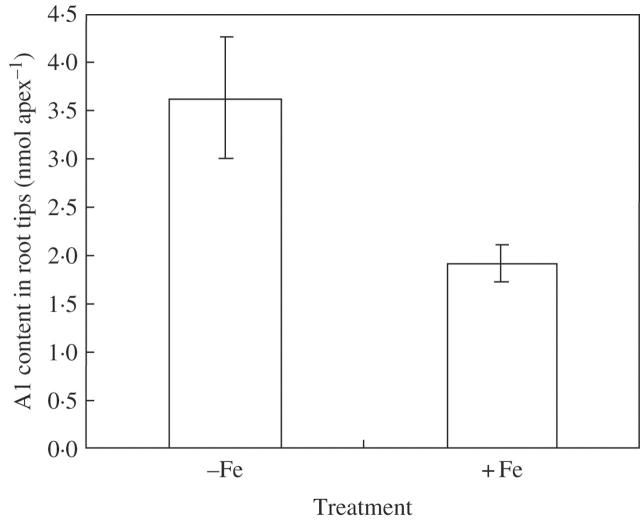
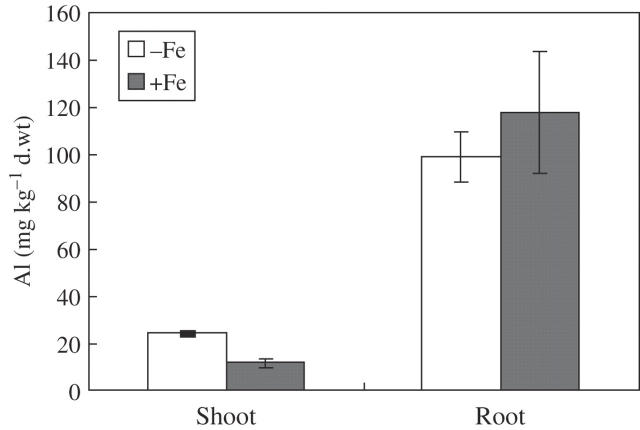
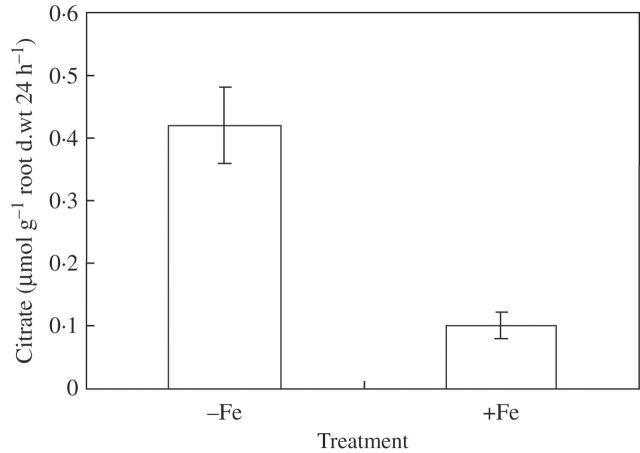
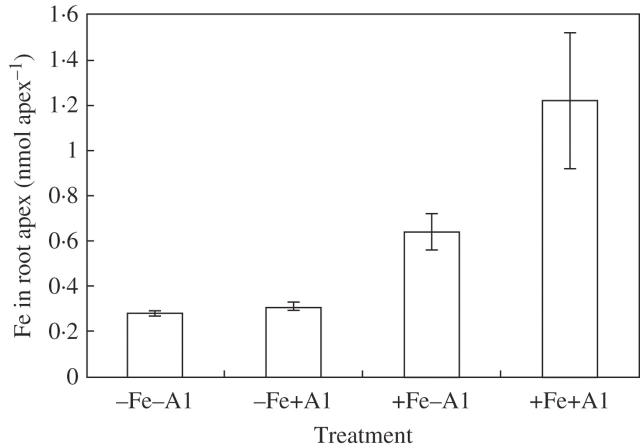
Key results and conclusions: Both methods (I and II) could induce the formation of iron plaque on rice root surfaces. The amounts of DCB-extractable Fe and Al on root surfaces were much higher in the presence of iron plaque than in the absence of iron plaque. Al contents in root tips were significantly decreased with iron plaque; translocation of Al from roots to shoots was significantly reduced with iron plaque. Al-induced secretion of citrate was observed and iron plaque could greatly depress this citrate secretion. These results suggested that iron plaque on rice root surfaces can be a sink to sequester Al onto the root surfaces and Fe ions can pre-saturate Al-binding sites in root tips, which protects the rice root tips from suffering Al stress to a certain extent.
Figures
References
-
- Batty LC, Baker AJM, Wheeler BD, Curtis CD. 2000. The effect of pH and plaque on the uptake of Cu and Mn in Phragmites australis (Cav.) Trin ex. Steudel. Annals of Botany 86: 647–653.
-
- Chabbi A. 1999. Juncus bulbosus as a pioneer species in acidic lignite mining lakes: interactions, mechanism and survival strategies. New Phytologist 144: 133–142.
-
- Chen CC, Dixon JB, Turner FT. 1980a. Iron coatings on rice roots: mineralogy and quantity influencing factors. Soil Science Society of American Journal 44: 635–639.
-
- Chen CC, Dixon JB, Turner FT. 1980b. Iron coatings on rice roots: morphology and models of development. Soil Science Society of American Journal 44: 1113–1119.
Publication types
MeSH terms
Substances
LinkOut - more resources
Full Text Sources
Medical
