


Trends in the incidence of primary liver and biliary tract cancers in England and Wales 1971-2001
- PMID: 16736026
- PMCID: PMC2361300
- DOI: 10.1038/sj.bjc.6603127
Trends in the incidence of primary liver and biliary tract cancers in England and Wales 1971-2001
Abstract
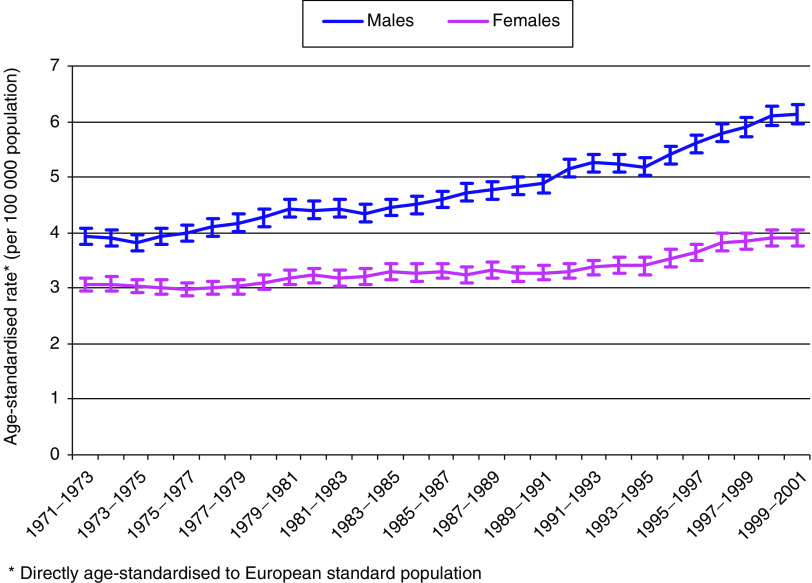
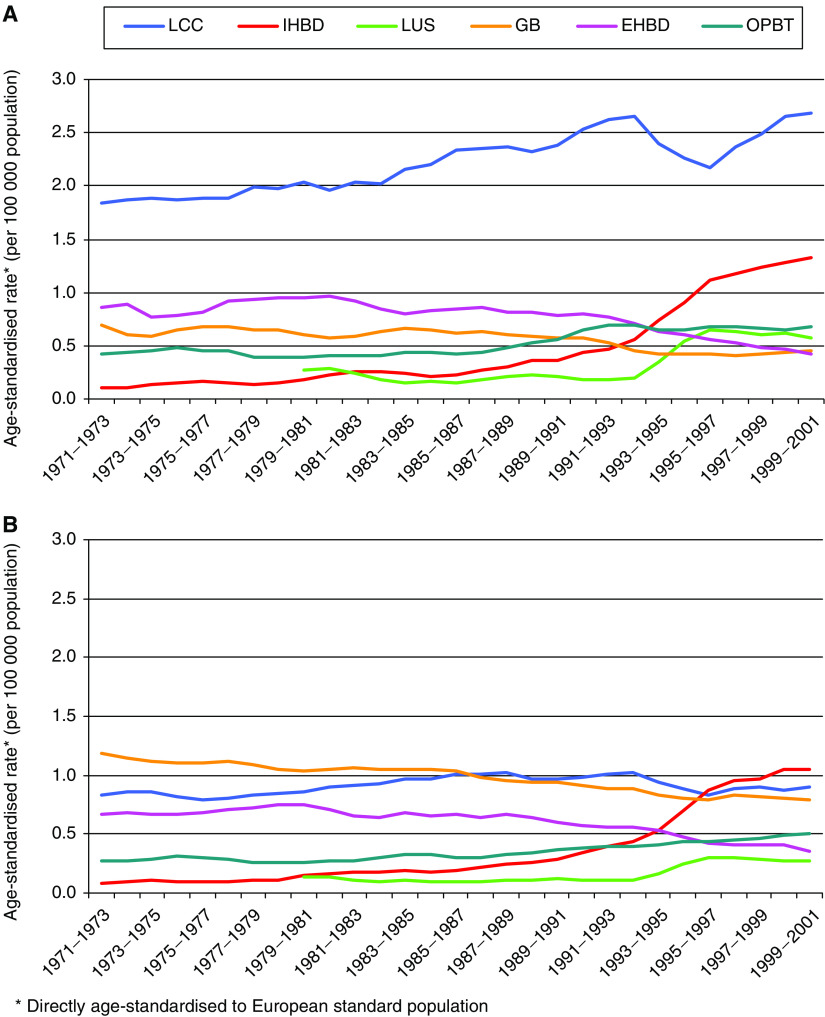
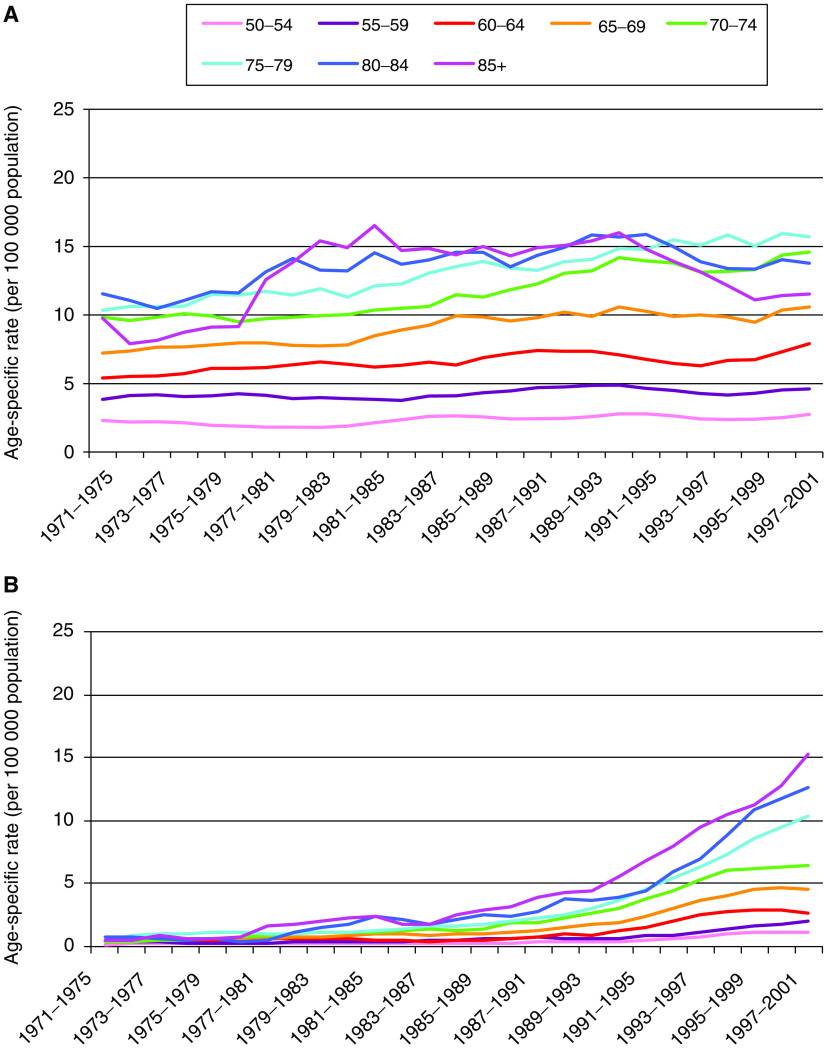
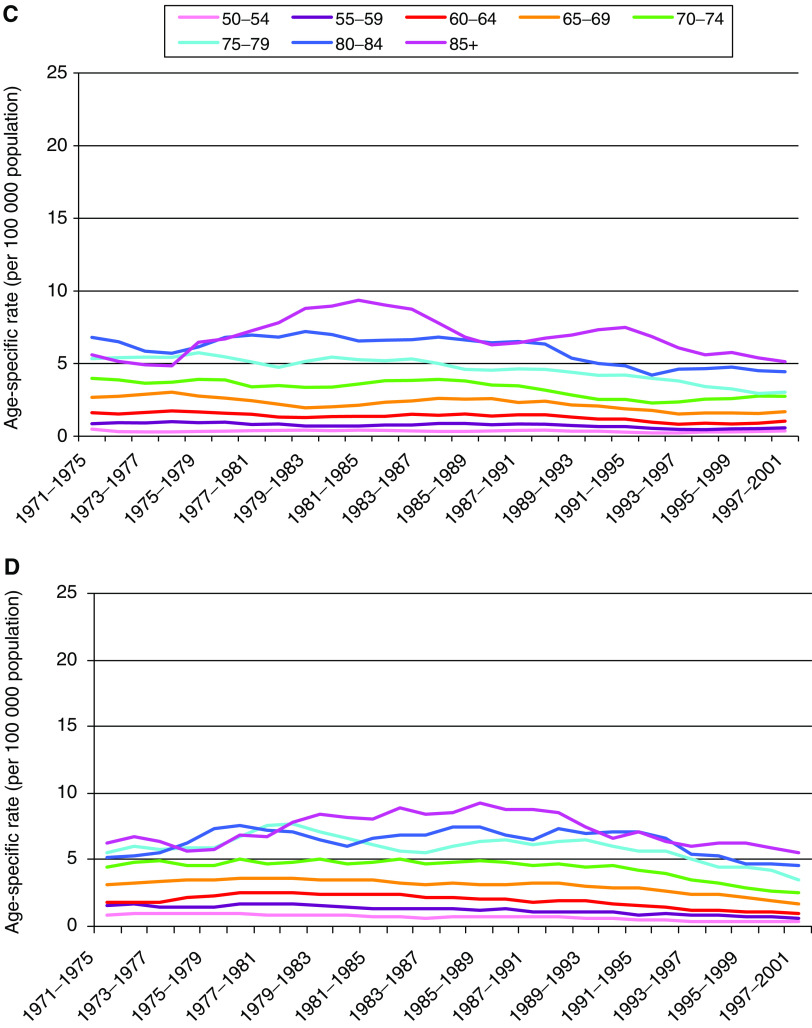
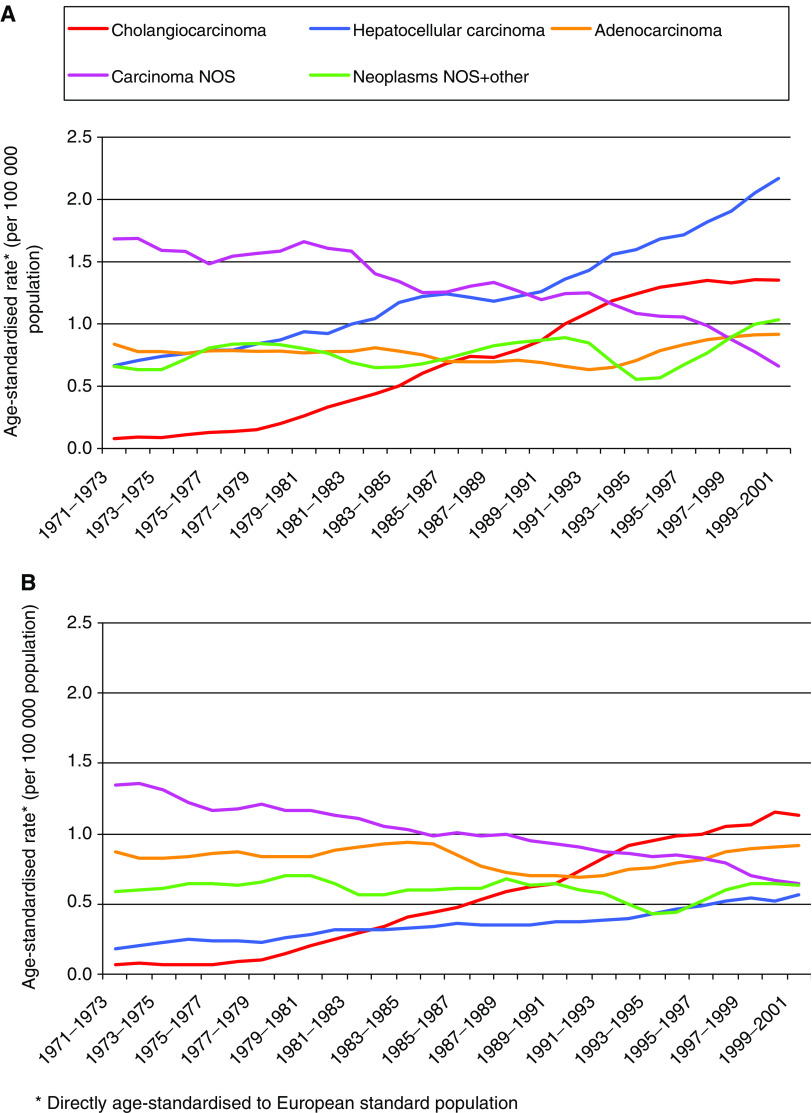
In the last two decades, mortality from primary liver cancer has increased in the UK. We aimed to determine whether the incidence trends for these cancers were similar and in particular if the increasing occurrence of cholangiocarcinoma has continued. We calculated directly age-standardised incidence rates (using the European standard population) by subsite and histological type for all cancers of the liver, gallbladder and biliary tract in England and Wales from 1971 to 2001, using cancer registry data. The incidence of cancers of the liver, gallbladder and biliary tract increased, with the greatest rise, around 12-fold, in intrahepatic bile duct cancers. The rate of liver cell cancer increased by around 45% in males, but by <10% in females. There were marked reductions in the incidence of gallbladder and extrahepatic bile duct cancer. Cholangiocarcinoma increased around 16-fold and became the most common type of primary liver cancer in females, while hepatocellular carcinoma remained the commonest type in males. The age-specific incidence rates showed that intrahepatic bile duct cancer continued to increase throughout the 1990s in those aged 75 and over, while liver cell cancer decreased in the older age groups. In conclusion, there were increases in the incidence of primary liver cancer, which have been particularly dramatic for intrahepatic bile duct cancer, over the last three decades of the 20th century in England and Wales. There has been a halving in the incidence of gallbladder cancer and a reduction of a third in extrahepatic bile duct cancer.
Figures
References
-
- Brock A, Griffiths C, Rooney C (2004) The effect of the introduction of ICD-10 on cancer mortality trends in England and Wales. Health Stat Q Autumn, Issue 23, 7–17 - PubMed
-
- El-Serag HB, Mason AC (1999) Rising incidence of hepatocellular carcinoma in the United States. N Engl J Med 340: 745–750 - PubMed
-
- International Classification of Disease (ICD8) (1967) Manual of the International Statistical Classification of Diseases, Injuries, and Causes of Death. Geneva: World Health Organisation
-
- International Classification of Disease (ICD9) (1975) International Classification of Diseases: Manual of the International Statistical Classification of Diseases, Injuries and Causes of Death. Geneva: WHO
Publication types
MeSH terms
LinkOut - more resources
Full Text Sources
Other Literature Sources
Medical
