


Pulmonary function testing in idiopathic interstitial pneumonias
- PMID: 16738195
- PMCID: PMC2658684
- DOI: 10.1513/pats.200602-022TK
Pulmonary function testing in idiopathic interstitial pneumonias
Abstract
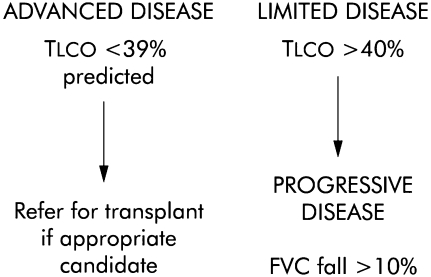
Diffuse parenchymal lung diseases are a group of disorders that involve the space between the epithelial and endothelial basement membranes and are generally segregated into four major categories. These include the idiopathic interstitial pneumonias, which are further categorized into seven clinical/radiologic/pathologic subsets. These disorders generally share a common pattern of physiologic abnormality characterized by a restrictive ventilatory defect and reduced diffusing capacity (DLCO). Pulmonary function testing is often used and recommended in their assessment and management. The potential clinical application of physiologic testing includes to aid in diagnosis, although its value in differential diagnosis is limited. Pulmonary function testing also aids in establishing disease severity and in defining prognosis. In nonspecific interstitial pneumonia and idiopathic pulmonary fibrosis, severely decreased DLCO has proven valuable in this regard. Similarly, exertional desaturation to less than 88% at baseline testing and a decrease in FVC (greater than 10%) over the course of short-term follow-up identify patients at particular risk of mortality. Finally, physiologic testing, especially spirometry and DLCO, have demonstrated value in monitoring response to therapy and identifying disease progression.
Figures


References
-
- American Thoracic Society, European Respiratory Society. American Thoracic Society/European Respiratory Society international multidisciplinary consensus classification of the idiopathic interstitial pneumonias. Am J Respir Crit Care Med 2002;165:277–304. - PubMed
-
- O'Donnell D. Physiology of interstitial lung disease. In: Schwarz M, King T Jr, editors. Interstitial lung disease. Hamilton, ON, Canada: Marcel Dekker; 1998. pp. 51–70.
-
- Schlueter D, Immekus J, Stead W. Relationship between maximal inspiratory pressure and total lung capacity (coefficient of retraction) in normal subjects and in patients with emphysema, asthma, and diffuse pulmonary infiltration. Am Rev Respir Dis 1967;96:656–665. - PubMed
-
- Macklem P, Becklake M. The relationship between mechanical and diffusing properties of the lung in health and disease. Am Rev Respir Dis 1963;87:47–56.
-
- Gibson G, Pride N, Davis J, Schroter R. Exponential description of the static pressure–volume curve of normal and diseased lung. Am Rev Respir Dis 1979;120:799–811. - PubMed
Publication types
MeSH terms
Grants and funding
LinkOut - more resources
Full Text Sources
Medical