Transdermal nicotine-induced tobacco abstinence symptom suppression: nicotine dose and smokers' gender
- PMID: 16756416
- PMCID: PMC1564049
- DOI: 10.1037/1064-1297.14.2.121
Transdermal nicotine-induced tobacco abstinence symptom suppression: nicotine dose and smokers' gender
Abstract
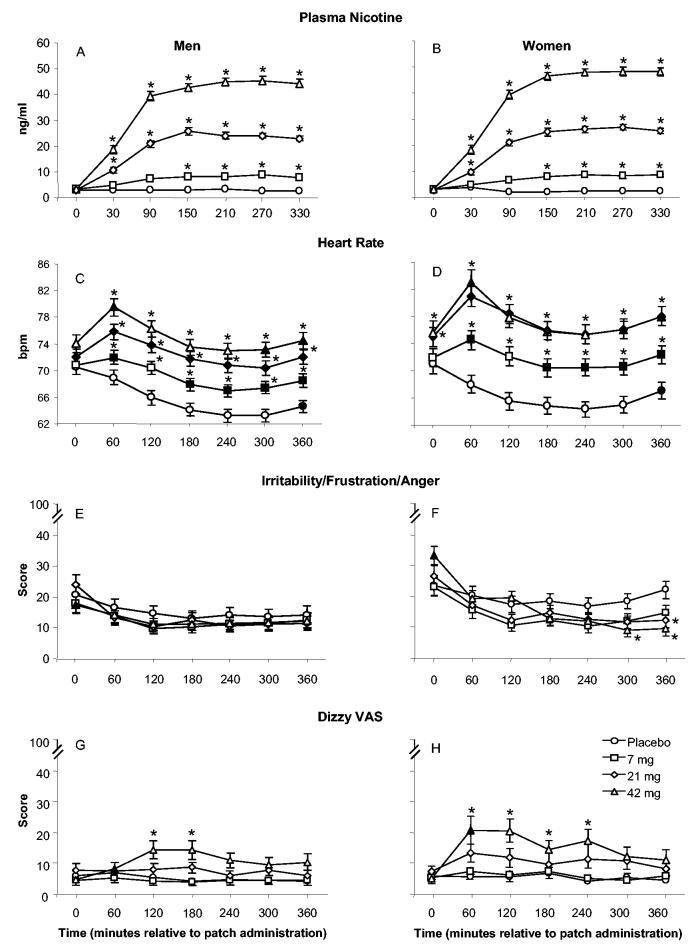
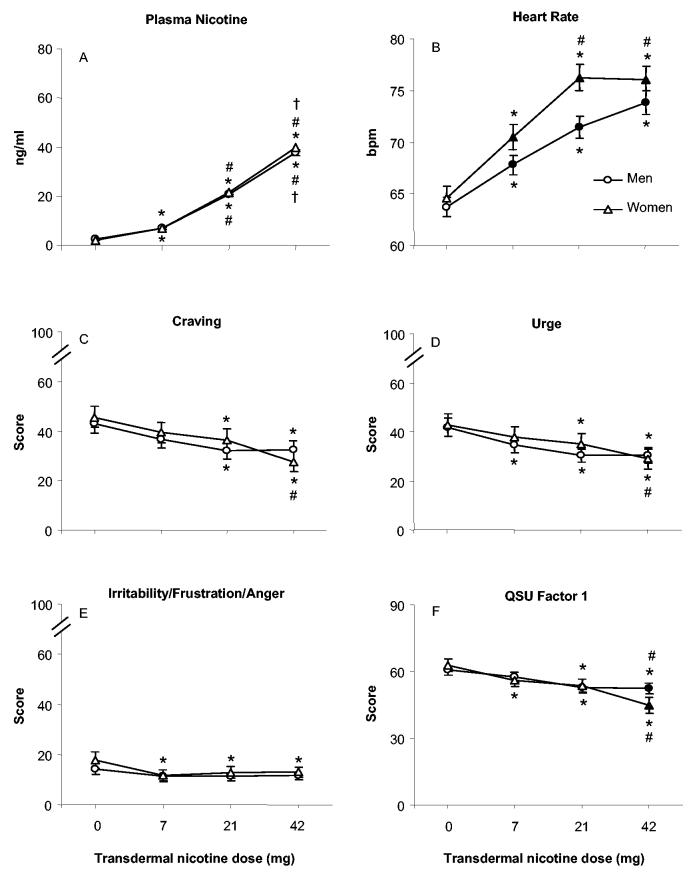
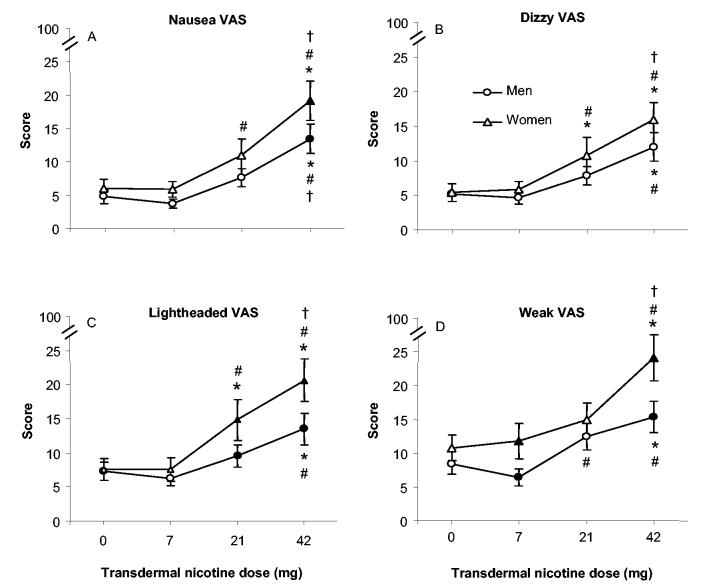
An aversive tobacco abstinence syndrome, thought to reflect an underlying level of nicotine dependence, contributes to cigarette smokers' failed quit attempts. Nicotine replacement therapy (NRT) suppresses tobacco abstinence, but high relapse rates suggest room for improvement. Improving NRT's efficacy might begin with identifying factors that influence tobacco abstinence symptom suppression. Two such factors are smokers' gender and NRT dose. The purpose of this study was to determine the dose-related effects of transdermal nicotine (TN) on tobacco abstinence symptoms in 75 men and 53 women who regularly smoked cigarettes but who had abstained from smoking for at least 8-12 hr. Participants completed 4 double-blind, randomized 6.5-hr laboratory sessions that differed by TN dose (0, 7, 21, or 42 mg). Each session included blood sampling for plasma nicotine level, measurement of heart rate, participants' ratings of tobacco abstinence symptoms and effects of nicotine, and psychomotor performance. Increases in plasma nicotine level were related to TN dose and were independent of gender. TN-induced abstinence symptom suppression was dose-related for items assessing craving and urge to smoke and largely was independent of gender. TN increased heart rate and ratings of aversive side effects (e.g., nausea, lightheadedness) in a dose-related manner, and women were more sensitive at higher doses. Results from this laboratory study support the continued use of TN as a pharmacotherapy. Higher doses may ameliorate some abstinence symptoms, although the side effect profile, at least in the short term, may limit effectiveness, especially for women.
Figures
References
-
- Abrams DB, Monti PM, Carey JB, Pinto RP, Jacobus SI. Reactivity to smoking cues and relapse: Two studies of discriminant validity. Behaviour Research and Therapy. 1988;26:225–233. - PubMed
-
- Allen SS, Hatsukami DK, Christianson D, Nelson D. Effects of transdermal nicotine on craving, withdrawal, and premenstrual symptomatology in short-term smoking abstinence during different phases of the menstrual cycle. Nicotine and Tobacco Research. 2000;2:231–241. - PubMed
-
- American Psychiatric Association . Diagnostic and statistical manual of mental disorders. 4th ed. Author; Washington, DC: 1994.
-
- Beck AT, Steer RA, Brown GK. Manual for Beck Depression Inventory II (BDI-II) Psychology Corporation; San Antonio, TX: 1996.
-
- Benowitz NL, Zevin S, Jacob P., III. Suppression of nicotine intake during ad libitum cigarette smoking by high-dose transdermal nicotine. Journal of Pharmacology and Experimental Therapeutics. 1998;287:958–962. - PubMed