


Multilocus sequence typing for analyses of clonality of Candida albicans strains in Taiwan
- PMID: 16757617
- PMCID: PMC1489451
- DOI: 10.1128/JCM.00320-06
Multilocus sequence typing for analyses of clonality of Candida albicans strains in Taiwan
Abstract
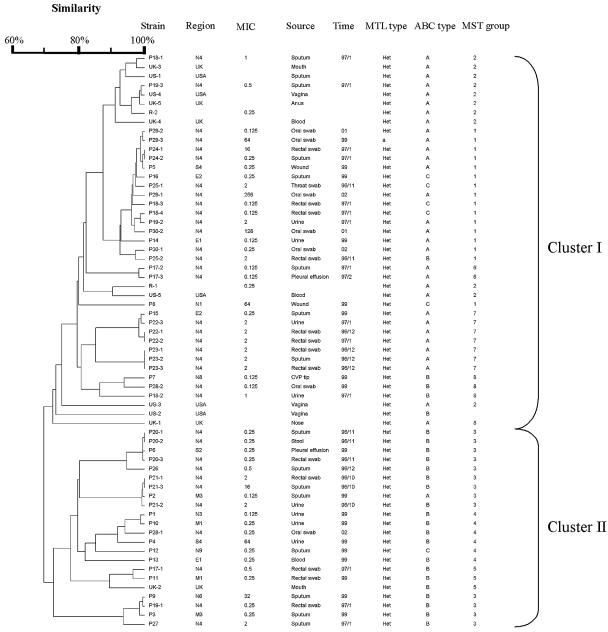
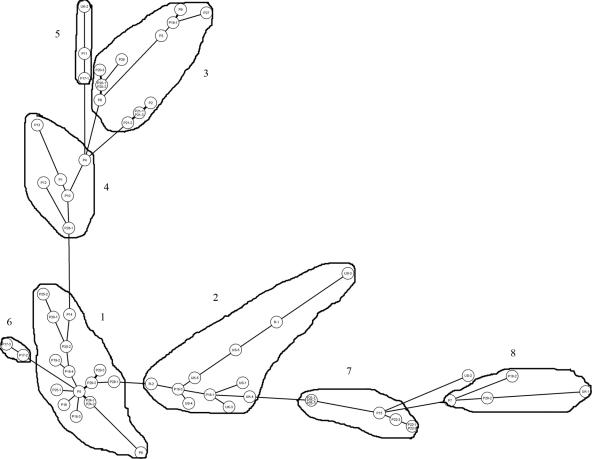
Multilocus sequence typing (MLST) was used to characterize the genetic profiles of 51 Candida albicans isolates collected from 12 hospitals in Taiwan. Among the 51 isolates, 16 were epidemiologically unrelated, 28 were isolates from 11 critically ill, human immunodeficiency virus (HIV)-negative patients, and 7 were long-term serial isolates from 3 HIV-positive patients. Internal regions of seven housekeeping genes were sequenced. A total of 83 polymorphic nucleotide sites were identified. Ten to 20 different genotypes were observed at the different loci, resulting, when combined, in 45 unique genotype combinations or diploid sequence types (DSTs). Thirty (36.1%) of the 83 individual changes were synonymous and 53 (63.9%) were nonsynonymous. Due to the diploid nature of C. albicans, MLST was more discriminatory than the pulsed-field gel electrophoresis-BssHII-restricted fragment method in discriminating epidemiologically related strains. MLST is able to trace the microevolution over time of C. albicans isolates in the same patient. All but one of the DSTs of our Taiwanese strain collections were novel to the internet C. albicans DST database (http://test1.mlst.net/). The DSTs of C. albicans in Taiwan were analyzed together with those of the reference strains and of the strains from the United Kingdom and United States by unweighted-pair group method using average linkages and minimum spanning tree. Our result showed that the DNA type of each isolate was patient specific and associated with ABC type and decade of isolation but not associated with mating type, anatomical source of isolation, hospital origin, or fluconazole resistance patterns.
Figures
References
-
- Ball, L. M., M. A. Bes, B. Theelen, T. Boekhout, R. M. Egeler, and E. J. Kuijper. 2004. Significance of amplified fragment length polymorphism in identification and epidemiological examination of Candida species colonization in children undergoing allogeneic stem cell transplantation. J. Clin. Microbiol. 42:1673-1679. - PMC - PubMed
-
- Chen, K. W., H. J. Lo, Y. H. Lin, and S. Y. Li. 2005. Comparison of four molecular typing methods to assess genetic relatedness of Candida albicans clinical isolates in Taiwan. J. Med. Microbiol. 54:249-258. - PubMed
-
- Chen, Y. C., S. C. Chang, K. T. Luh, and W. C. Hsieh. 2003. Stable susceptibility of Candida blood isolates to fluconazole despite increasing use during the past 10 years. J. Antimicrob. Chemother. 52:71-77. - PubMed
Publication types
MeSH terms
Substances
Grants and funding
LinkOut - more resources
Full Text Sources
Medical
