


Diarrheal epidemics in Dhaka, Bangladesh, during three consecutive floods: 1988, 1998, and 2004
- PMID: 16760521
- PMCID: PMC1626162
Diarrheal epidemics in Dhaka, Bangladesh, during three consecutive floods: 1988, 1998, and 2004
Abstract
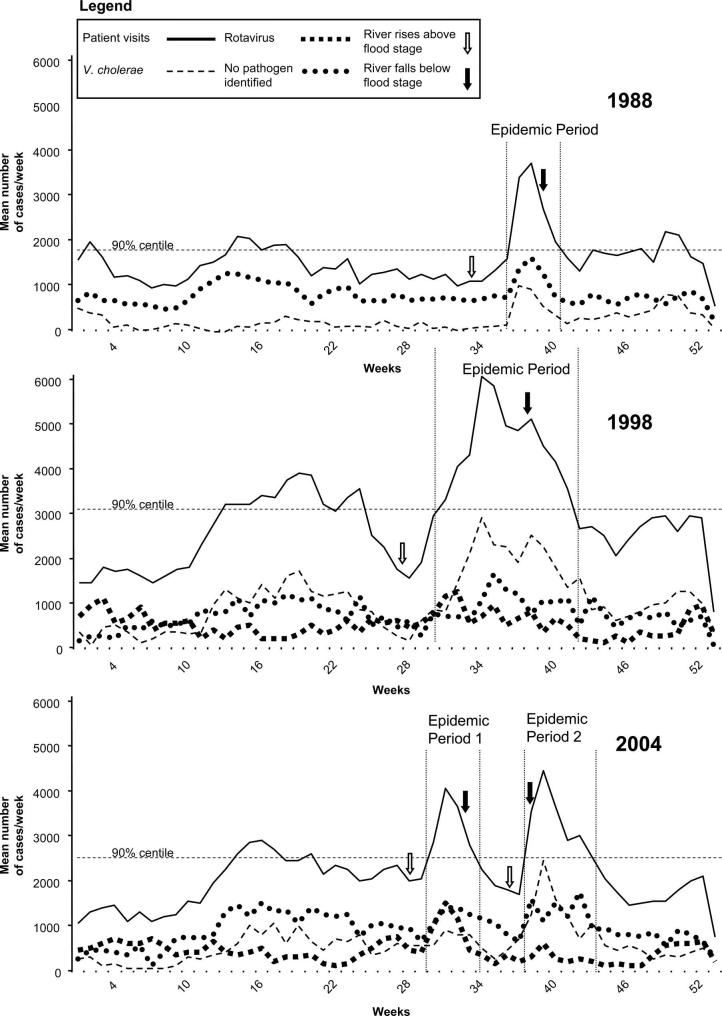
We examined demographic, microbiologic, and clinical data from patients presenting during 1988, 1998, and 2004 flood-associated diarrheal epidemics at a diarrhea treatment hospital in Dhaka, Bangladesh. Compared with non-flood periods, individuals presenting during flood-associated epidemics were older, more severely dehydrated, and of lower socioeconomic status. During flood-associated epidemics, Vibrio cholerae was the most commonly identified cause of diarrhea, and the only diarrheal pathogen whose incidence proportionally increased in each epidemic compared with seasonally matched periods. Rotavirus was the second most frequently identified flood-associated pathogen, although the proportion of cases caused by rotavirus infection decreased during floods compared with matched periods. Other causes of diarrhea did not proportionally change, although more patients per day presented with enterotoxigenic Escherichia coli, Shigella, and Salmonella species-associated diarrhea during floods compared with matched periods. Our findings suggest that cholera is the predominant cause of flood-associated diarrheal epidemics in Dhaka, but that other organisms spread by the fecal-oral route also contribute.
Figures
References
-
- Rashid SF. The urban poor in Dhaka City: their struggles and coping strategies during the floods of 1998. Disasters. 2000;24:240–253. - PubMed
-
- Kondo H, Seo N, Yasuda T, Hasizume M, Koido Y, Ninomiya N, Yamamoto Y. Post-flood epidemics of infectious disease in Mozambique. Prehosp Disast Med. 2002;17:126–133. - PubMed
-
- Aghababian RV, Teuscher J. Infectious disease following major disasters. Ann Emerg Med. 1992;21:362–367. - PubMed
-
- Kunii O, Nakamura S, Abdur R, Wakai S. The impact on health and risk factors of the diarrhoea epidemics in the 1998 Bangladesh floods. Public Health. 2002;116:68–74. - PubMed
-
- WHO. Cholera. Wkly Epidemiol Rec. 2003;79:281–288. - PubMed
Publication types
MeSH terms
Grants and funding
LinkOut - more resources
Full Text Sources
Medical