


Dietary exposure of largemouth bass to OCPs changes expression of genes important for reproduction
- PMID: 16765462
- PMCID: PMC1892580
- DOI: 10.1016/j.aquatox.2006.05.003
Dietary exposure of largemouth bass to OCPs changes expression of genes important for reproduction
Abstract
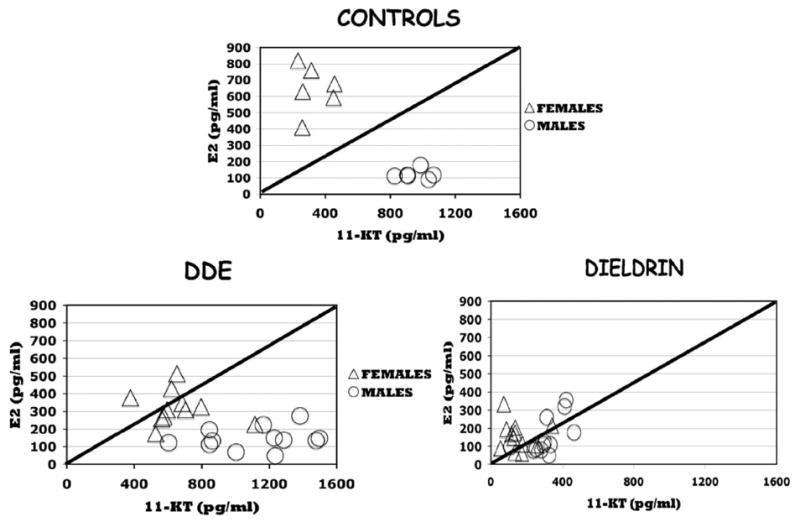
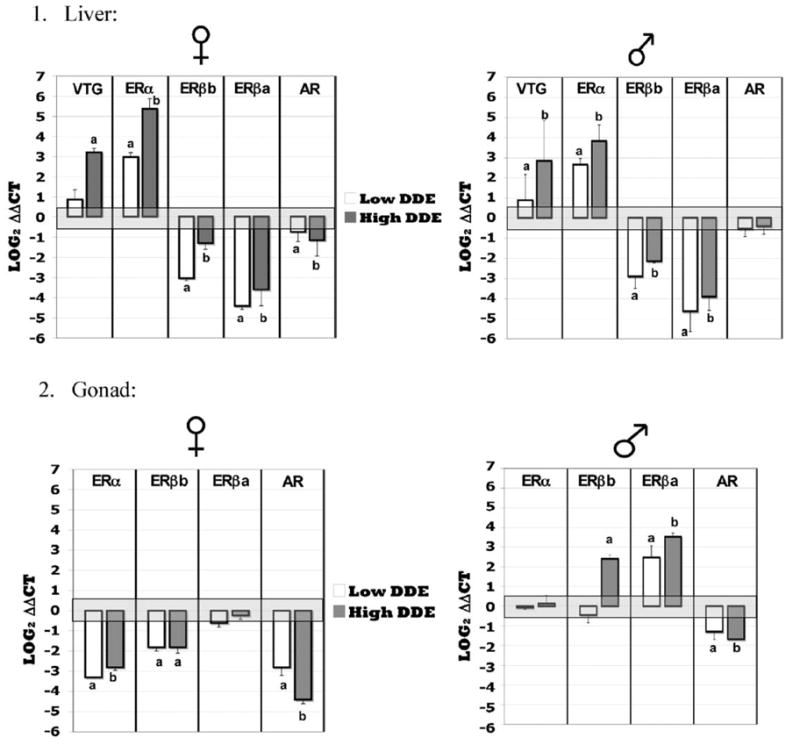
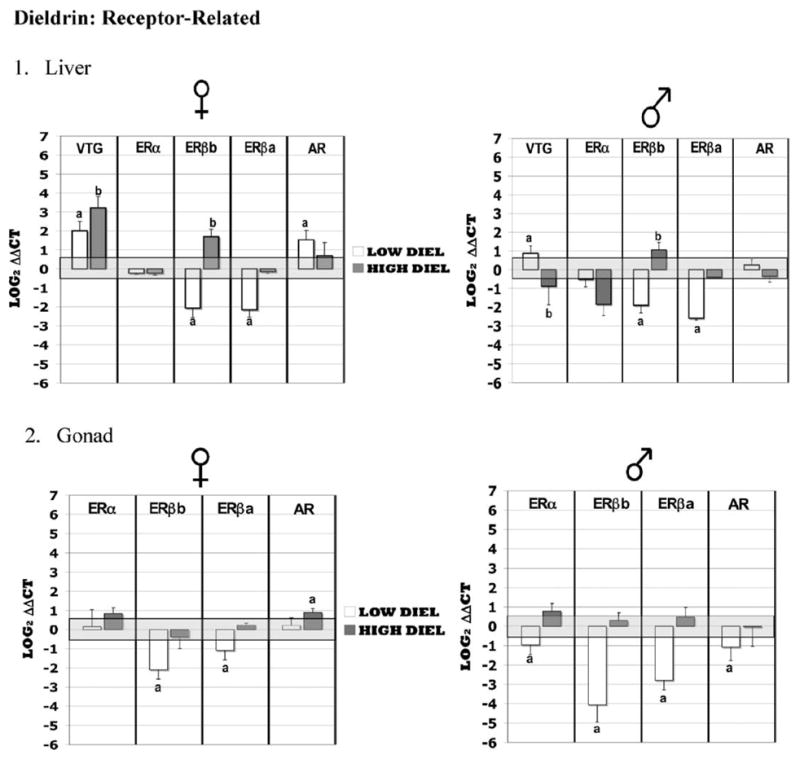
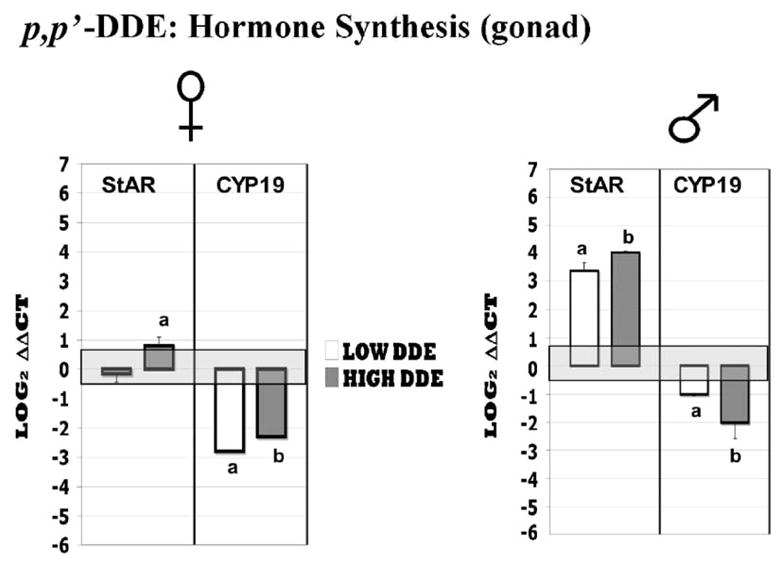
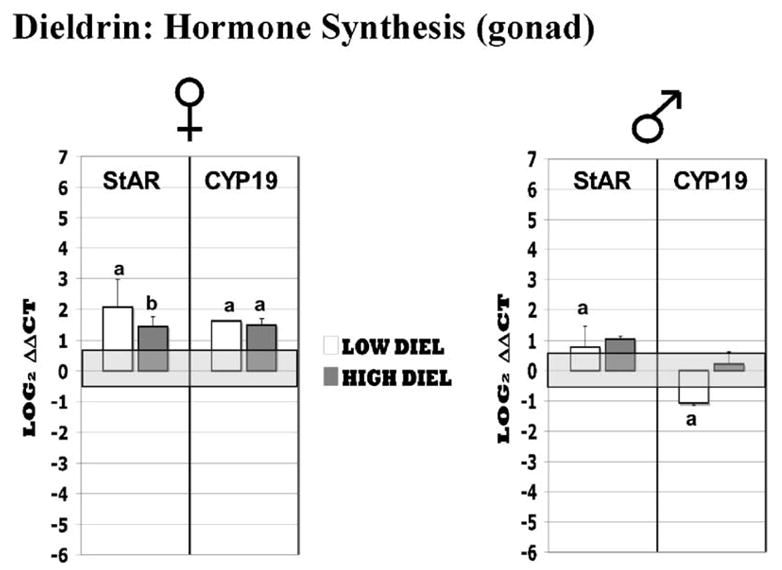
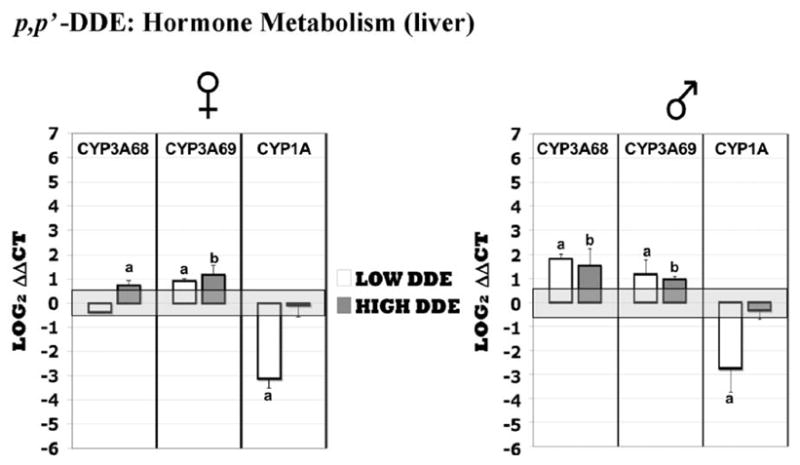
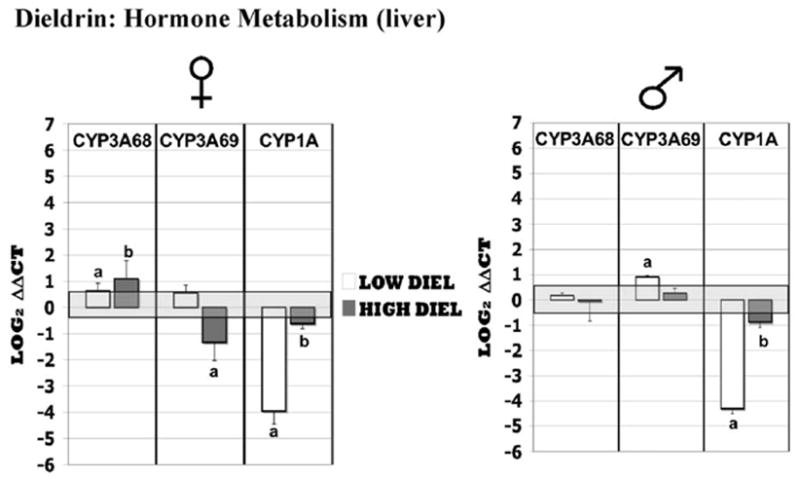
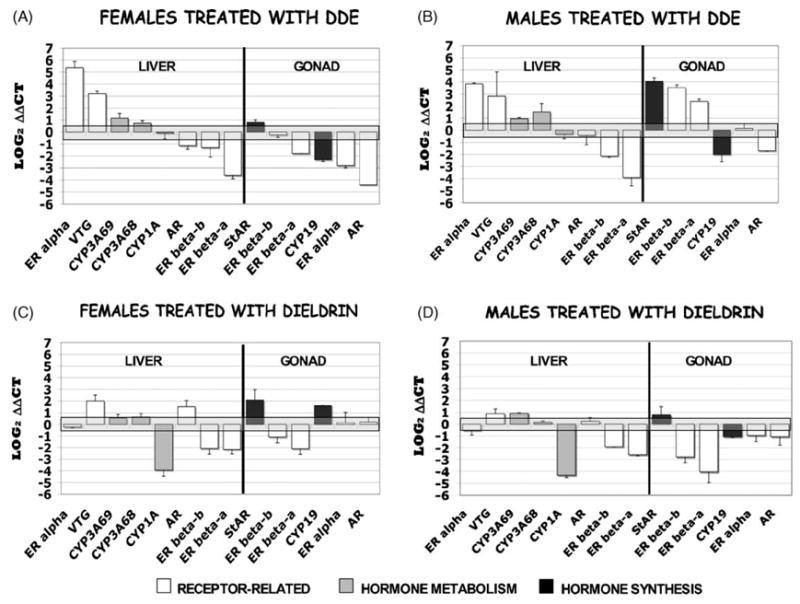
Dieldrin and p,p'-DDE are ubiquitous contaminants known to act as endocrine disruptors, causing impaired development and reproduction in fish and wildlife. In order to elucidate the mechanisms by which dieldrin and p,p'-DDE cause endocrine disruption in largemouth bass (Micropterus salmoides), fish were exposed subchronically through the diet to both contaminants. Following 120 days of exposure, p,p'-DDE decreased estradiol in females, but increased 11-ketotestosterone in both sexes. Dieldrin on the other hand, decreased estradiol and 11-ketotestosterone in both sexes. Both pesticides also altered steady state mRNA expression levels of a set of genes chosen to represent three possible mechanisms of endocrine disruption: (1) direct interaction with soluble sex steroid receptors, (2) biosynthesis of endogenous sex hormones, and (3) metabolism of endogenous hormones. p,p'-DDE acted as a weak estrogen, increasing the expression of vitellogenin and estrogen receptor alpha in the liver. p,p'-DDE also altered the expression of genes involved in the synthesis of endogenous hormones as well as their metabolism. Dieldrin, on the other hand, only altered expression of vitellogenin and not estrogen receptor alpha. Dieldrin also altered the expression of genes involved in hormone synthesis and metabolism, and it dramatically lowered plasma hormone levels. Both pesticides targeted expression of genes involved in all three modes of action, suggesting that they each have multiple modes of action.
Figures
References
-
- Andersen HR, Vinggaard AM, Rasmussen TH, Gjermandsen IM, Bonefeld-Jorgensen EC. Effects of currently used pesticides in assays for estrogenicity, androgenicity, and aromatase activity in vitro. Toxicol Appl Pharmacol. 2002;179:1–12. - PubMed
-
- Arukwe A, Förlin L, Goksøyr A. Xenobiotic and steroid biotransformation enzymes in Atlantic salmon (Salmo salar) liver treated with an estrogenic compound: 4-nonylphenol. Environ Toxicol Chem. 1997;16:2576–2583.
-
- Arukwe A. Cellular and molecular responses to endocrine-modulators and the impact on fish reproduction. Mar Pollut Bull. 2001;42:643–655. - PubMed
-
- Attia GR, Dooley CA, Rainey WE, Carr BR. Transforming growth factor beta inhibits steroidogenic acute regulatory (StAR) protein expression in human ovarian thecal cells. Mol Cell Endocrinol. 2000;170:123–129. - PubMed
Publication types
MeSH terms
Substances
Grants and funding
LinkOut - more resources
Full Text Sources
Medical
