


Prolonged treatment with ligands affects ligand binding to the human serotonin(1A) receptor in Chinese hamster ovary cells
- PMID: 16767512
- PMCID: PMC11520648
- DOI: 10.1007/s10571-006-9002-7
Prolonged treatment with ligands affects ligand binding to the human serotonin(1A) receptor in Chinese hamster ovary cells
Abstract
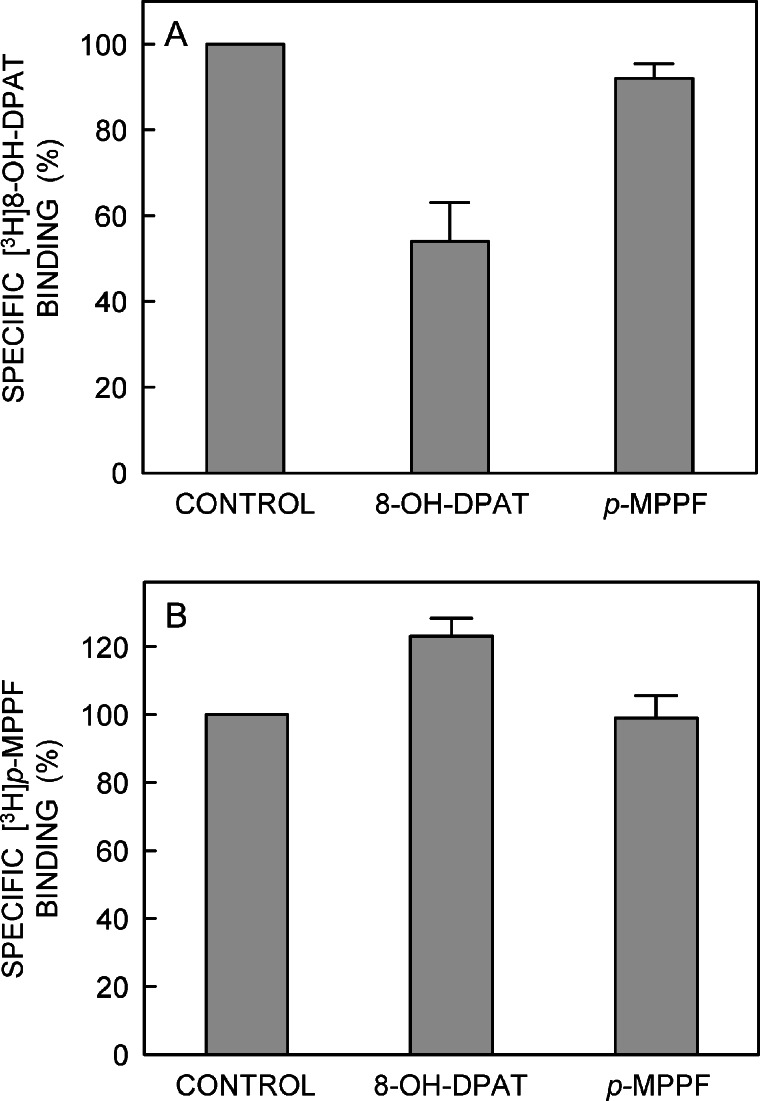
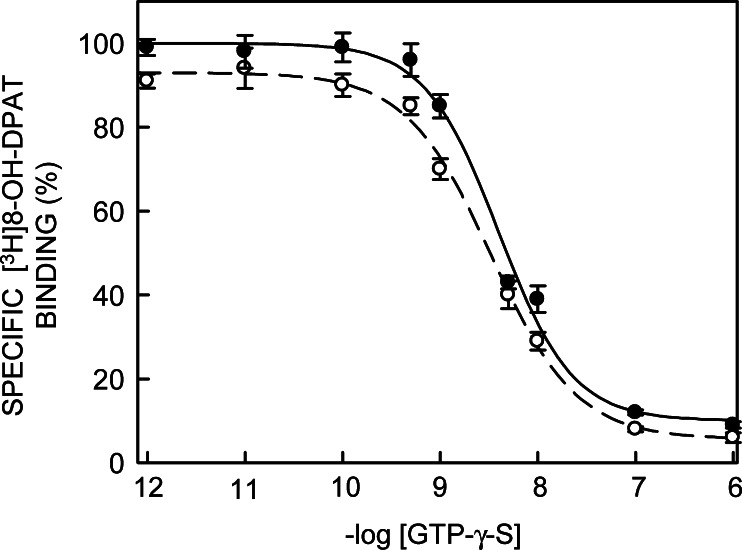
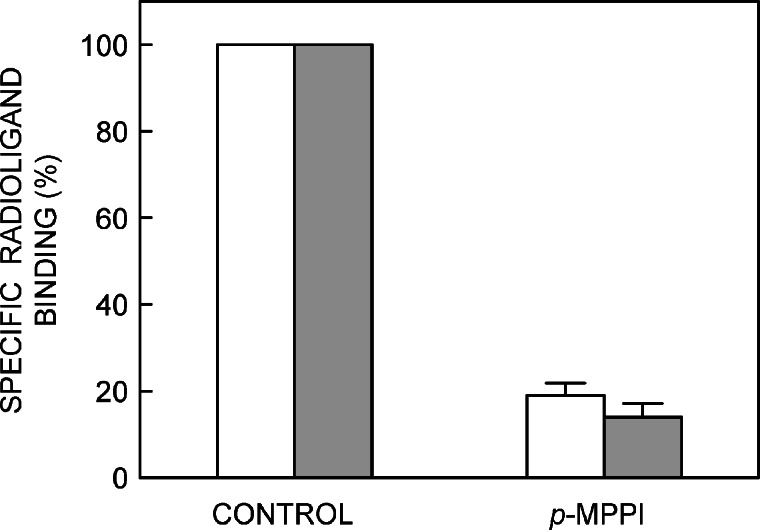
1. The serotonin(1A) receptors are members of a superfamily of seven transmembrane domain receptors that couple to G-proteins, and appear to be involved in several behavioral and cognitive functions. 2. We monitored the effect of prolonged treatment of the human serotonin(1A) receptor expressed in Chinese hamster ovary (CHO) cells with pharmacologically well-characterized ligands on its binding to the agonist 8-hydroxy-2(di-N-propylamino)tetralin (8-OH-DPAT) and antagonist 4-(2'-methoxy)-phenyl-1-[2'-(N-2''-pyridinyl)-p-fluorodobenzamido]ethyl-piperazine (p-MPPF). 3. Our results indicate that prolonged treatment with the specific agonist (8-OH-DPAT) differentially affects subsequent binding of the agonist and antagonist to the receptor in a manner independent of receptor-G-protein coupling. Importantly, our results show that prolonged treatment with the commonly used antagonist p-MPPF, and its iodinated analogue 4-(2'-methoxy)-phenyl-1-[2'-(N-2''-pyridinyl)-p-iodobenzamido]ethyl-piperazine (p-MPPI), which have earlier been reported to display similar binding properties to serotonin(1A) receptors, induces significantly different effects on the ligand binding function of serotonin(1A) receptors.
Figures
References
Publication types
MeSH terms
Substances
LinkOut - more resources
Full Text Sources
