


Persisters: a distinct physiological state of E. coli
- PMID: 16768798
- PMCID: PMC1557402
- DOI: 10.1186/1471-2180-6-53
Persisters: a distinct physiological state of E. coli
Abstract
Background: Bacterial populations contain persisters, phenotypic variants that constitute approximately 1% of cells in stationary phase and biofilm cultures. Multidrug tolerance of persisters is largely responsible for the inability of antibiotics to completely eradicate infections. Recent progress in understanding persisters is encouraging, but the main obstacle in understanding their nature was our inability to isolate these elusive cells from a wild-type population since their discovery in 1944.
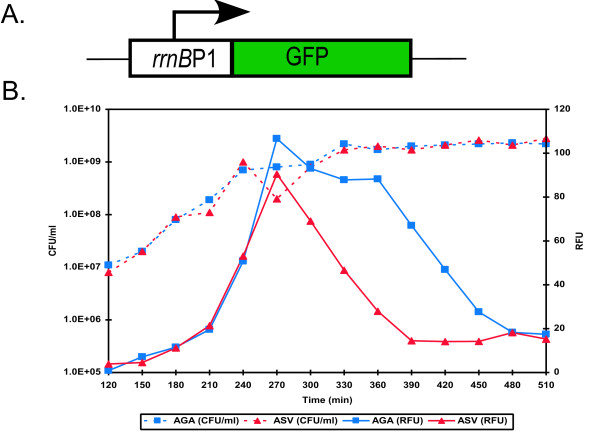
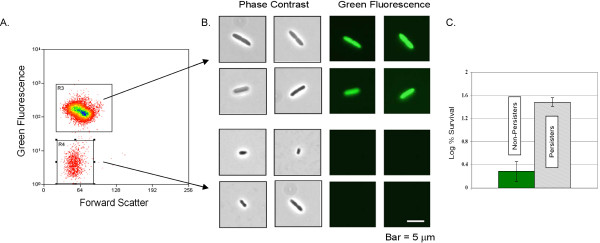
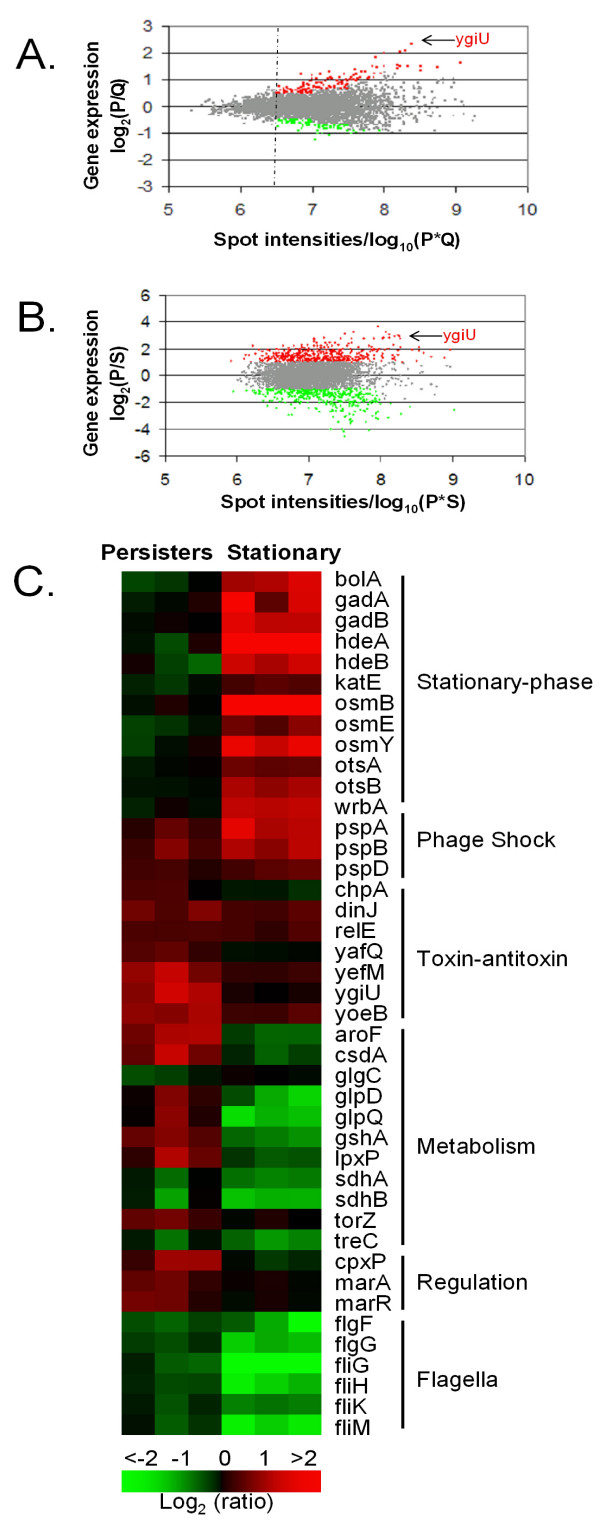
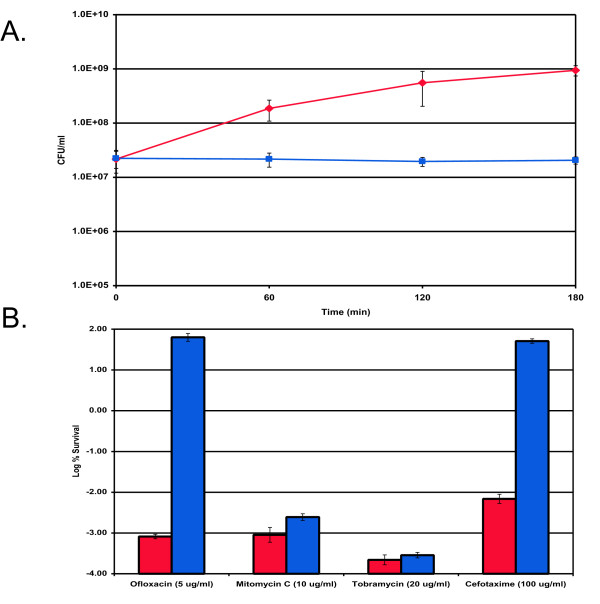
Results: We hypothesized that persisters are dormant cells with a low level of translation, and used this to physically sort dim E. coli cells which do not contain sufficient amounts of unstable GFP expressed from a promoter whose activity depends on the growth rate. The dim cells were tolerant to antibiotics and exhibited a gene expression profile distinctly different from those observed for cells in exponential or stationary phases. Genes coding for toxin-antitoxin module proteins were expressed in persisters and are likely contributors to this condition.
Conclusion: We report a method for persister isolation and conclude that these cells represent a distinct state of bacterial physiology.
Figures
References
-
- Bigger JW. Treatment of staphylococcal infections with penicillin. Lancet. 1944;ii:497–500. doi: 10.1016/S0140-6736(00)74210-3. - DOI
Publication types
MeSH terms
Substances
Grants and funding
LinkOut - more resources
Full Text Sources
Other Literature Sources
Molecular Biology Databases
