


Pyrene binary probes for unambiguous detection of mRNA using time-resolved fluorescence spectroscopy
- PMID: 16769776
- PMCID: PMC1477857
- DOI: 10.1093/nar/gkl406
Pyrene binary probes for unambiguous detection of mRNA using time-resolved fluorescence spectroscopy
Abstract
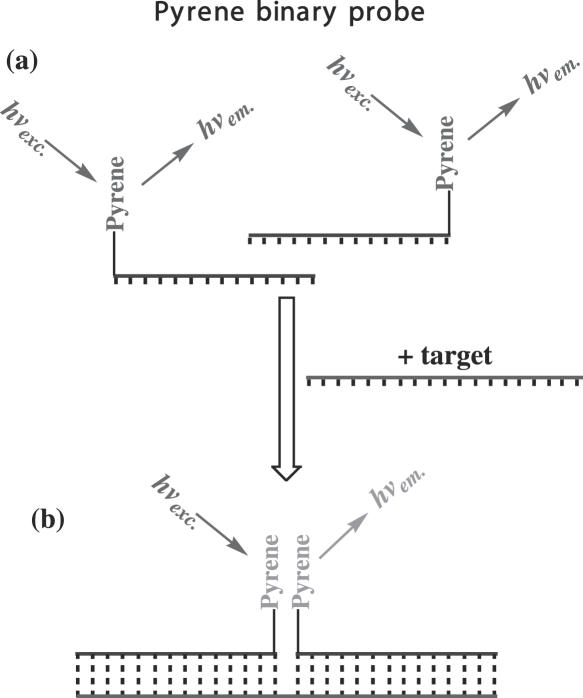
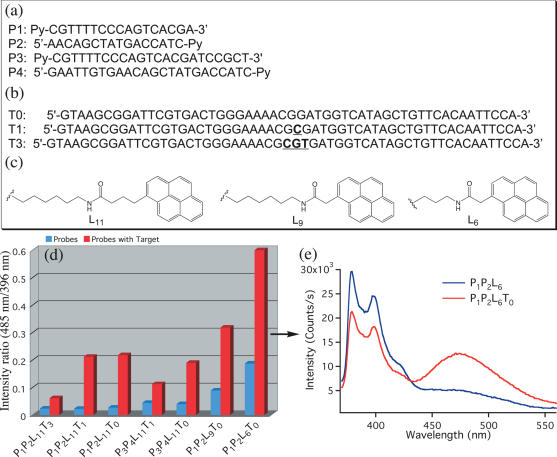
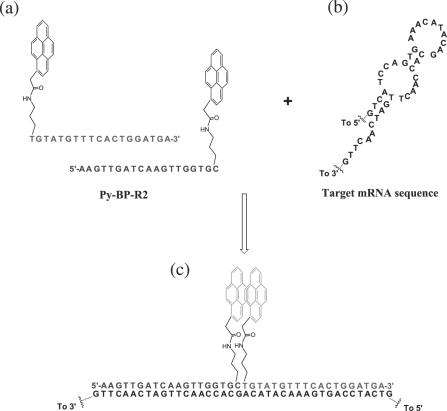
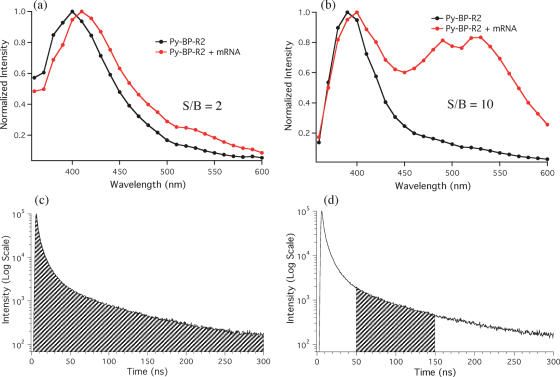
We report here the design, synthesis and application of pyrene binary oligonucleotide probes for selective detection of cellular mRNA. The detection strategy is based on the formation of a fluorescent excimer when two pyrene groups are brought into close proximity upon hybridization of the probes with the target mRNA. The pyrene excimer has a long fluorescence lifetime (>40 ns) compared with that of cellular extracts (approximately 7 ns), allowing selective detection of the excimer using time-resolved emission spectra (TRES). Optimized probes were used to target a specific region of sensorin mRNA yielding a strong excimer emission peak at 485 nm in the presence of the target and no excimer emission in the absence of the target in buffer solution. While direct fluorescence measurement of neuronal extracts showed a strong fluorescent background, obscuring the detection of the excimer signal, time-resolved emission measurements indicated that the emission decay of the cellular extracts is approximately 8 times faster than that of the pyrene excimer probes. Thus, using TRES of the pyrene probes, we are able to selectively detect mRNA in the presence of cellular extracts, demonstrating the potential for application of pyrene excimer probes for imaging mRNAs in cellular environments that have background fluorescence.
Figures

References
-
- Martin K.C., Casadio A., Zhu H., Yaping E., Rose J.C., Chen M., Bailey C.H., Kandel E.R. Synapse-specific, long-term facilitation of Aplysia sensory to motor synapses: a function for local protein synthesis in memory storage. Cell. 1997;91:927–938. - PubMed
-
- Mayford M., Barzilai A., Keller F., Schacher S., Kandel E.R. Modulation of an NCAM-related adhesion molecule with long-term synaptic plasticity in Aplysia. Science. 1992;256:638–644. - PubMed
Publication types
MeSH terms
Substances
Grants and funding
LinkOut - more resources
Full Text Sources
Other Literature Sources
Miscellaneous
