


Impact of RNA structure on the prediction of donor and acceptor splice sites
- PMID: 16772025
- PMCID: PMC1526458
- DOI: 10.1186/1471-2105-7-297
Impact of RNA structure on the prediction of donor and acceptor splice sites
Abstract
Background: gene identification in genomic DNA sequences by computational methods has become an important task in bioinformatics and computational gene prediction tools are now essential components of every genome sequencing project. Prediction of splice sites is a key step of all gene structural prediction algorithms.
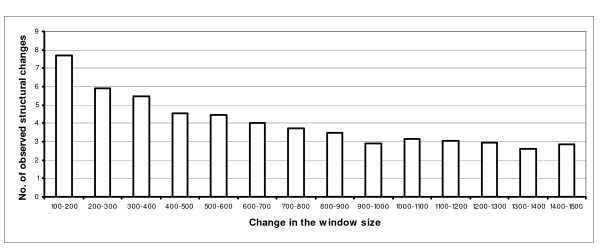
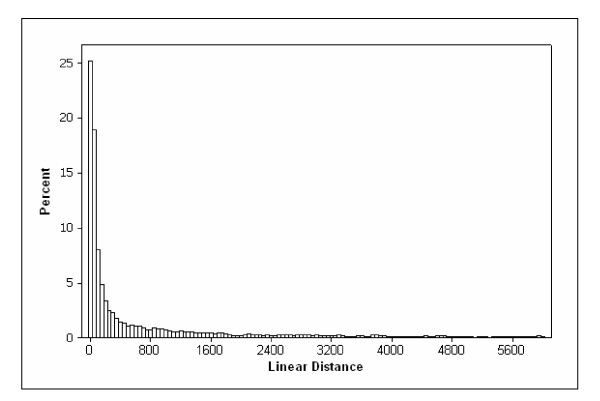
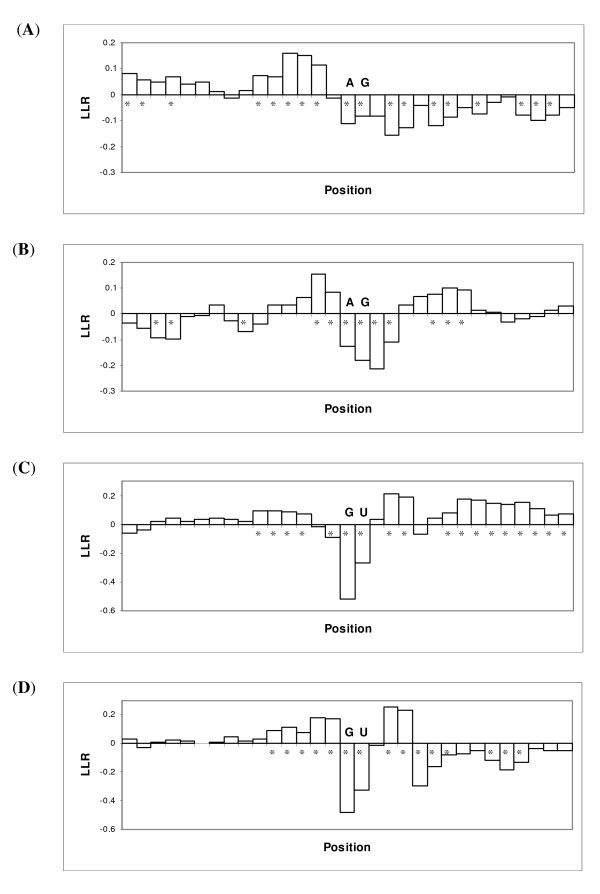
Results: we sought the role of mRNA secondary structures and their information contents for five vertebrate and plant splice site datasets. We selected 900-nucleotide sequences centered at each (real or decoy) donor and acceptor sites, and predicted their corresponding RNA structures by Vienna software. Then, based on whether the nucleotide is in a stem or not, the conventional four-letter nucleotide alphabet was translated into an eight-letter alphabet. Zero-, first- and second-order Markov models were selected as the signal detection methods. It is shown that applying the eight-letter alphabet compared to the four-letter alphabet considerably increases the accuracy of both donor and acceptor site predictions in case of higher order Markov models.
Conclusion: Our results imply that RNA structure contains important data and future gene prediction programs can take advantage of such information.
Figures
References
-
- Patterson DJ, Yasuhara K, Ruzzo WL. Pre-mRNA secondary structure prediction aids splice site prediction. Pac Symp Biocomput. 2002;7:223–234. - PubMed
MeSH terms
Substances
LinkOut - more resources
Full Text Sources
