


Mechano-electrical transduction: new insights into old ideas
- PMID: 16773495
- PMCID: PMC1839004
- DOI: 10.1007/s00232-005-0834-8
Mechano-electrical transduction: new insights into old ideas
Abstract
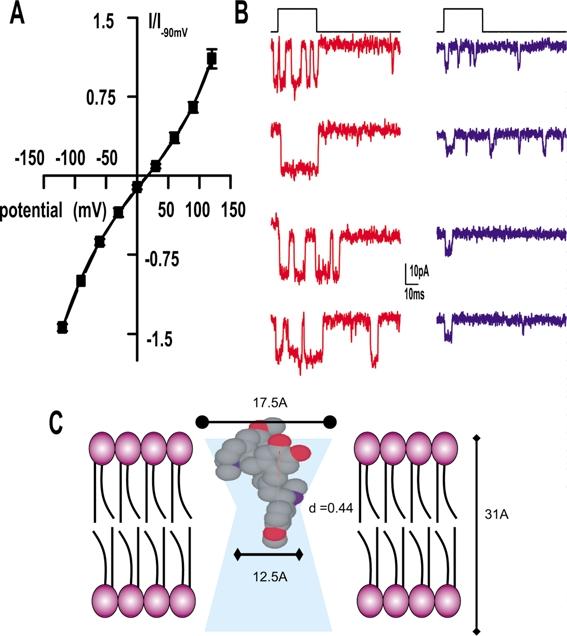
The gating-spring theory of hair cell mechanotransduction channel activation was first postulated over twenty years ago. The basic tenets of this hypothesis have been reaffirmed in hair cells from both auditory and vestibular systems and across species. In fact, the basic findings have been reproduced in every hair cell type tested. A great deal of information regarding the structural, mechanical, molecular and biophysical properties of the sensory hair bundle and the mechanotransducer channel has accumulated over the past twenty years. The goal of this review is to investigate new data, using the gating spring hypothesis as the framework for discussion. Mechanisms of channel gating are presented in reference to the need for a molecular gating spring or for tethering to the intra- or extracellular compartments. Dynamics of the sensory hair bundle and the presence of motor proteins are discussed in reference to passive contributions of the hair bundle to gating compliance. And finally, the molecular identity of the channel is discussed in reference to known intrinsic properties of the native transducer channel.
Figures


References
-
- Alvarez de la Rosa D, Canessa CM, Fyfe GK, Zhang P. Structure and regulation of amiloride-sensitive sodium channels. Annu. Rev. Physiol. 2000;62:573–594. - PubMed
-
- Assad JA, Shepherd GM, Corey DP. Tip-link integrity and mechanical transduction in vertebrate hair cells. Neuron. 1991;7:985–994. - PubMed
-
- Balasubramanian S, Lynch JW, Barry PH. The permeation of organic cations through cAMP-gated channels in mammalian olfactory receptor neurons. J. Membrane Biol. 1995;146:177–191. - PubMed
Publication types
MeSH terms
Grants and funding
LinkOut - more resources
Full Text Sources
Miscellaneous
