


Can antibiotic prescriptions in respiratory tract infections be improved? A cluster-randomized educational intervention in general practice--the Prescription Peer Academic Detailing (Rx-PAD) Study [NCT00272155]
- PMID: 16776824
- PMCID: PMC1569835
- DOI: 10.1186/1472-6963-6-75
Can antibiotic prescriptions in respiratory tract infections be improved? A cluster-randomized educational intervention in general practice--the Prescription Peer Academic Detailing (Rx-PAD) Study [NCT00272155]
Abstract
Background: More than half of all antibiotic prescriptions in general practice are issued for respiratory tract infections (RTIs), despite convincing evidence that many of these infections are caused by viruses. Frequent misuse of antimicrobial agents is of great global health concern, as we face an emerging worldwide threat of bacterial antibiotic resistance. There is an increasing need to identify determinants and patterns of antibiotic prescribing, in order to identify where clinical practice can be improved.
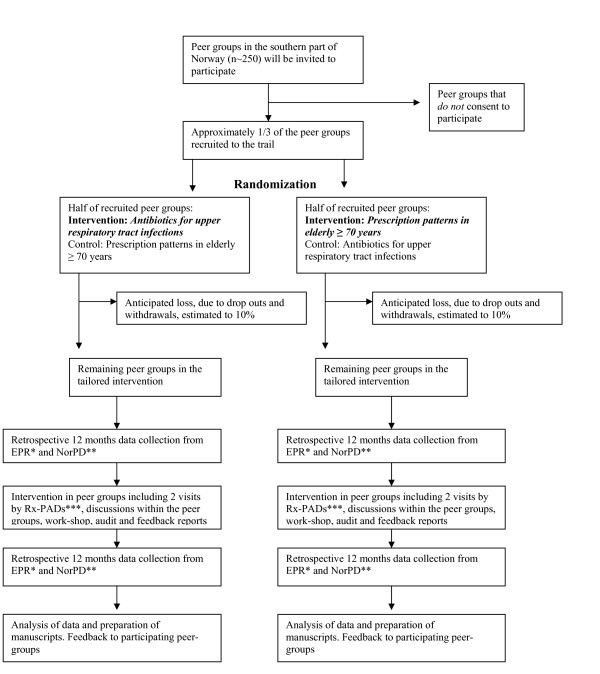
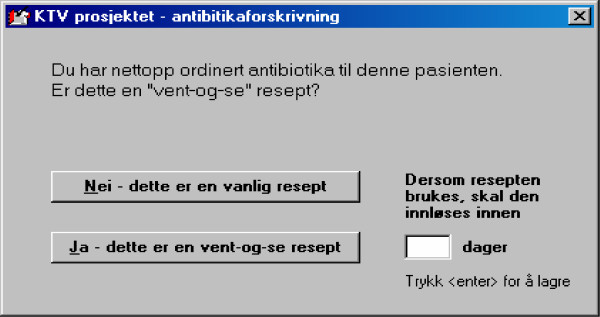
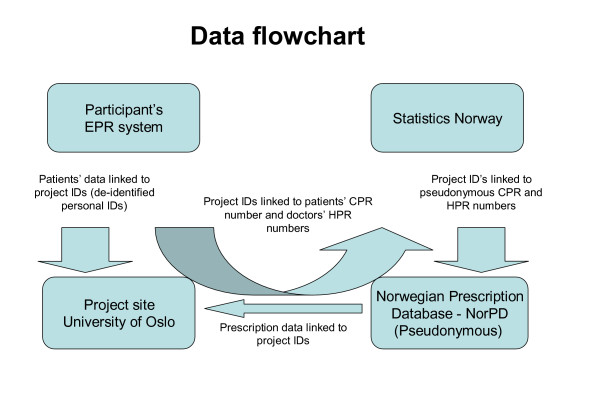
Methods/design: Approximately 80 peer continuing medical education (CME) groups in southern Norway will be recruited to a cluster randomized trial. Participating groups will be randomized either to an intervention- or a control group. A multifaceted intervention has been tailored, where key components are educational outreach visits to the CME-groups, work-shops, audit and feedback. Prescription Peer Academic Detailers (Rx-PADs), who are trained GPs, will conduct the educational outreach visits. During these visits, evidence-based recommendations of antibiotic prescriptions for RTIs will be presented and software will be handed out for installation in participants PCs, enabling collection of prescription data. These data will subsequently be linked to corresponding data from the Norwegian Prescription Database (NorPD). Individual feedback reports will be sent all participating GPs during and one year after the intervention. Main outcomes are baseline proportion of inappropriate antibiotic prescriptions for RTIs and change in prescription patterns compared to baseline one year after the initiation of the tailored pedagogic intervention.
Discussion: Improvement of prescription patterns in medical practice is a challenging task. A thorough evaluation of guidelines for antibiotic treatment in RTIs may impose important benefits, whereas inappropriate prescribing entails substantial costs, as well as undesirable consequences like development of antibiotic resistance. Our hypothesis is that an educational intervention program will be effective in improving prescription patterns by reducing the total number of antibiotic prescriptions, as well as reducing the amount of broad-spectrum antibiotics, with special emphasis on macrolides.
Trial registration: ClinicalTrials.gov NCT00272155.
Figures
References
-
- O'Brien KL, Dowell SF, Schwartz B, Marcy SM, Phillips WR, Gerber MA. Cough illness/bronchitis: principles of judicious use of antimicrobial agents. Pediatrics. 1998;101:S178–181. doi: 10.1542/peds.101.6.e6. - DOI
-
- Rosenstein N, Phillips WR, Gerber MA, Marcy M, Schwartz B, Dowell SF. The common cold - pinciples of judicious use of microbial agents. Pediatrics. 1998;101:S181–184.
-
- Schappert SM. Ambulatory care visits of physician offices, hospital outpatient departments, and emergency departments: United States, 1995. Vital Health Stat 13. 1997. pp. 1–38. - PubMed
MeSH terms
Substances
Associated data
LinkOut - more resources
Full Text Sources
Medical
