


The distribution and intensity of parasite sequestration in comatose Malawian children
- PMID: 16779727
- PMCID: PMC1515074
- DOI: 10.1086/505078
The distribution and intensity of parasite sequestration in comatose Malawian children
Abstract
Background: The sequestration of Plasmodium falciparum-infected erythrocytes in capillary beds is a characteristic feature of severe malaria and is believed to be central to disease pathogenesis. Sequestration occurs in all P. falciparum infections, including those in asymptomatic individuals. Therefore, sequestration cannot be the sole determinant of severe disease; the intensity or distribution of infected erythrocytes may also contribute. Discerning the relationship between sequestration and well-defined clinical syndromes may enhance understanding of disease mechanisms.
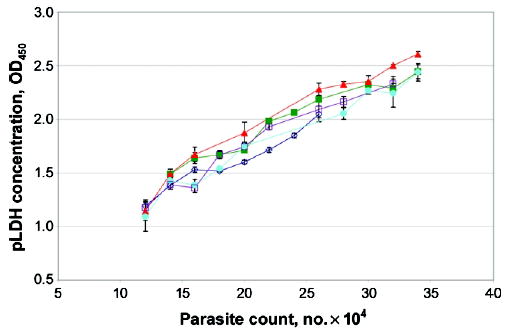
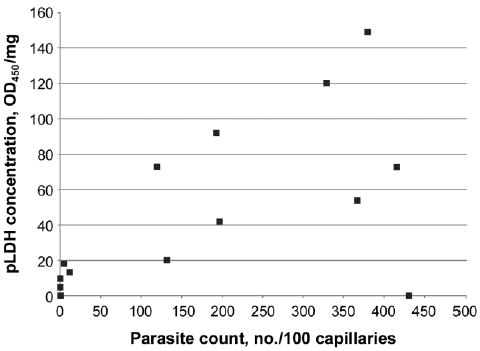
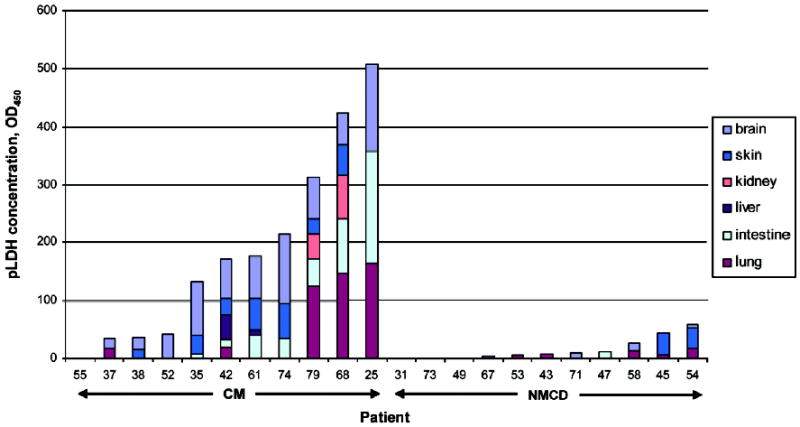
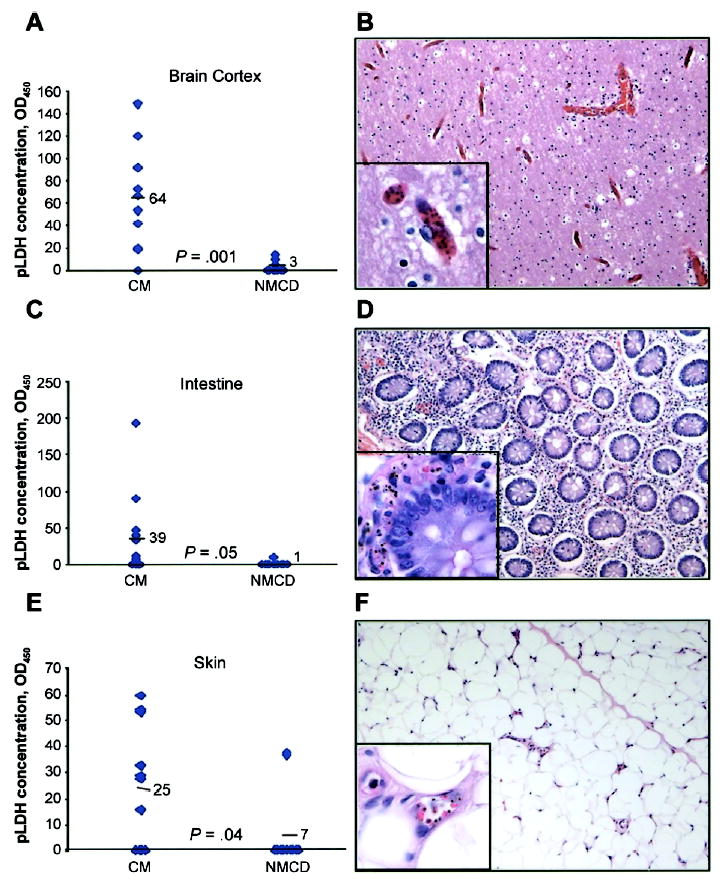
Methods: We measured the concentration of parasite-derived lactate dehydrogenase (pLDH) in tissue samples obtained at autopsy from patients with clinically defined cerebral malaria. On the basis of the autopsy findings, patients were divided into 2 groups: those with an identifiable, nonmalarial cause of death and those without, who were presumed to have died of cerebral malaria. The concentration of pLDH, as determined by enzyme-linked immunosorbent assay, was used to estimate parasite load in different organs.
Results: When pLDH could be detected, the parasite load was higher in patients with presumed cerebral malaria than in parasitemic patients with assumed cerebral malaria with a nonmalaria cause of death identified at autopsy (P<.05 for brain, intestine, and skin).
Conclusions: These findings suggest that sequestration in patients with fatal cerebral malaria occurs in multiple organs and does not reflect a predilection in the parasite for the cerebral vasculature.
Conflict of interest statement
Potential conflicts of interest: none reported.
Figures
References
-
- Miller LH, Baruch DI, Marsh K, Doumbo OK. The pathogenic basis of malaria. Nature. 2002;415:673–9. - PubMed
-
- Su XZ, Heatwole VM, Wertheimer SP, et al. The large diverse gene family var encodes proteins involved in cytoadherence and antigenic variation of Plasmodium falciparum-infected erythrocytes. Cell. 1995;82:89–100. - PubMed
Publication types
MeSH terms
Substances
Grants and funding
LinkOut - more resources
Full Text Sources
Medical
