Letters and notes in orthopaedic surgery
- PMID: 16786610
- PMCID: PMC1963690
- DOI: 10.1308/003588406X98612
Letters and notes in orthopaedic surgery
Abstract
Introduction: Accurate written communication is essential in orthopaedic surgery. Incomplete and poorly structured letters can lead to poor knowledge of a patient's diagnosis.
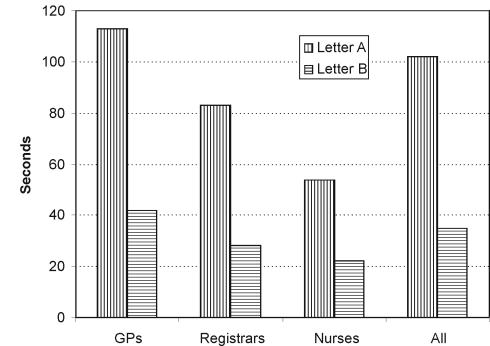
Materials and methods: Structured and traditional letter formats were compared for speed of reading and preference by general practitioners (GPs), consultants, registrars and out-patient nursing staff. In addition, out-patient clinic letters and notes were analysed and compared for speed of reading and ease of assimilating information and content.
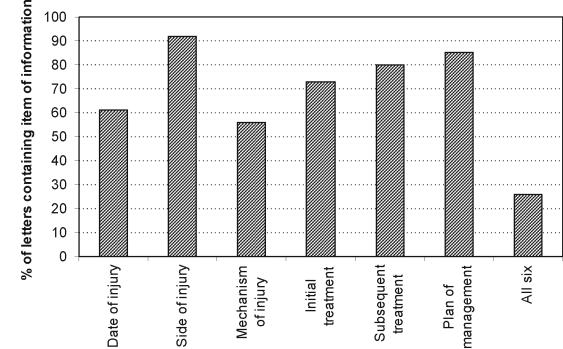
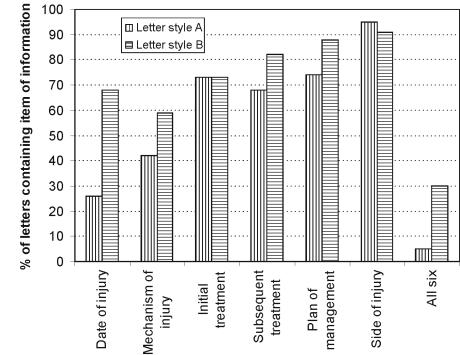
Results: There was overwhelming preference for the structured letter format. This style of letter could be read significantly more quickly with information better assimilated and relevant data included more frequently. However, only 26% of letters generated contained a complete set of information sought by GPs and hospital staff.
Conclusions: Structured letters are better in orthopaedics because it is easier to access the contents. The structured format disciplines medical staff to address essential information. Even with a structured format the majority of letters omitted essential information. Training in letter writing is necessary. A structured letter format next to dictating machines might improve the quality of letters generated.
Figures
References
MeSH terms
LinkOut - more resources
Full Text Sources