


Hormonal priming, induction of ovulation and in-vitro fertilization of the endangered Wyoming toad (Bufo baxteri)
- PMID: 16790071
- PMCID: PMC1524778
- DOI: 10.1186/1477-7827-4-34
Hormonal priming, induction of ovulation and in-vitro fertilization of the endangered Wyoming toad (Bufo baxteri)
Abstract
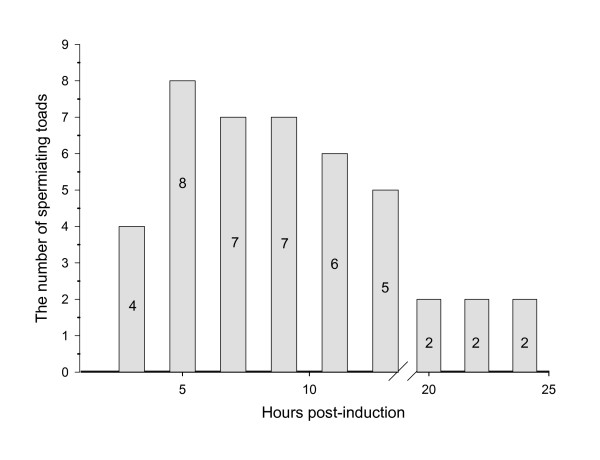
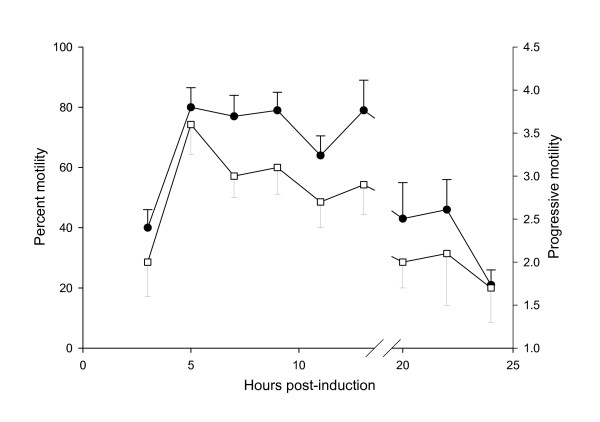
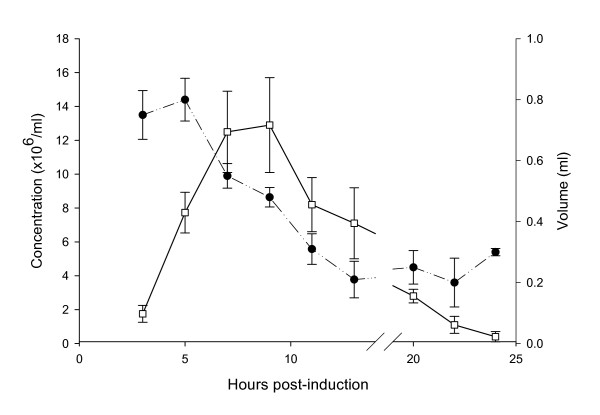
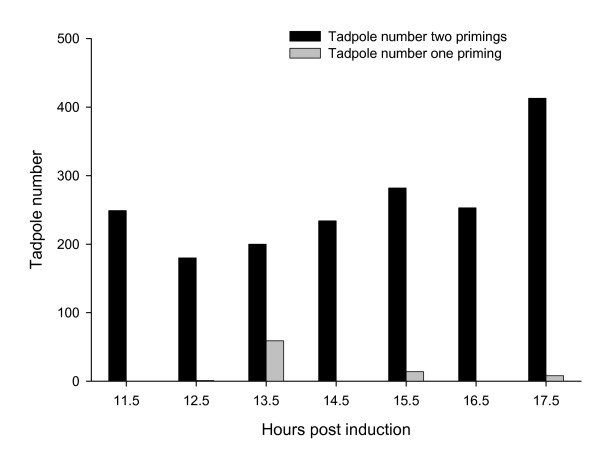
The endangered Wyoming toad (Bufo baxteri) is the subject of an extensive captive breeding and reintroduction program. Wyoming toads in captivity rarely ovulate spontaneously and hormonal induction is used to ovulate females or to stimulate spermiation in males. With hormonal induction, ovulation is unreliable and egg numbers are low. The sequential administration of anovulatory doses of hormones (priming) has increased egg numbers and quality in both anurans and fish. Consequently, we tested the efficacy of a combination of human Chorionic Gonadotrophin (hCG) and Luteinizing Hormone Releasing Hormone analogue (LHRHa) administered as one dose, or two or three sequential doses to Bufo baxteri on egg numbers, fertilization and early embryo development. Spawning toads deposited eggs into Simplified Amphibian Ringers (SAR) solution to enable controlled in-vitro fertilization (IVF) with sperm from hormonally induced male toads. Unprimed females receiving a single mixed normally ovulatory dose of 500 IU hCG plus 4 micrograms of LHRHa produced no eggs. Whereas females primed with this dose and an anovulatory dose (100 IU hCG and 0.8 micrograms of LHRHa) of the same hormones, or primed only with an anovulatory dose, spawned after then receiving an ovulatory dose. Higher total egg numbers were produced with two primings than with one priming. Moreover, two primings produced significantly more eggs from each individual female than one priming. The cleavage rate of eggs was not found to differ between one or two primings. Nevertheless, embryo development with eggs from two primings gave a significantly greater percentage neurulation and swim-up than those from one priming. Of the male toads receiving a single dose of 300 IU hCG, 80% produced spermic urine with the greatest sperm concentration 7 hours post-administration (PA). However, peak sperm motility (95%) was achieved at 5 hours PA and remained relatively constant until declining 20 hours PA. In conclusion, Bufo baxteri egg numbers and quality benefited from sequential priming with LHRHa and hCG whereas spermic urine for IVF was produced from males with a single dose of hCG. The power of assisted reproduction technology in the conservation of endangered amphibians is shown by the release of nearly 2000 tadpoles produced by IVF during this study.
Figures
References
-
- Young BE, Stuart SN, Chanson JS, Cox NA, Boucher TM. Disappearing Jewels: The Status of New World Amphibians. NatureServe, Arlington, Virginia. 2004.
-
- U.S. Fish and Wildlife Service Status of the Wyoming toad. Annual Report. 2005.
-
- Baxter GT. A study of the amphibians and reptiles of Wyoming (Laramie, Wyoming: University of Wyoming Master's thesis) 1946.
-
- Baxter GT, Stromberg MR, Dood SK. The status of the Wyoming toad (Bufo hemiophrys baxteri) Environ Conserv. 1982;9:348.
-
- Lewis DL, Baxter GT, Johnson KM, Stone MD. Possible extinction of the Wyoming toad, Bufo hemiophrys baxteri. J Herpetol. 1985;19:166–168. doi: 10.2307/1564434. - DOI
Publication types
MeSH terms
Substances
LinkOut - more resources
Full Text Sources
Miscellaneous
