Are carbon dioxide detectors useful in neonates?
- PMID: 16790735
- PMCID: PMC2672742
- DOI: 10.1136/adc.2005.082008
Are carbon dioxide detectors useful in neonates?
Abstract
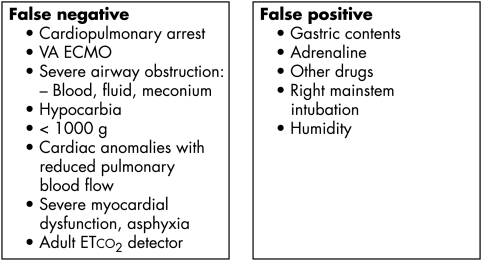
Maintenance of neonatal normocarbia may prevent chronic lung disease and periventricular leucomalacia, but this requires frequent arterial sampling, which has risks. Alternative methods for measuring CO2 are therefore desirable. These include end tidal CO2, capillary sampling, and transcutaneous measurements. CO2 detectors have also proved effective and rapid indicators of endotracheal intubation. However, this method relies on the presence of exhaled CO2, which may be reduced in certain situations, such as cardiopulmonary arrest. Colorimetric CO2 detectors are therefore valuable adjuncts for airway management, especially during resuscitation, but Pa(CO2) is still the best measure of CO2 in neonatal practice.
Conflict of interest statement
Competing interests: none declared

References
-
- Garland J S, Buck R K, Allred E N.et al Hypocarbia before surfactant therapy appears to increase bronchopulmonary dysplasia risk in infants with distress syndrome. Arch Pediatr Adolesc Med 1995149617–622. - PubMed
-
- Strauss R G. Transfusion therapy in neonates. Am J Dis Child 1991145904–911. - PubMed
-
- Hermansen M C, Hermansen M G. Intravascular catheter complications in the neonatal intensive care unit. Clin Perinatol 200532141–156. - PubMed
-
- Bhende M S, Thompson A E, Cook D R.et al Validity of a disposable end‐tidal CO2 detector in verifying endotracheal tube placement in infants and children. Ann Emerg Med 199221142–145. - PubMed
Publication types
MeSH terms
Substances
LinkOut - more resources
Full Text Sources
Other Literature Sources
Medical