


Mutations of human cationic trypsinogen (PRSS1) and chronic pancreatitis
- PMID: 16791840
- PMCID: PMC2793115
- DOI: 10.1002/humu.20343
Mutations of human cationic trypsinogen (PRSS1) and chronic pancreatitis
Abstract
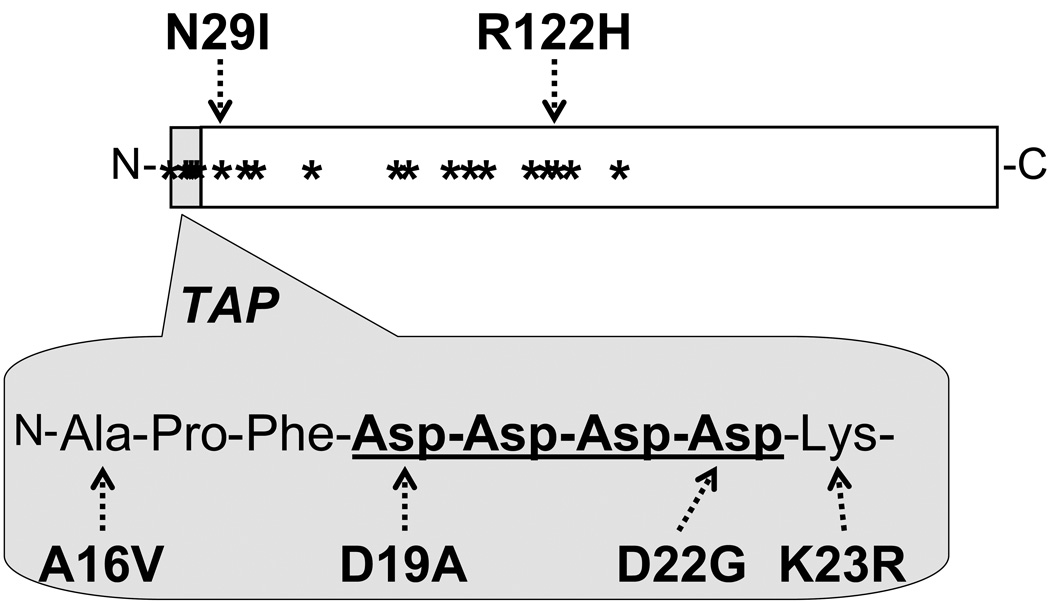
Ten years ago, the groundwork for the discovery of the genetic basis of chronic pancreatitis was laid by linkage analyses of large kindreds with autosomal dominant hereditary chronic pancreatitis. Subsequent candidate gene sequencing of the 7q35 chromosome region revealed a strong association of the c.365G > A (p.R122 H) mutation of the PRSS1 gene encoding cationic trypsinogen with hereditary pancreatitis. In the following years, further mutations of this gene were discovered in patients with hereditary or idiopathic chronic pancreatitis. In vitro the mutations increase autocatalytic conversion of trypsinogen to active trypsin and thus probably cause premature, intrapancreatic trypsinogen activation in vivo. The clinical presentation is highly variable, but most affected mutation carriers have relatively mild disease. In this review, we summarize the current knowledge on trypsinogen mutations and their role in pancreatic diseases.
Figures
References
-
- Abita JP, Delaage M, Lazdunski M. The mechanism of activation of trypsinogen. The role of the four N-terminal aspartyl residues. Eur J Biochem. 1969;8:314–324. - PubMed
-
- Beranek H, Teich N, Witt H, Schulz HU, Mössner J, Keim V. Analysis of tumor necrosis factor alpha and interleukin 10 promotor variants in patients with chronic pancreatitis. Eur J Gastroenterol Hepatol. 2003;15:1223–1227. - PubMed
-
- Bernardino AL, Guarita DR, Mott CB, Pedroso MR, Machado MC, Laudanna AA, Tani CM, Almeida FL, Zatz M. CFTR, PRSS1 and SPINK1 mutations in the development of pancreatitis in Brazilian patients. JOP. 2003;4:169–177. - PubMed
Publication types
MeSH terms
Substances
Grants and funding
LinkOut - more resources
Full Text Sources
Other Literature Sources
