


The crystal structure of iron-free human serum transferrin provides insight into inter-lobe communication and receptor binding
- PMID: 16793765
- PMCID: PMC1895924
- DOI: 10.1074/jbc.M604592200
The crystal structure of iron-free human serum transferrin provides insight into inter-lobe communication and receptor binding
Abstract
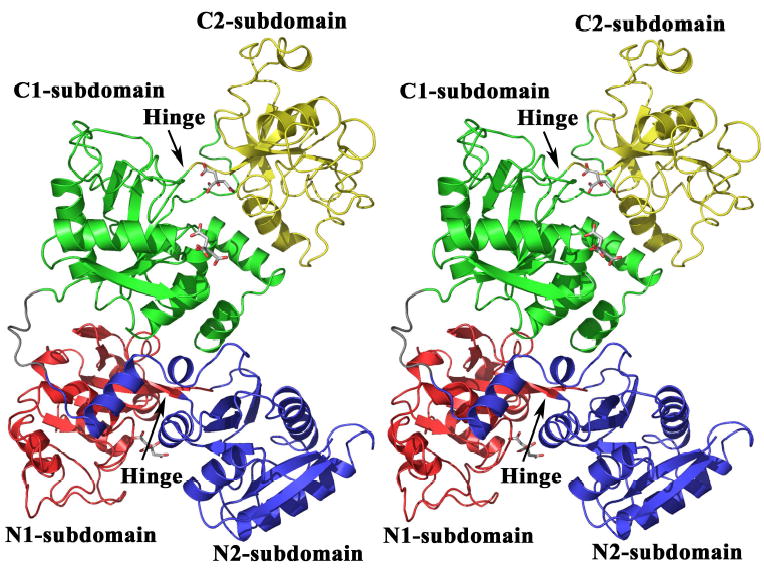
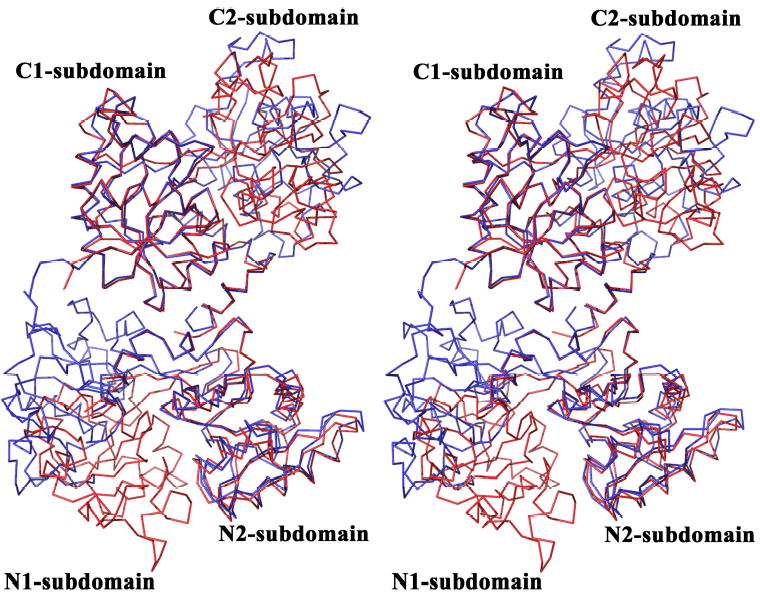
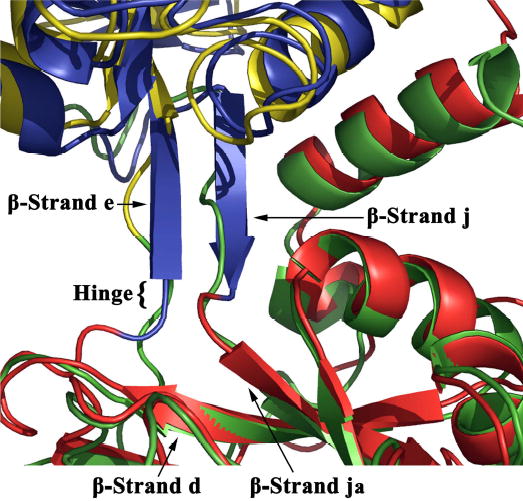
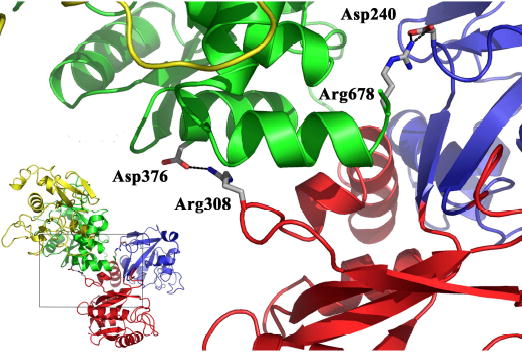
Serum transferrin reversibly binds iron in each of two lobes and delivers it to cells by a receptor-mediated, pH-dependent process. The binding and release of iron result in a large conformational change in which two subdomains in each lobe close or open with a rigid twisting motion around a hinge. We report the structure of human serum transferrin (hTF) lacking iron (apo-hTF), which was independently determined by two methods: 1) the crystal structure of recombinant non-glycosylated apo-hTF was solved at 2.7-A resolution using a multiple wavelength anomalous dispersion phasing strategy, by substituting the nine methionines in hTF with selenomethionine and 2) the structure of glycosylated apo-hTF (isolated from serum) was determined to a resolution of 2.7A by molecular replacement using the human apo-N-lobe and the rabbit holo-C1-subdomain as search models. These two crystal structures are essentially identical. They represent the first published model for full-length human transferrin and reveal that, in contrast to family members (human lactoferrin and hen ovotransferrin), both lobes are almost equally open: 59.4 degrees and 49.5 degrees rotations are required to open the N- and C-lobes, respectively (compared with closed pig TF). Availability of this structure is critical to a complete understanding of the metal binding properties of each lobe of hTF; the apo-hTF structure suggests that differences in the hinge regions of the N- and C-lobes may influence the rates of iron binding and release. In addition, we evaluate potential interactions between apo-hTF and the human transferrin receptor.
Figures
References
-
- Harris DC, Aisen P. Physical Biochemistry of the Transferrins. In: Loehr TM, editor. Iron Carriers and Iron Proteins. VCH Publishers, Inc; New York: 1989.
-
- Aisen P, Leibman A, Zweier J. JBiolChem. 1978;253:1930–1937. - PubMed
-
- Lambert LA, Perri H, Meehan TJ. CompBiochemPhysiol[B] 2005;140:11–25. - PubMed
Publication types
MeSH terms
Substances
Associated data
- Actions
- Actions
Grants and funding
LinkOut - more resources
Full Text Sources
Other Literature Sources
Molecular Biology Databases
Miscellaneous
