Treatment persistence with once-monthly ibandronate and patient support vs. once-weekly alendronate: results from the PERSIST study
- PMID: 16800837
- PMCID: PMC1619408
- DOI: 10.1111/j.1742-1241.2006.01059.x
Treatment persistence with once-monthly ibandronate and patient support vs. once-weekly alendronate: results from the PERSIST study
Abstract
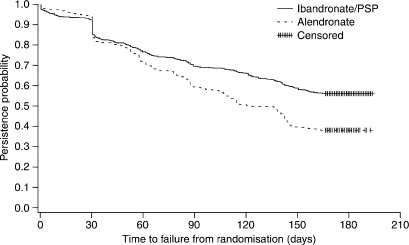
Osteoporosis is a common and debilitating condition associated with significant morbidity and mortality. The efficacy and safety of oral bisphosphonates for the treatment of osteoporosis are well established. However, patient adherence and persistence on treatment are suboptimal. This randomised open-label multi-centre study of 6-months' duration compared persistence on treatment in postmenopausal women with osteoporosis receiving either once-monthly ibandronate plus a patient support programme (PSP), or once-weekly alendronate. To avoid falsely elevated persistence rates often associated with clinical trials, the study was designed to reflect everyday clinical practice in the UK and follow-up visits were limited to be consistent with the primary care setting. Analysis of the primary endpoint showed that persistence was significantly higher in the ibandronate/PSP group compared with the alendronate group (p < 0.0001). The estimated proportion of patients persisting with treatment at 6 months was 56.6% (306/541) and 38.6% (198/513) in the ibandronate/PSP and alendronate groups, respectively. Therefore, compared with alendronate, there was a 47% relative improvement in the proportion of patients persisting with treatment in the ibandronate/PSP group. Secondary endpoint measurements of adherence (e.g. proportion of patients remaining on treatment at study end; proportion of patients discontinuing from the study) were also significantly different in favour of ibandronate plus patient support. In summary, the PERSIST study demonstrated that persistence on treatment was increased in patients receiving once-monthly ibandronate plus patient support compared with once-weekly alendronate. Increased persistence on bisphosphonate treatment is expected to improve patient outcomes and decrease the social and economic burden of osteoporosis.
Figures
References
-
- American Heart Association. 2003. [17 May 2006].
-
- World Health Organization. Adherence to Long-term Therapies: Evidence for Action. 2003. [17 May 2006]. Available from: http://www.who.int/chronic_conditions/adherencereport/en/
-
- International Society for Pharmacoeconomics and Outcomes Research (ISPOR) Medication Compliance and Persistence Special Interest Group. [17 May 2006]. Available from: http://www.ispor.org/sigs/MCP_accomplishments.asp#definition.
-
- Emkey RD, Ettinger M. Improving compliance and persistence with bisphosphonate therapy for osteoporosis. Am J Med. 2006;119(Suppl. 1):S18–24. - PubMed
-
- Cramer JA, Silverman S. Persistence with bisphosphonate treatment for osteoporosis: finding the root of the problem. Am J Med. 2006;119(Suppl. 1):S12–7. - PubMed
Publication types
MeSH terms
Substances
LinkOut - more resources
Full Text Sources
Miscellaneous