


Correlates of use of antifracture therapy in older women with low bone mineral density
- PMID: 16808749
- PMCID: PMC1924624
- DOI: 10.1111/j.1525-1497.2006.00468.x
Correlates of use of antifracture therapy in older women with low bone mineral density
Abstract
Background: Guidelines exist for treatment of low bone mineral density (BMD). Little is known about patient characteristics associated with use of treatment.
Objectives: To determine patient-related correlates of medication use following screening dual x-ray absorptiometry (DXA) of older adults.
Design: Secondary analysis of a prospective cohort study.
Setting: Pittsburgh, PA and Memphis, TN.
Participants: Community-dwelling women between the ages 70 and 79 years enrolled in the Health, Aging, and Body Composition (Health ABC) Study.
Measurements: Risk factors for fracture and BMD of the hip were assessed at baseline. Patients and their community physicians were supplied the results of the DXA scan. Prescription and over-the-counter medication use was collected at annual exams for 2 years.
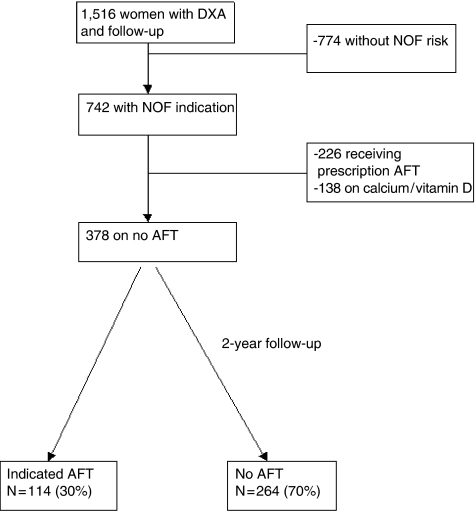
Results: Of 1,584 women enrolled in Health ABC, 378 had an indication for antifracture therapy and were not receiving such treatment at baseline. By the second annual follow-up examination, prescription antiresorptive medication was reported in 49 (13.0%), whereas 65 (17.2%) received calcium and/or vitamin D supplementation. In adjusted models, the strongest predictor for use of any antifracture medicine was presence of osteoporosis [vs osteopenia, odds ratio (OR), 2.9 (1.7 to 4.7)], white race [OR, 2.6 (1.5 to 4.8)], and receipt of the flu shot [OR, 2.2 (1.3 to 3.8)]. Neither a history of falls nor prior fracture was associated with use of antifracture medications.
Conclusion: Even when physicians of study participants were provided with DXA scan results, 70% of older high-functioning women with an indication for therapy did not start or remain on an antifracture therapy. Substantial room for improvement exists in fracture prevention following a diagnosis of low BMD-especially among women with a history of falls, prior fractures, and among black women.
Figures
References
-
- Looker AC, Johnston CC, Jr, Wahner HW, et al. Prevalence of low femoral bone density in older US women from NHANES III. J Bone Miner Res. 1995;10:796–802. - PubMed
-
- Kanis JA, Johnell O, Oden A, Dawson A, De Laet C, Jonsson B. Ten year probabilities of osteoporotic fractures according to BMD and diagnostic thresholds. Osteoporos Int. 2001;12:989–95. - PubMed
-
- Black DM, Thompson DE, Bauer DC, et al. Fracture risk reduction with alendronate in women with osteoporosis: the Fracture Intervention Trial. FIT Research Group. J Clin Endocrinol Metab. 2000;85:4118–24. - PubMed
-
- Cummings SR, Black DM, Thompson DE, et al. Effect of alendronate on risk of fracture in women with low bone density but without vertebral fractures: results from the Fracture Intervention Trial. JAMA. 1998;280:2077–82. - PubMed
-
- Watts NB, Josse RG, Hamdy RC, et al. Risedronate prevents new vertebral fractures in postmenopausal women at high risk. J Clin Endocrinol Metab. 2003;88:542–9. - PubMed
Publication types
MeSH terms
Substances
Grants and funding
LinkOut - more resources
Full Text Sources
Medical